In brief: Kumkuma Abhisheka is the sacred bath of the deity with kumkuma (vermilion), a rite the Skanda Purana expressly enjoins for the Goddess. At Shri Ruju Yogi Vadiraja Mandira, Chintamani, the archaka performs it in your name and gotra, then sends consecrated kumkuma, mantrakshate, and dry fruit to your home. To book: Kumkuma Abhisheka (Rs.150).
For the related name-offering with kumkuma (not a full bath), see Lakshmi Kumkumarchane. For the general symbolism of the powder itself, see Kumkum in Hindu Worship. For how abhisheka works as a class of ritual, see What Is Abhisheka?.
Kumkuma Abhisheka belongs to the oldest stream of temple upachara — the sensory services by which a devotee honours the Lord and the Divine Mother with substances the Purāṇas themselves name as dear to them. Red kumkuma is not a late folk addition. It appears in the Bhagavata Purana at the Lord’s lotus feet, in the Skanda Purana as the bath of the Goddess, in the Bhavishya Purana among the marks of saubhagya, and in the Lalita Sahasranama of the Brahmanda Purana as the hue and anointing of Devi herself. This article gathers those ancient witnesses, explains how the seva is offered at Vadiraja Mandira, and distinguishes the full kumkuma bath from the related practice of kumkumarchane.
What Kumkuma Abhisheka Means
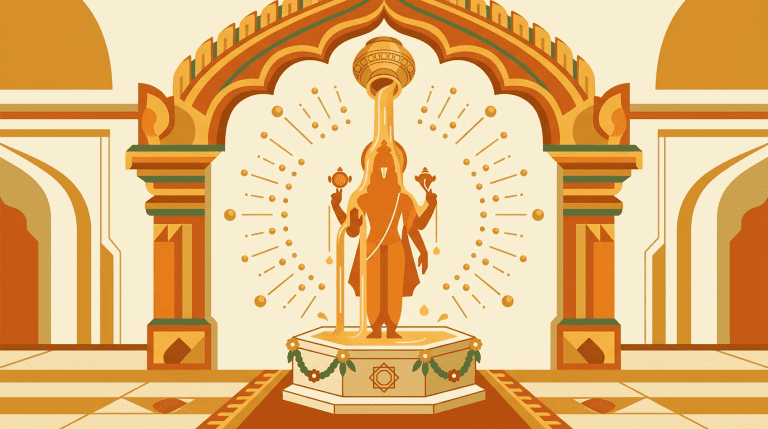
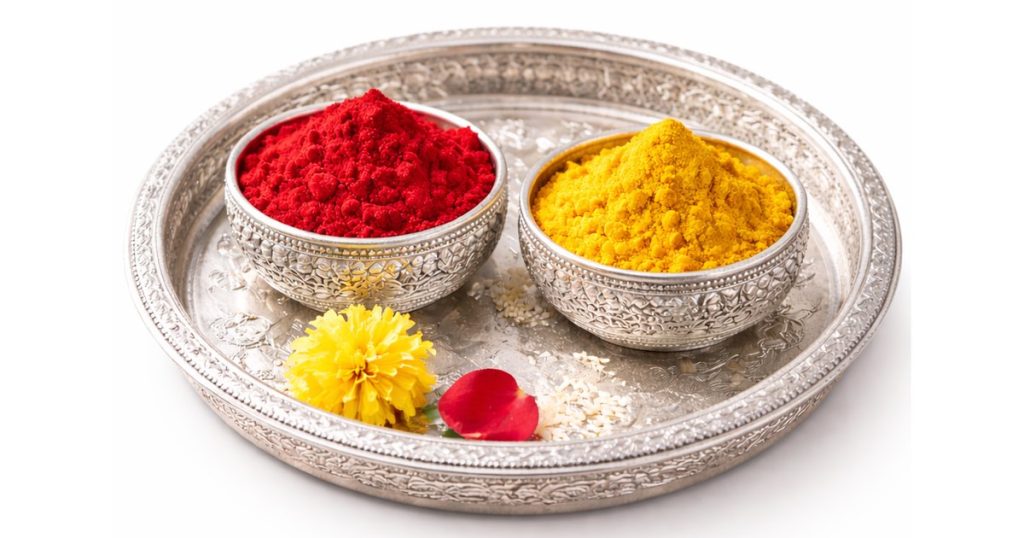
Abhisheka means a sacred bathing. The archaka pours a prescribed substance over the consecrated form (Bimba or murti) while mantras are recited, then clothes and adorns the deity again. When that substance is kumkuma — prepared as a fragrant paste and as water reddened with vermilion — the rite is called Kumkuma Abhisheka.
The colour red has always marked life, auspiciousness, and the living power of the Goddess in Purāṇic worship. Kumkuma, traditionally made from turmeric turned red with a touch of lime, or from prized saffron (kunkuma kesara) in richer offerings, carries that colour into the sanctum. The devotee’s sankalpa — name, gotra, and intention — is spoken before the bath, so the offering is personal, not anonymous.
This is not metaphor alone. In the Madhwa understanding of worship, the Lord and His consort truly receive the service. The kumkuma that has touched the deity returns to the devotee as prasada, a tangible share of the rite.
Skanda Purana: Bathe the Goddess with Kumkuma
The clearest ritual prescription for a kumkuma bath appears in the Skanda Purana, Prabhasa Khanda, Dvaraka Mahatmya (Adhyaya 14). The text says:
gatvā saṃsnāpayeddevīṃ kuṃkumena kusuṃbhakaiḥ |
saṃchādya vastraiḥ saṃpūjya puṣpairnānāvidhaiḥ tathā“Having gone there, one should bathe the Goddess with kumkuma and kusumbha; then clothe her with garments and worship her with flowers of many kinds.”
Three acts follow in order: abhisheka with kumkuma and kusumbha (safflower / red dye substances), vastra (clothing), and pushpa-puja (flower worship). The verse sits inside a tirtha-mahatmya for the shrine of Savitri Devi at Dvaraka, yet its ritual logic is general: Devi is pleased by a red bath, then by clean cloth and varied flowers. Temple practice of Kumkuma Abhisheka continues that sequence — bath, then alankara.
Elsewhere in the same Dvaraka Mahatmya (Adhyaya 6), the Skanda Purana describes anointing Lord Damodara Hari with sandal (srikhanda) mixed with kumkuma and musk after a panchamrita bath. Kumkuma thus appears both as the principal bath for the Goddess and as a fragrant mix in the Lord’s gandha-lepa — a reminder that the red powder belongs to the full circle of Vaishnava and Shakta upacharas preserved in the Purāṇas.
Bhavishya Purana: Kumkuma, Parvati, and Saubhagya
The Bhavishya Purana returns to kumkuma again and again as a mark of auspiciousness:
- Bright body colours such as gorocana, gold, and kumkuma are auspicious among the lakshanas of women (Brahma Parva, Chapter 5).
- Water scented with kumkuma, aguru, karpura, and chandana is prepared for sacred puja (Brahma Parva, Chapter 17).
- Kumkuma mixed with chandana is called samalambhana and is offered in the worship of Gananayaka (Brahma Parva, Chapter 29).
- Among fragrant substances (gandhas), kumkuma is declared the best; the blend of kasturi, chandana, kumkuma, and karpura is named yakshakardama (Brahma Parva, Chapter 68).
- Kumkuma paste is praised as an excellent anointing, dear even to Bhagavan Surya; arghya with water reddened by kumkuma is said to grant long heavenly sojourn (Brahma Parva, Chapters 87, 93).
- Devi Parvati is worshipped with kumkuma, red cloth, and red flowers, as Bhagavan Shankara is with sandal and white flowers (Uttara Parva, Chapters 21, 23).
- Kumkuma is one of the eight items of the Saubhagyashtaka, together with sugarcane, stavaraja, nishpava, rajidhanya, cow’s milk and its products, and salt; in the Saubhagya-shayana vrata it is linked with the name Sati (Uttara Parva, Chapter 25).
These chapters explain why families seek Kumkuma Abhisheka for sowbhagya — lasting auspiciousness in marriage, home, and prosperity. The Purana does not treat kumkuma as optional decoration. It places the red powder inside the formal set of substances that mark a life held under divine favour.
Bhagavata Purana: The Red of the Lord’s Feet
The Srimad Bhagavata Purana gives kumkuma a place in the Lord’s own lila:
When Bhagavan Vamana measured the worlds at Bali’s yajna, the nail of His left foot’s big toe broke open the shell of the brahmanda. The waters that entered washed His lotus feet and became red with the kumkuma adorning those feet. That stream was first called Bhagavatpadi — she who is joined to the foot of Bhagavan — and later Ganga. Merely by touching that water, beings are freed from outer impurity and from the papas of the heart (Bhagavata Purana, Skandha 5, Chapter 17).
In Patala, the daughters of the naga kings smear the arms of Bhagavan Sankarshana with a paste of aguru, chandana, and kumkuma (Skandha 5, Chapter 25). On Kailasa, the fresh kumkuma of the deva-women dissolves into the Nanda and Alakananda and turns the water fragrant (Skandha 4, Chapter 6). In Vraja, the gopis treasure the kumkuma that clung to the grass from Sri Krishna’s lotus feet, and they speak of jasmine garlands reddened by the kumkuma of the beloved (Skandha 10, Chapters 21, 30, 47).
These passages do not invent a philosophy of identity between soul and Absolute. They show bhakti: the red mark of love and honour on the Lord’s form, sought and remembered by devotees. When a temple pours kumkuma in abhisheka, it stands in that same Purāṇic affection for the red that belongs to Bhagavan and to those who serve Him.
Lalita Sahasranama and the Red Form of the Goddess
The Lalita Sahasranama, taught within the Brahmanda Purana, opens its dhyana with the Goddess whose body has the red hue of vermilion — sindūrāruṇa-vigrahām. Another famous meditation verse remembers her as sakunkuma-vilepanām — anointed with kumkuma — shining like the japa (china-rose) flower, wearing red garlands and red garments. Names and meditations throughout the thousand-name hymn keep returning to her aruna (dawn-red) radiance that fills the worlds.
Devotees and acharyas have long cited the Goddess’s love of kumkuma anointing as scriptural warrant for offering vermilion in archana and abhisheka. The hymn itself is a map of her qualities; joining each remembrance with the red powder — or bathing her form in kumkuma — is a concrete way of serving the Mother the Purana describes.
Related reading for Navaratri context: Devi Mahatmya (Durga Saptashati) Explained.
Devi Mahatmya: The Red-Hued Power
The Devi Mahatmya (Durga Saptashati) of the Markandeya Purana repeatedly presents the Goddess as the radiant power who overcomes what threatens the worlds. Later temple and household practice cluster red flowers, red cloth, and kumkuma around her worship for the same reason the Purāṇas cluster them: red is the colour of living shakti, of auspicious victory, and of the Mother’s protective presence. Kumkuma Abhisheka during Navaratri, on Fridays, or on Varalakshmi Vrata continues that Purāṇic colour-language in the language of ritual service.
Kumkuma Abhisheka vs Kumkumarchane
Both sevas honour the Goddess with vermilion; they are not the same rite.
- Kumkumarchane is nama-archana: the priest recites divine names (often 108) and offers a pinch of kumkuma with each name. At this mandira, Lakshmi Kumkumarchane follows that pattern for Goddess Lakshmi.
- Kumkuma Abhisheka is a full snana (bath): kumkuma paste and kumkuma-tinged water are poured over the deity, then cloth and flowers follow, as the Skanda Purana describes.
Archana concentrates the mind through names. Abhisheka is a primary upachara of honour — bathing the deity as a king or beloved guest is bathed. Many families offer both: the bath for the deep upachara, and the name-offering for the intimacy of japa.
How the Seva Is Performed at Vadiraja Mandira
At Shri Ruju Yogi Vadiraja Mandira, Thinakallu Village, Chintamani, Kumkuma Abhisheka is performed by the archaka with the devotee’s sankalpa:
- Sankalpa — name, gotra, and intention are invoked.
- Preparation — pure kumkuma is readied as paste and as reddened water, according to temple achara.
- Abhisheka — the sacred bath is offered with stotras and mantras dear to the Divine Mother and Lord Hari.
- Alankara — the deity is dried, clothed, and adorned with flowers.
- Mangala Aarati — the rite closes with arati; prasada is set aside for the sponsor.
You may book from anywhere. Prasada is packed after the seva and shipped across India. Book here: Kumkuma Abhisheka — Rs.150.
When Devotees Offer This Seva
Tradition favours:
- Fridays — the weekday long associated with Goddess Lakshmi
- Navaratri — nine nights of Devi worship
- Varalakshmi Vrata — the vow for the boon-giving Mother
- Pournami — full-moon days
- Weddings and saubhagya sankalpas — when families pray for lasting auspiciousness
Any civil day is acceptable. The mandira performs the seva with your sankalpa; hopes named in the tradition — sowbhagya, household peace, prosperity under Lakshmi’s grace — are prayers, not guaranteed worldly results.
Prasada
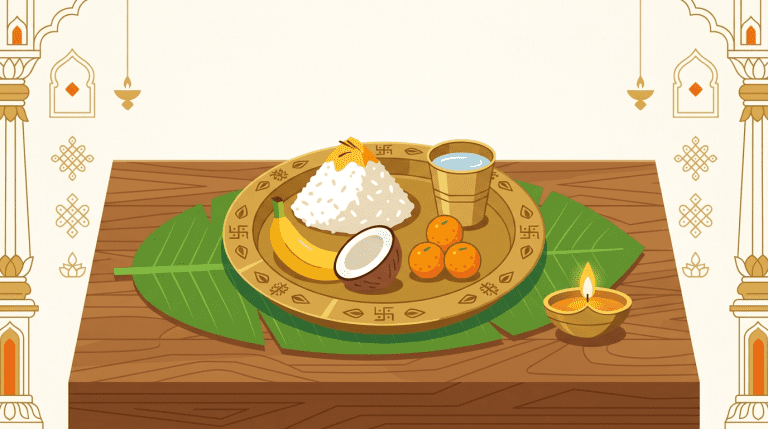
After Kumkuma Abhisheka you receive:
- Consecrated kumkuma from the abhisheka
- Mantrakshate (consecrated rice)
- Dry fruit
Applying the kumkuma prasada is a cherished way to carry the blessing of the bath into daily life. All items are first offered at the mandira under the anugraha of Sri Bhavi Sameera Vadirajaru and Sri Bhootarajaru, then sent to your address.
Related Sevas and Reading
- Book Kumkuma Abhisheka (Rs.150)
- Lakshmi Kumkumarchane
- Panchamruta Abhisheka
- Madhu (Honey) Abhisheka
- Sri Gandhalepana
- Kumkum in Hindu Worship
- What Is Abhisheka?
- Devi Mahatmya Explained
Frequently Asked Questions
Is Kumkuma Abhisheka mentioned in ancient texts?
Yes. The Skanda Purana (Dvaraka Mahatmya) directly instructs bathing the Goddess with kumkuma and kusumbha, then offering garments and flowers. The Bhavishya Purana, Bhagavata Purana, and Lalita Sahasranama (Brahmanda Purana) further establish kumkuma as sacred to Devi and as marking the Lord’s lotus feet.
Is this the same as Lakshmi Kumkumarchane?
No. Kumkumarchane offers a pinch of kumkuma with each divine name. Kumkuma Abhisheka is a full sacred bath with kumkuma as the principal substance.
What is the price of Kumkuma Abhisheka at Vadiraja Mandira?
The seva is offered for Rs.150. Prasada is included and delivered across India. Book Kumkuma Abhisheka.
Which deity receives the abhisheka?
The rite follows the Purāṇic pattern of Devi abhisheka with kumkuma, offered at Shri Ruju Yogi Vadiraja Mandira with full sankalpa. Related Lakshmi worship at the same mandira includes Lakshmi Kumkumarchane.
Can NRIs book this seva?
Yes. Complete the booking online with name and gotra. The archaka performs the seva at Chintamani; prasada is shipped to an Indian address you provide.
Does the article teach Advaita?
No. This article stays with Purāṇic ritual prescription and bhakti — the Lord and the Goddess as distinct objects of worship who receive the devotee’s service. It does not teach identity of the individual soul with Brahman.