
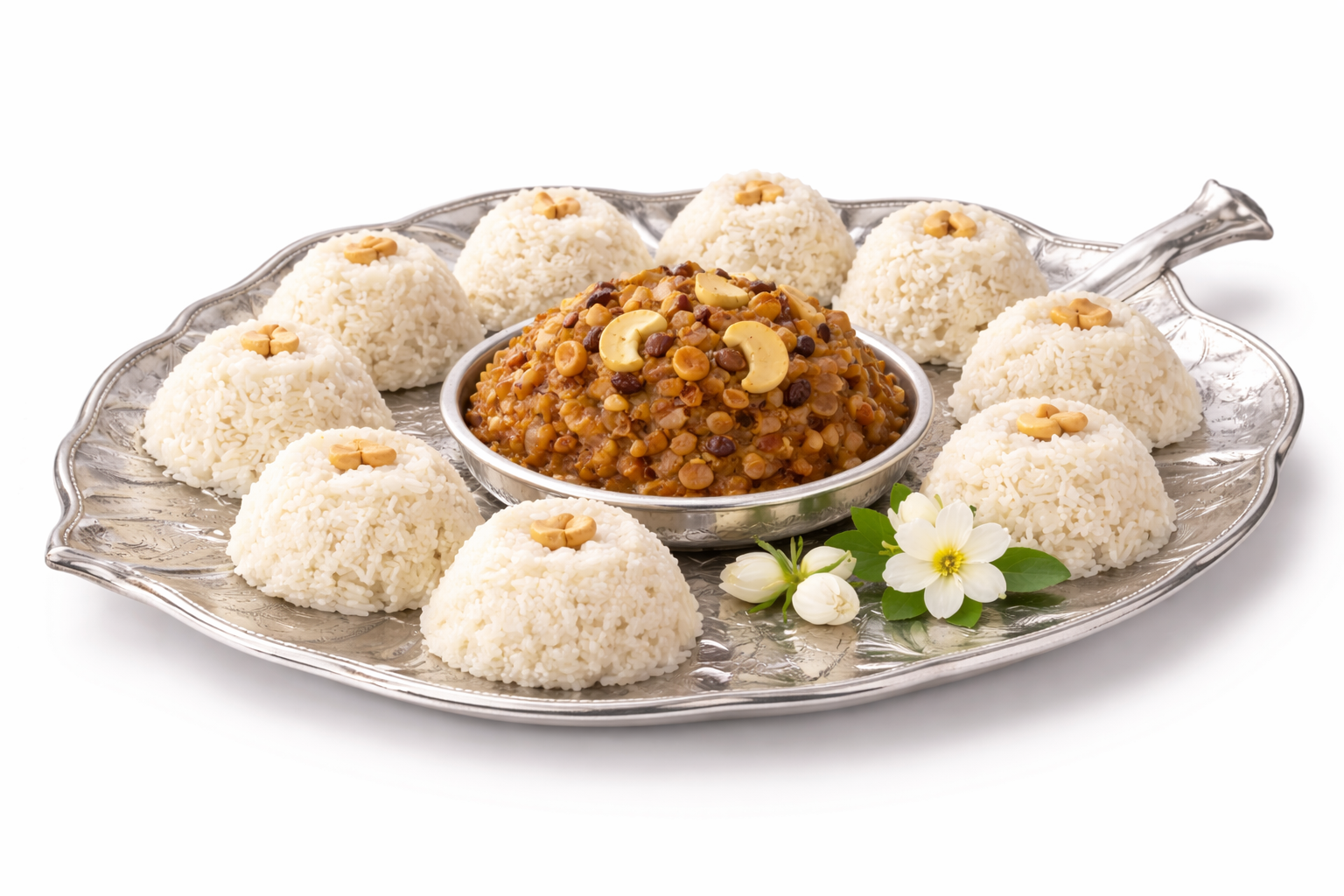
Description
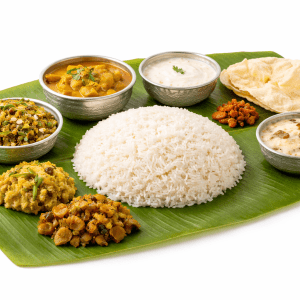
Hastodaka Seva is the revered offering of Neivedyam (sacred food) to the Mruttika Vrundavanas of great Yatis in the Madhwa Parampare. The word Hastodaka literally means “water that has touched the hand” and refers to the act of placing food before a sanyasi or yati – a tradition that extends beyond the physical lifetime of the saint through offerings at their Vrundavana (samadhi). At Shri Bhaavi Sameera Vadiraja Mandira, Chintamani, Hastodaka Seva is performed daily by qualified archakas following the Madhwa Agama.
How Hastodaka Seva Is Performed at Our Temple
The Neivedyam is prepared in the temple kitchen using sattvic ingredients. It is first offered to Sri Hayagreeva Devaru – the deity of supreme knowledge – then to Sri Ghatikachala Prana Devaru, and finally to the Pancha Mrittika Vrundavana of Sri Bhaavi Sameera Vadirajaru. This prescribed sequence ensures the offering is sanctified through the correct hierarchy of the Guru Parampara before the prasada is prepared for the devotee.
The archaka performs sankalpa in the devotee’s name and gotra, chants the appropriate mantras, and completes the offering with Mangala Aarati. The entire process upholds the standards set by Shri Madhwacharya in the Tantrasara Sangraha.
Scriptural Significance of Hastodaka
In the Madhwa tradition, Yatis who have entered Vrundavana are not considered departed – their spiritual presence continues. The Vishnu Dharmottara Purana and the teachings of Shri Vyasatirtha emphasise that Neivedyam offered at a Vrundavana reaches the saint just as surely as food offered to a living person. This makes Hastodaka Seva an act of direct service to the Guru Parampara, carrying immense spiritual merit (punya).
Shri Vadiraja Tirtha himself, in the Swapna Vrundavana Akhyana, instructed devotees to maintain Neivedyam offerings at his Vrundavana. At our temple, we honour this instruction faithfully every day.
Spiritual Benefits
Devotees book Hastodaka Seva for ancestral peace (Pitra Shanti), family welfare, removal of obstacles, and to earn the blessings of the Guru Parampara. The merit is believed to extend to the devotee’s entire lineage. It is especially recommended on Shraddha days, Ekadashi, and occasions honouring one’s ancestors.
Prasada You Receive
After the Neivedyam is offered, the sanctified prasada is reverently packed and dispatched to your address. You receive Mantrakshate (consecrated rice), Kumkuma, and Dry Fruit – all first offered to the deities and the Vrundavana of Sri Vadirajaru.
For an in-depth exploration of this tradition, read our article: What Is Hastodaka Seva? Neivedyam to Yatis at Vadiraja Mandira.
Frequently Asked Questions
What is Hastodaka Seva?
Hastodaka Seva is the offering of Neivedyam (sacred food) to the Mruttika Vrundavanas of great Yatis in the Madhwa tradition. At Shri Vadiraja Mandira, it is offered sequentially to Hayagreeva Devaru, Prana Devaru, and Sri Vadirajaru’s Pancha Vrundavana.
Why is Hastodaka considered a high form of seva?
In Madhwa philosophy, the Yati’s spiritual presence continues at the Vrundavana. Offering Neivedyam there is equivalent to serving the saint in person and carries immense merit as described in the Vishnu Dharmottara Purana and by Shri Vyasatirtha.
When is Hastodaka Seva performed?
This seva is performed daily at Shri Vadiraja Mandira. You can book online for any date. It is especially auspicious on Ekadashi, Shraddha days, and Panchami tithi.
What prasada do I receive from Hastodaka Seva?
You receive Mantrakshate (consecrated rice), Kumkuma, and Dry Fruit – all sanctified through the offering to the deities and the Vrundavana. Prasada is packed and delivered to your doorstep.
Can I book Hastodaka Seva for ancestors or Pitra Shanti?
Yes. Many devotees book this seva specifically for ancestral peace and Shraddha observances. The sankalpa is performed in your name and gotra, dedicating the merit to your lineage.
How is Hastodaka different from regular Neivedyam?
Regular Neivedyam is offered only to the deity. Hastodaka specifically includes the offering to Yati Vrundavanas – the samadhi shrines of great saints – making it a dual offering that honours both the Lord and the Guru Parampara.
Related sevas: Panchami Archana Seva | Sarva Seva (Complete Package) | Guide to Madhwa Sevas

Geetha Hegde (verified owner) –
Quick and hassle-free. Booked for my mother’s health. Temple team sent confirmation and we got the prasada. Very satisfied.
Srinivasa Rao (verified owner) –
Hastodaka is our family favourite. The sacred water offering was done as per tradition. Packaging was neat and the prasada reached safely.
Vidya Nayak (verified owner) –
Simple and meaningful seva. Received the teertha prasada within a week. Felt very peaceful booking online from Bangalore.