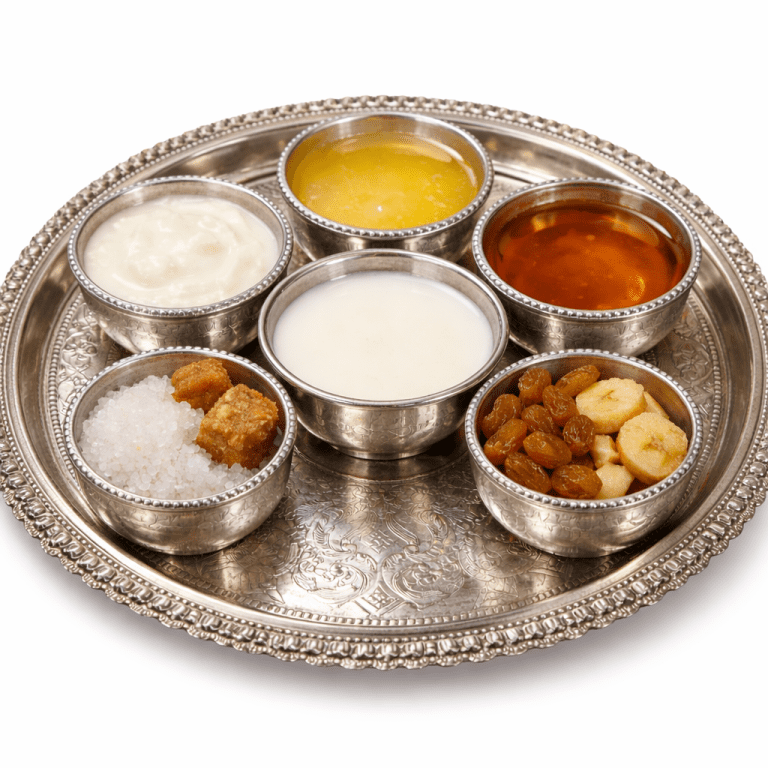
Panchamruta Abhisheka is the sacred ritual bath performed upon the deity using five nectars – milk, curd, honey, ghee, and sugar – each carrying profound symbolic significance within the Vedic tradition. At Shri Vadiraja Mandira, Chintamani, this ancient ritual is performed upon the idol of Lord Vadirajaru and…
Seva Articles - Temple Rituals, Festivals & Madhwa Philosophy
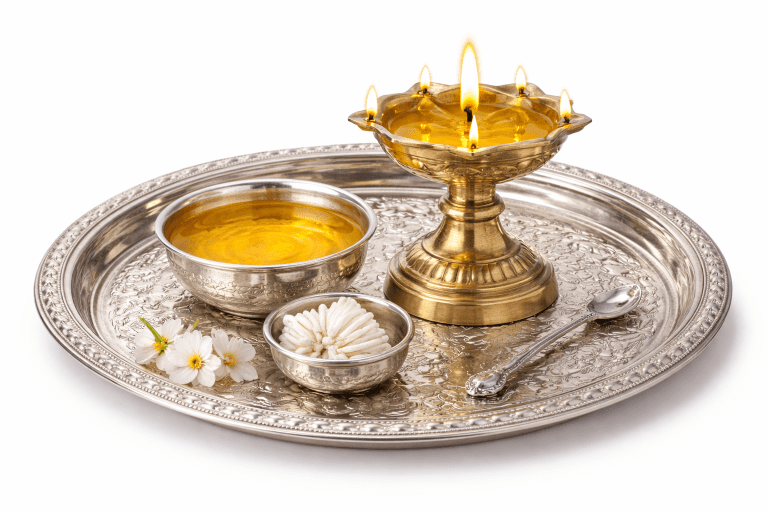
Among all forms of lamp worship prescribed in the Vedic tradition, the Ghruta Nanda Deepa Seva – a lamp burning continuously with pure cow’s ghee – holds the highest position in terms of spiritual potency. At Shri Vadiraja Mandira, Chintamani, this seva involves a consecrated ghee lamp burning…
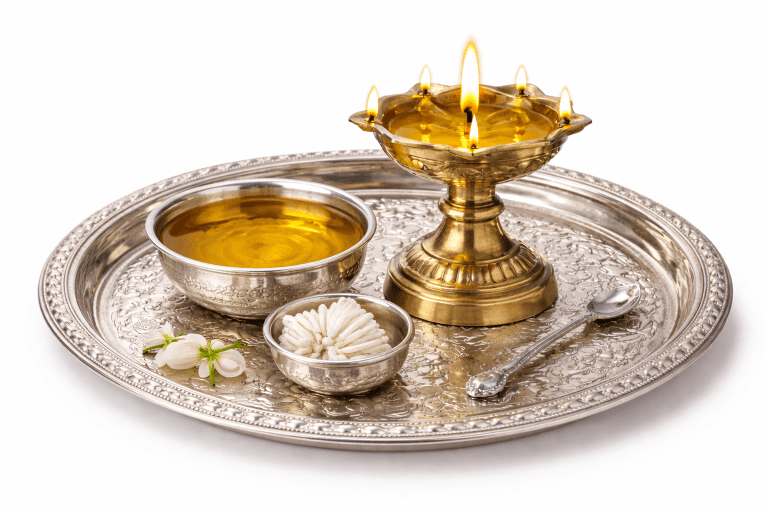
In Hindu temple worship, the lamp is more than a source of light – it is a living symbol of divine presence, spiritual knowledge, and the dispelling of the darkness of ignorance. The Taila Nanda Deepa Seva at Shri Vadiraja Mandira, Chintamani is a thirty-day continuous lamp offering…
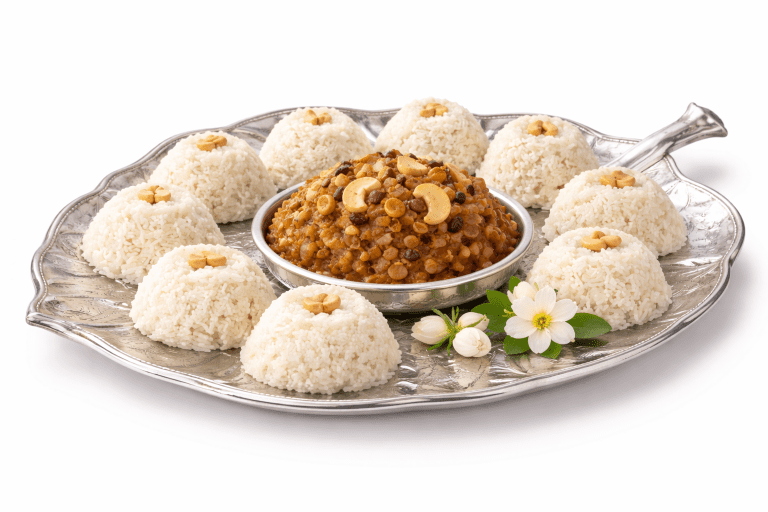
Hastodaka Seva is one of the most profound and spiritually meaningful offerings observed at Shri Vadiraja Mandira, Chintamani. The word “Hastodaka” is derived from Sanskrit – hasta meaning hand and udaka meaning water – yet its significance goes far beyond a simple water offering. In the Madhwa Vaishnava…
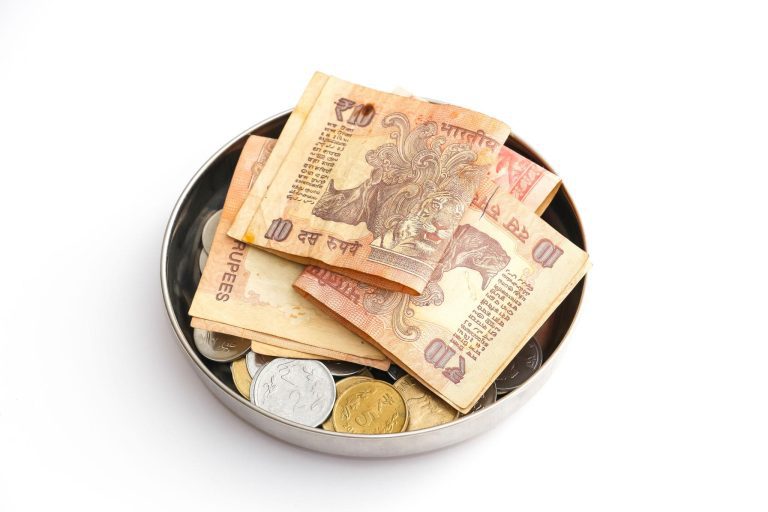
Kanike – the voluntary offering of one’s resources to the temple – is one of the most fundamental and spiritually significant acts in the life of a devoted Hindu. At Shri Vadiraja Mandira, Chintamani, Kanike is the primary channel through which devotees express their gratitude to God, their…