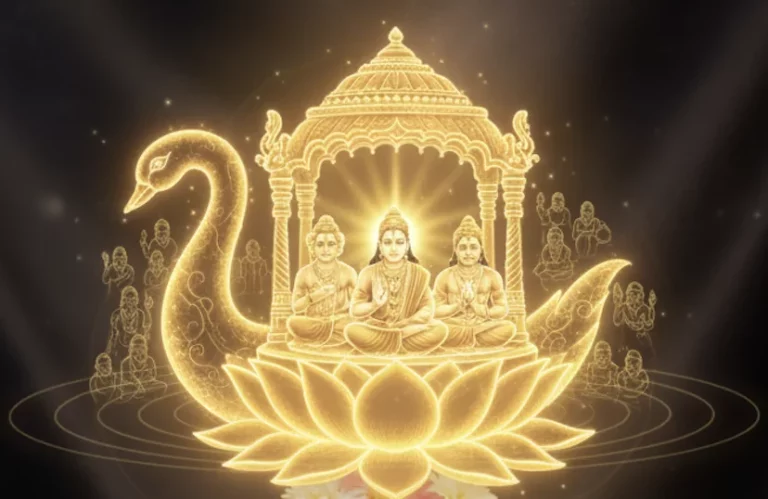

Sri Vadiraja Tirtharu is adored in the Madhwa sampradaya as a brilliant acharya, a powerful defender of siddhanta, a great devotee of Sri Hari, and a radiant saint whose life continues to inspire seekers even today. Yet, among the many glories associated with him, one subject stands apart for its theological depth and devotional importance: his rujutva.
For devotees, this is not just a matter of praise. It is a sacred understanding preserved through traditional references, puranic support, and later sampradaya-based glorification. The traditional sources present Sri Vadirajaru as an exalted being associated with Laatavya, and through that lens, revered as Sri Bhaavi Sameera.
This article brings those references together in a clearer, reader-friendly format for Ruju Yogi readers – retaining the verses, preserving the traditional meanings, and explaining why these citations matter to devotees who wish to understand the spiritual stature of Sri Vadirajaru more deeply. For context on his life, see Life and Teachings of Sri Vadiraja Tirtha; visit Shri Bhaavi Sameera Vadiraja Mandira, Chintamani and explore Madhwa sevas offered there.
Rujutva of Sri Vadirajaru
Scriptural foundations of Sri Bhaavi Sameera
Why the rujutva of Sri Vadirajaru matters
In spiritual traditions, titles are not given casually. When a saint is remembered in a particular way by scripture, parampara, and acharyas, devotees naturally seek to understand the basis for that reverence. The question here is simple but profound: why is Sri Vadirajaru remembered as an exalted being connected with Ruju-gana and Bhaavi Sameera?
The source tradition answers that question by presenting a chain of pramanas – not from one isolated text, but from multiple traditional sources – and by showing how those references are understood within the Madhwa lineage.
Sri Vadirajaru as an avatara of Sri Laatavya
The foundation of this traditional understanding begins with the identification of Sri Vadirajaru with Sri Laatavya. The source text first introduces this through a reference from Vyoma Samhita and then supports it further through citations from Brahma Vaivarta, Padma, Vaamana, and Skanda Puranas.
From Vyoma Samhita
| Language | Text |
|---|---|
| English transliteration | Sanjarbhuraana sooktena laatavyo hi sureshwaraha geeyate rujugaathosau vaadiraajo mahaan yatihi || |
| Sanskrit (Devanagari) | सञ्जर्भुराण सूक्तेन लातव्यो हि सुरेश्वरः । गीयते रुजुगाथोऽसौ वादिराजो महान् यतिः ॥ |
| Kannada | ಸಂಜರ್ಭುರಾಣ ಸೂಕ್ತೇನ ಲಾತವ್ಯೋ ಹಿ ಸುರೇಶ್ವರಃ । ಗೀಯತೇ ರುಜುಗಾಥೋಽಸೌ ವಾದಿರಾಜೋ ಮಹಾನ್ ಯತಿಃ ॥ |
Meaning The source explains that the moola-rupa of Laatavya exists beyond the Brahmanda in constant meditation on Narayana. It further says that his first rupa is present in Satyaloka, where he functions as acharya even to great devatas such as Garuda, Shesha, Rudra, and Indra. In that understanding, Laatavya possesses exalted spiritual knowledge and is spoken of across several sacred sources. This opening reference sets the stage for seeing Sri Vadirajaru not merely as a historical saint, but as a manifestation of a divinely elevated being.
The Brahma Vaivarta Puraana reference: service, victory, and establishment of siddhanta
The next pramana shifts from identity to mission. It portrays Sri Vadirajaru as one immersed in the service of Vedavyasa, one who overcomes false doctrines, and one who establishes the true teaching for the welfare of the world. That makes this reference especially meaningful to devotees who know Sri Vadirajaru not only as a saint, but also as a protector of Tattvavada.
From Brahma Vaivarta Puraanam
| Language | Text |
|---|---|
| English transliteration | Vyasa sevaarato nityam vaadiraajo rujur yatihi durvaadaan parimathyashu matpadam yaatumarhati sthaapayishyati machaashtram tena bhaveeddivaha |
| Sanskrit (Devanagari) | व्याससेवारतो नित्यं वादिराजो रुजुर्यतिः । दुर्वादान् परिमथ्याशु मत्पदं यातुमर्हति । स्थापयिष्यति मचास्त्रं तेन भवेद्दिवः ॥ |
| Kannada | ವ್ಯಾಸಸೇವಾರತೋ ನಿತ್ಯಂ ವಾದಿರಾಜೋ ರುಜುರ್ಯತಿಃ । ದುರ್ವಾದಾನ್ ಪರಿಮಥ್ಯಾಶು ಮತ್ಪದಂ ಯಾತುಮರ್ಹತಿ । ಸ್ಥಾಪಯಿಷ್ಯತಿ ಮಚಾಸ್ತ್ರಂ ತೇನ ಭವೇದ್ದಿವಃ ॥ |
Meaning The source gives the sense that Vaadiraja Teertha, as one belonging to Ruju-gana, remains ever engaged in the service of Vedavyasa. He is described as one who will crush wrong philosophies, establish Madhwa siddhanta firmly, and bring welfare to all. The thrust of this citation is clear: Sri Vadirajaru’s life-work is not accidental; it is divinely aligned, purposeful, and spiritually exalted.
The Padma Puraana reference: divine souls in the Madhwa lineage
This reference widens the picture. It places Sri Vadirajaru within the sacred stream of incarnations connected to Madhwa and Vayu. The source explains that when Vayu incarnates as Madhwa, other divine beings also take birth in that lineage for the safeguarding and expansion of the siddhanta. Sri Vadirajaru is presented as one such exalted presence.
From Padma Puraanam
| Language | Text |
|---|---|
| English transliteration | tam madhwam maarutam sarve parivaarataya sadaa samsevitum suraa bhoomavavateerna iti shrutam te tu tachhishyataamaapya tanmantam tu vyaghoshanam yeshu mukhyau vishnuteertha padmanaabhaakhya yoginau antakdehastatraaghyastamantam vartaishyati tatpoorvamasya vamshe tu rujustho hu sureshwaraha vaadiraajo yatirbhootwa chaitadwistaaraishyati |
| Sanskrit (Devanagari) | तं मध्वं मारुतं सर्वे परिवारतया सदा । संसेवितुं सुरा भूमाववतीर्णा इति श्रुतम् । ते तु तच्छिष्यतामाप्य तन्मन्तं तु व्यघोषणम् । येषु मुख्यौ विष्णुतीर्थ पद्मनाभाख्य योगिनौ । अन्तक्देहस्तत्राघ्यस्तमन्तं वर्तयिष्यति । तत्पूर्वमस्य वंशे तु रुजुस्थो हु सुरेश्वरः । वादिराजो यतिर् भूत्वा चैतद्विस्तारयिष्यति ॥ |
| Kannada | ತಂ ಮಧ್ವಂ ಮಾರುತಂ ಸರ್ವೇ ಕುಟುಂಬಾರತಯಾ ಸದಾ । ಸಂಸೇವಿತುಂ ಸುರಾ ಭೂಮಾವವತೀರ್ಣಾ ಇತಿ ಶ್ರುತಮ್ । ತೇ ತು ತಚ್ಚಿಷ್ಯತಾಮಾಪ್ಯ ತನ್ಮಂತಂ ತು ವ್ಯಘೋಷಣಮ್ । ಯೇಷು ಮುಖ್ಯೌ ವಿಷ್ಣುತೀರ್ಥ ಪದ್ಮನಾಭಾಖ್ಯ ಯೋಗಿನೌ । ಅಂತಕ್ದೇಹಸ್ತತ್ರಾಘ್ಯಸ್ತಮಂತಂ ವರ್ತಯಿಷ್ಯತಿ । ತತ್ಪೂರ್ವಮಸ್ಯ ವಂಶೇ ತು ರುಜುಸ್ಥೋ ಹು ಸುರೇಶ್ವರಃ । ವಾದಿರಾಜೋ ಯತಿರ್ ಭೂತ್ವಾ ಚೈತದ್ವಿಸ್ತಾರಯಿಷ್ಯತಿ ॥ |
Meaning The source explains this verse as saying that when Vayu incarnates as Madhwa, devas too descend in his lineage to uphold and protect the philosophy he teaches. Among the most important in that lineage are Vishnu Teertha and Padmanabha Teertha. It further explains that Vishnu Teertha continues his tapas without relinquishing his body and rejuvenates Madhwa mata, and that Rujudevata Sureshwara – identified there with Laatavya – is born in that lineage as Vaadiraja Yati to spread the philosophy further.
Why is Sri Vadirajaru called “Sureshwara” here?
The source itself anticipates a reader’s doubt: if the Padma Puraana verse uses the word Sureshwara, how is that applied to Sri Vadirajaru? It answers that question through another traditional citation and a short explanatory note.
Sattattwa Vachanam
| Language | Text |
|---|---|
| English transliteration | Manyurindro manuhu somo bhaavi-madhwaha sureshwaraha laatavyo vaadiraajosau kuvidangashrutho shrutaha |
| Sanskrit (Devanagari) | मन्युरिन्द्रो मनुः सोमो भावि-मध्वः सुरेश्वरः । लातव्यो वादिराजोऽसौ कुविदाङ्गश्रुतः श्रुतः ॥ |
| Kannada | ಮನ್ಯುರಿಂದ್ರೋ ಮನುಃ ಸೋಮೋ ಭಾವಿ-ಮಧ್ವಃ ಸುರೇಶ್ವರಃ । ಲಾತವ್ಯೋ ವಾದಿರಾಜೋಽಸೌ ಕುವಿದಾಂಗಶ್ರುತಃ ಶ್ರುತಃ ॥ |
Meaning The source article explains that Manyu, Indra, Manu, Soma, Bhaavi Madhwa, and Sureshwara are all names associated with Laatavya, who is identified here with Vaadiraja Teertharu and described as Kuvidanga Shruta.
Explanation from the source tradition
The accompanying explanation in the source says:
- Manyu, Manu, and Soma are names of Laatavya.
- He is also called Indra because he is a Ruju and a leader among the devatas, and is further connected with a future Indra-padavi under the name Rochaka.
- Since he is Laatavya, he is also called Bhaavi Madhwa.
- The title Kuvidanga Shruta is linked in the source to a Rigvedic mantra and is understood as indicating one who is mentioned or praised there.
This clarification is important because it shows that the use of the word Sureshwara is not casual or vague. It is part of a larger traditional naming framework used to explain Sri Vadirajaru’s exalted identity.
The Vaamana Puraana reference: birth in Bharata for the protection of dharma
The Vaamana Puraana passage adds another layer. Here, the emphasis falls on divine descent for dharma-rakshana. The source text interprets the verse as teaching that great souls take birth in Bharata for a purpose, and that Sri Vadirajaru’s role belongs within that sacred mission.
From Vaamana Puraanam
| Language | Text |
|---|---|
| English transliteration | Aparoksha Visheshana samyutam brahmapoorvakaaha kalkyantaa Rujawaha proktaa Praarabdhaphala bhoghinaha BrahmaNo na avataarosti shatamadhye Paraajhaya vaayu maaraabhya kalkyantaa jani-mantrotra Bhaarate hanumd-bheema-madhwaakhya-roopo vaayurbhavishyati swayamvarasamudhyoge rukminee-patra maadaraat krushnaayaadaad gruheetvayo hyantaha puragato dwijaha sarvaaddastadaivaayam Rujur-laatavya naamakaha vaayu-sthaana samaaroha yogyoyam yatiroopavaan aakaalpam braahmaNaha Krushnaprasaadasyaikabhaajanam krushnaarchako yatirbhootvaa Vaadiraajo vadishyati Shri Ruknineeshavijayam kalau KrushNaprasaadabhaak |
| Sanskrit (Devanagari) | अपरोक्ष विशेषण संयुक्तं ब्रह्मपूर्वकाः । कल्क्यन्ता रुजवाह प्रोक्ता प्रारब्धफल भोगिनः । ब्रह्मणो न अवतारोऽस्ति शतमध्ये पराज्हय । वायु माराभ्य कल्क्यन्ता जनि-मन्त्रोत्र भारते । हनुमद्-भीम-मध्वाख्य-रूपो वायुर्भविष्यति । स्वयंवरसमुध्योगे रुक्मिणी-पत्र मादरात् । कृष्णायादाद् गृहीत्वयो ह्यन्तः पुरगतो द्विजः । सर्वाद्दस्तदैवायं रुजुर्-लातव्य नामकः । वायु-स्थान समारोह योग्यॊऽयं यतिरूपवान् । आकल्पं ब्राह्मणः कृष्णप्रसादस्यैकभाजनम् । कृष्णार्चको यतिर् भूत्वा वादिराजो वदिष्यति । श्री रुक्नीनेशविजयं कलौ कृष्णप्रसादभाक् ॥ |
| Kannada | ಅಪರೋಕ್ಷ ವಿಶೇಷಣ ಸಂಯುಕ್ತಂ ಬ್ರಹ್ಮಪೂರ್ವಕಾಃ । ಕಲ್ಕ್ಯಾಂತಾ ರುಜವಾಹ ಪ್ರೋಕ್ತಾ ಪ್ರಾರಬ್ಧಫಲ ಭೋಗಿನಃ । ಬ್ರಹ್ಮಣೋ ನ ಅವತಾರೋಽಸ್ತಿ ಶತಮಧ್ಯೇ ಪರಾಜ್ಹಯ । ವಾಯು ಮಾರಾಭ್ಯ ಕಲ್ಕ್ಯಾಂತಾ ಜನಿ-ಮಂತ್ರೋತ್ರ ಭಾರತೇ । ಹನುಮದ್-ಭೀಮ-ಮಧ್ವಾಖ್ಯ-ರೂಪೋ ವಾಯುರ್ಭವಿಷ್ಯತಿ । ಸ್ವಯಂವರಸಮುದ್ಧ್ಯೋಗೇ ರುಕ್ಮಿಣೀ-ಪತ್ರ ಮಾದರಾತ್ । ಕೃಷ್ಣಾಯಾದಾದ್ ಗೃಹೀತ್ವಯೋ ಹ್ಯಂತಃ ಪುರಗತೋ ದ್ವಿಜಃ । ಸರ್ವಾದ್ದಸ್ತದೈವಾಯಂ ರುಜುರ್-ಲಾತವ್ಯ ನಾಮಕಃ । ವಾಯು-ಸ್ಥಾನ ಸಮಾರೋಹ ಯೋಗ್ಯೋಽಯಂ ಯತಿರೂಪವಾನ್ । ಆಕಲ್ಪಂ ಬ್ರಾಹ್ಮಣಃ ಕೃಷ್ಣಪ್ರಸಾದಸ್ಯೈಕಭಾಜನಮ್ । ಕೃಷ್ಣಾರ್ಚಕೋ ಯತಿರ್ ಭೂತ್ವಾ ವಾದಿರಾಜೋ ವದಿಷ್ಯತಿ । ಶ್ರೀ ರುಕ್ಣೀನೀಶವಿಜಯಂ ಕಲೌ ಕೃಷ್ಣಪ್ರಸಾದಭಾಕ್ ॥ |
Meaning The source article explains this passage as saying that, except for Brahma, the rujus take birth in Bharata to uphold dharma. Vayu appears in forms such as Hanuma, Bheema, and Madhwa. In that divine current comes the avatara of Laatavya, who in a prior birth served as the messenger carrying Rukmini’s message, and who later incarnates as Vaadiraja Yati and composes Rukmineesha Vijaya.
The Skanda Puraana reference: repeated descent and future manifestation
The Skanda Puraana citation reinforces continuity. The source explains Laatavya as one who incarnates repeatedly, in relation to Vayu’s divine work, and later appears as Sri Vadiraja. The cumulative effect is significant: the article is not making one isolated claim, but building a layered scriptural case.
From Skanda Puraanam
| Language | Text |
|---|---|
| English transliteration | Laatavyasya rujostasya kluptam pratiyugeyuge vaayo: praveshaparyantamatra stithvaatha gachati idam shareeram sampraapya laatavyo vaayutaamiyaat tataha kaalaantare sopi vaadiraajo bhavishyati |
| Sanskrit (Devanagari) | लातव्यस्य रुजोस्तस्य क्लुप्तं प्रतियुगेयुगे । वायोः प्रवेशपर्यन्तमत्र स्थित्वाऽथ गच्छति । इदं शरीरं सम्प्राप्य लातव्यो वायुतामियात् । ततः कालान्तरे सोऽपि वादिराजो भविष्यति ॥ |
| Kannada | ಲಾತವ್ಯಸ್ಯ ರುಜೋಸ್ತಸ್ಯ ಕ್ಲುಪ್ತಂ ಪ್ರತಿಯುಗೇಯುಗೇ । ವಾಯೋಃ ಪ್ರವೇಶಪರ್ಯಂತಮತ್ರ ಸ್ಥಿತ್ವಾಽಥ ಗಚ್ಛತಿ । ಇದಂ ಶರೀರಂ ಸಂಪ್ರಾಪ್ಯ ಲಾತವ್ಯೋ ವಾಯುತಾಮಿಯಾತ್ । ತತಃ ಕಾಲಾಂತರೇ ಸೋಽಪಿ ವಾದಿರಾಜೋ ಭವಿಷ್ಯತಿ ॥ |
Meaning The source gives the meaning that Laatavya incarnates in every yuga just as Vayu does, entering and departing from a body along with Vayu. It concludes that this very Laatavya later incarnates as Sri Vadiraja.
What the combined pramanas establish
The source text itself draws the conclusion that the pramanas from Padma, Vaamana, and Skanda Puranas together establish the rujutva of Vaadirajaru. Read as a whole, the presentation moves through a clear progression:
- Sri Vadirajaru is identified with Laatavya.
- Laatavya is described as a being of extraordinary spiritual status.
- He is linked with names such as Sureshwara and Bhaavi Madhwa.
- He descends within the Madhwa lineage for the spread and protection of siddhanta.
- He appears as Vaadiraja Yati and carries out that divine mission.
This is why devotees do not view the subject of rujutva as a decorative honorific. They see it as part of the sacred memory of the sampradaya.
Support from later acharyas in the guru-parampara
The source article does not stop with the puranic references. It also notes that Sri Sudheendra Teertharu, the guru of Sri Raghavendra Swamy, composed a stotra on Vaadirajaru affirming his greatness as guru of gurus and devatas and describing him as a Ruju. It further mentions that Sri Satyadharma Teertharu of Uttaradi Mutt also praised Vaadirajaru and referred to him as “Asama Sama.” The source then links the word “Asama” with Vayu and additionally notes that Sanjarbhuraana Sookta of Rigveda establishes the avatara of Laatavya as Vaadirajaru, just as Balitha Sookta is associated with the avatara of Vayu as Maadhwacharya.
These later references matter because they show that reverence for Sri Vadirajaru’s exalted status continued within the living tradition of acharyas, not only in the ancient citations.
What this means for devotees today
For a reader on Ruju Yogi, the value of this topic is not merely historical or argumentative. It is devotional. When devotees hear Sri Vadirajaru addressed as Sri Bhaavi Sameera, they are not only hearing a title – they are entering a sacred remembrance preserved by scripture, parampara, and bhakti.
To meditate on his rujutva is to see Sri Vadirajaru not only as a master of learning, but as a divinely empowered guide whose life, teachings, and grace belong to a much larger spiritual purpose. It deepens one’s reverence for guru, strengthens confidence in the Madhwa lineage, and inspires a more heartfelt connection to Hari-Vayu-Guru tattva. This devotional significance is the real reason the subject continues to matter.
Conclusion
Sri Vadiraja Tirtharu shines in the Madhwa tradition as a saint of rare brilliance, devotion, and divine purpose. The references presented in the source text – from Vyoma Samhita, Brahma Vaivarta Puraana, Padma Puraana, Sattattwa Vachanam, Vaamana Puraana, and Skanda Puraana – are cherished by devotees because they collectively illuminate his exalted spiritual identity and his connection with Laatavya and Sri Bhaavi Sameera.
For devotees, this understanding is not merely theological. It is a source of faith, reverence, and spiritual joy. May Sri Bhaavi Sameera Vadirajaru bless all with jnana, bhakti, vairagya, and unwavering devotion to Sri Hari.
॥ श्रीकृष्णार्पणमस्तु ॥
॥ ಶ್ರೀಕೃಷ್ಣಾರ್ಪಣಮಸ್ತು ॥
Frequently asked questions
What does “rujutva” mean in relation to Sri Vadirajaru?
In this traditional context, rujutva refers to the exalted spiritual status associated with Sri Vadirajaru through scriptural and parampara-based references. The source article presents it through multiple pramanas that connect him with Laatavya and Ruju-gana.
Why is Sri Vadirajaru called Sri Bhaavi Sameera?
He is revered in that way because the traditional references cited in the source connect him with a divinely exalted identity associated with Laatavya, future spiritual greatness, and the sacred current of Vayu-related service to dharma and siddhanta.
Why is the word “Sureshwara” used in the Padma Puraana reference?
The source itself raises this doubt and answers it through Sattattwa Vachanam, where Sureshwara is listed among the names associated with Laatavya, identified there with Vaadiraja Teertharu.
What does the Vaamana Puraana reference say about Sri Vadirajaru?
According to the source explanation, it says that rujus are born in Bharata to protect dharma, that Vayu appears as Hanuma, Bheema, and Madhwa, and that Laatavya later incarnates as Vaadiraja Yati and composes Rukmineesha Vijaya.
What does the Skanda Puraana reference convey?
The source explains it as saying that Laatavya incarnates in every yuga like Vayu, enters and departs from a body along with Vayu, and later appears as Sri Vadiraja.
Why are these references important to devotees?
They are important because they show that Sri Vadirajaru’s greatness is remembered not only through devotional affection, but also through sacred and sampradaya-based references that support his exalted status.
Is this article suitable for the Ruju Yogi seva articles section?
Yes. This version is structured for website readers: it preserves the verses, explains the meanings clearly, and presents the doctrine in a devotional and accessible format appropriate for a spiritual article page.