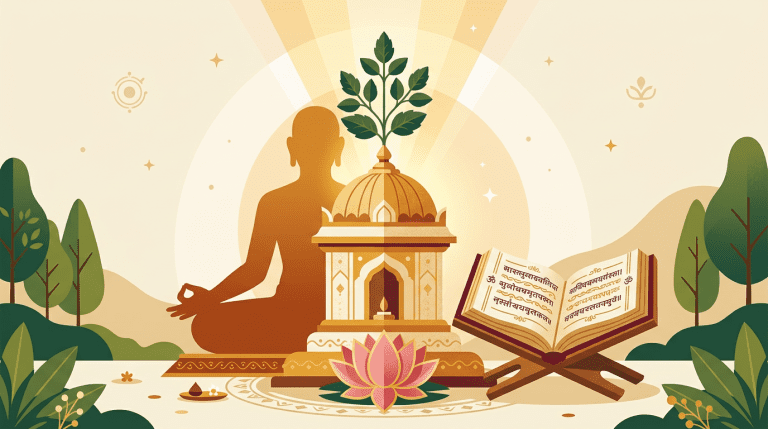
Shri Vadiraja Tirtha (c. 1480–1600 CE) stands as one of the most luminous figures in the Madhwa Vaishnava tradition – a saint who combined towering philosophical scholarship, exquisite poetic genius, and an intimate personal relationship with the Divine that lasted an astonishing 120 years. As the Pontiff of…
Seva Articles - Temple Rituals, Festivals & Madhwa Philosophy

In the Madhwa tradition, Taratamya (Sanskrit: tara-tamya, meaning “gradation” or “hierarchy”) is the doctrine that all beings – from the highest devata to the smallest creature – exist in a divinely ordained hierarchy of spiritual capacity, authority, and proximity to the Supreme Lord. This is not an arbitrary…

One of the most distinctive and profound contributions of Shri Madhwacharya to Vedic philosophy is the doctrine of Panchabheda – the five-fold eternal difference. While Tattvavada (Dvaita Vedanta) affirms three categories of reality – Ishwara (God), Jiva (soul), and Jada (matter) – Panchabheda defines the precise relationships between…
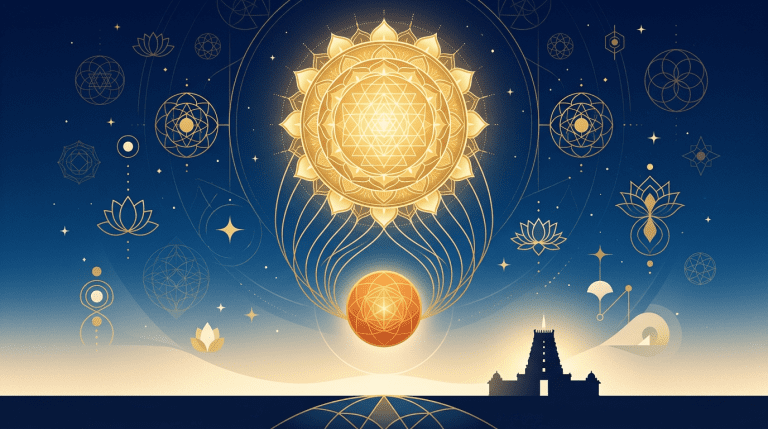
Dvaita Vedanta – more accurately called Tattvavada (the philosophy of reality) – is the correct understanding of the Vedas as established by Shri Madhwacharya (1238–1317 CE), also known as Ananda Tirtha and Purnaprajna. Born in the village of Pajaka near Udupi in coastal Karnataka, Madhwacharya is revered in…
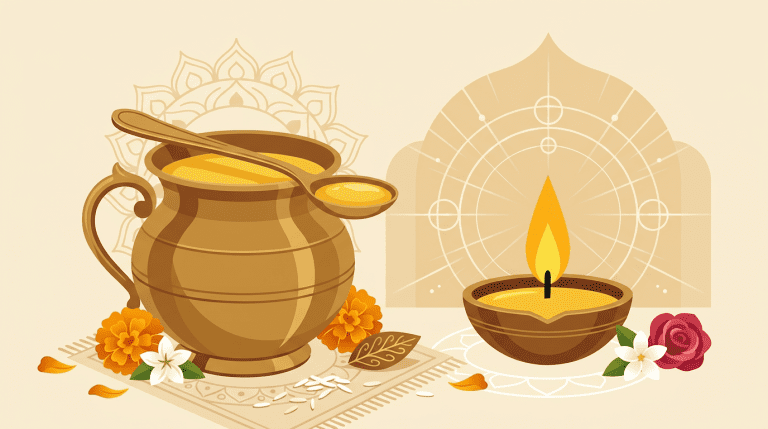
Ghee-ghruta in Sanskrit-is the golden, clarified essence of cow’s milk butter. In Hindu worship, ghee occupies a position of unrivalled sanctity. From the Vedic yajna (fire ritual) to the humble household lamp, from the grand temple abhisheka to the daily Naivedya, ghee is the thread that runs through…
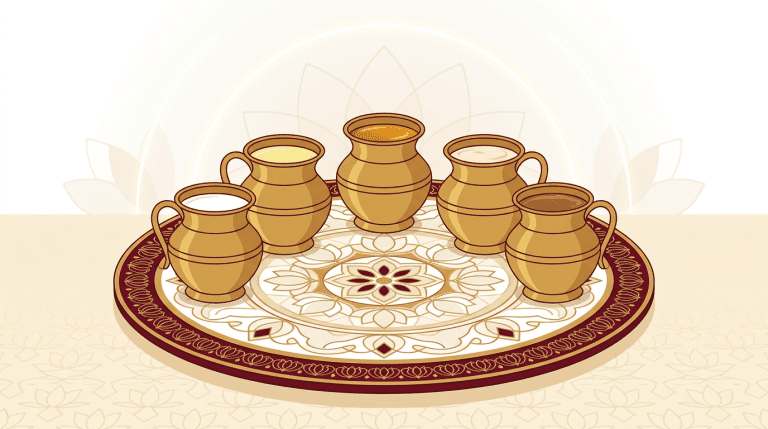
Panchamruta-literally “five nectars” (pancha = five, amruta = nectar)-is one of the most sacred substances in Hindu worship. Composed of five pure ingredients-milk, curd, ghee, honey, and sugar-Panchamruta is used to bathe the deity in a ritual known as Panchamruta Abhisheka. This ancient practice, rooted in Vedic and…

Sandalwood-known as Chandana in Sanskrit-has been revered in Hindu worship for millennia. Its cooling fragrance, its capacity to purify the mind and body, and its intimate association with temple rituals make it one of the most treasured sacred substances in Vaishnavism. From the Vedic yajna shala to the…
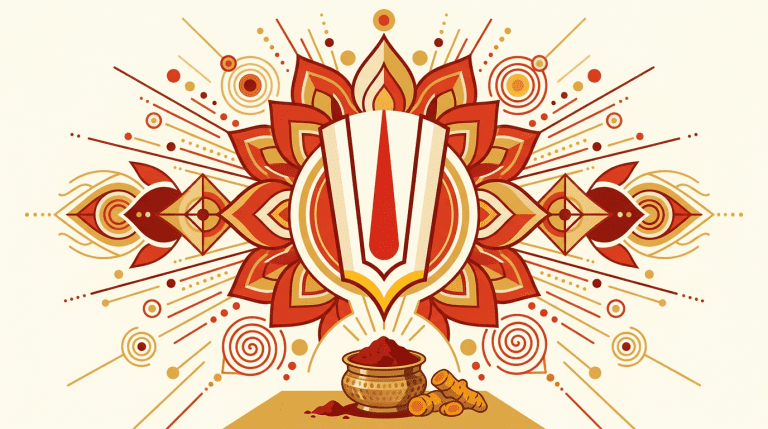
Kumkum-the vibrant red powder derived from turmeric-is one of the most recognisable elements of Hindu worship. From the auspicious mark on a devotee’s forehead to the elaborate kumkumarchane offered at temple sanctums, this sacred substance carries deep theological meaning. In the Madhwa sampradaya, kumkum is not merely a…
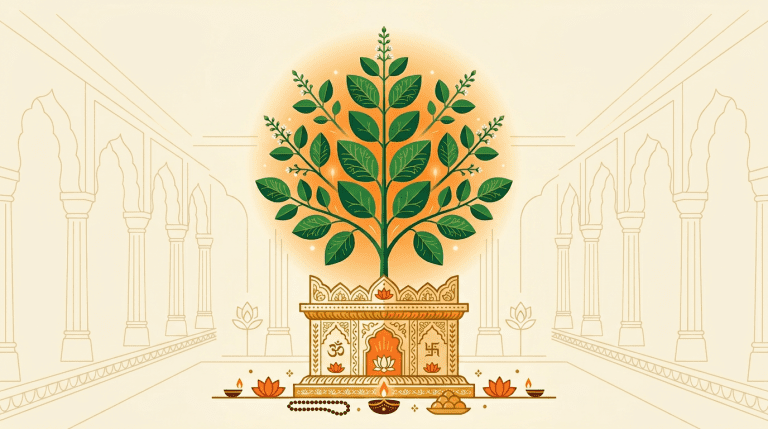
In the Vaishnava tradition, few sacred elements hold the exalted status that Tulasi (holy basil, Ocimum tenuiflorum) commands. Revered as the physical manifestation of Vrinda Devi, a beloved devotee and consort of Lord Vishnu, Tulasi occupies a singular place in daily worship, temple rituals, and household devotion. No…