Daily home worship — Devara Pooja — is the spiritual backbone of every Madhwa Vaishnava household. Shri Madhwacharya established a comprehensive daily ritual framework that has been practised unbroken for nearly eight centuries. Unlike occasional temple visits or festival celebrations, Devara Pooja is a daily obligation — the Shastras prescribe it as a fundamental duty (nitya karma) for every Madhwa grihastha (householder). Missing it without valid reason is considered a transgression. Yet for beginners and those returning to the practice after a gap, the perceived complexity of the ritual can feel overwhelming.
This guide breaks down the Madhwa daily pooja into clear, actionable steps — from setting up your pooja room to performing the full ritual sequence. Whether you are a young professional establishing your first independent household or a family seeking to restore a lapsed practice, this guide will help you begin with confidence.
Setting Up the Pooja Room (Devara Mane)
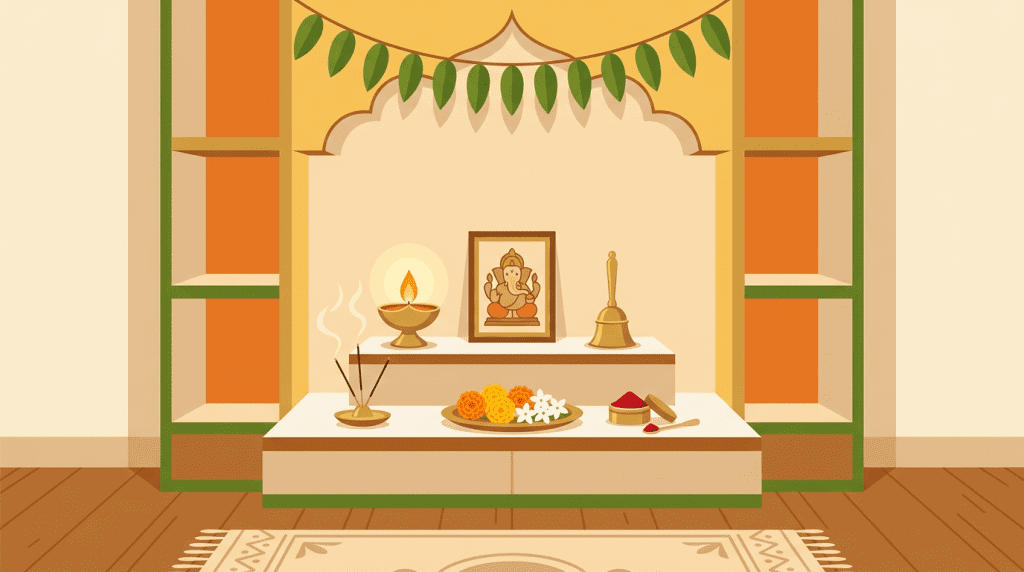
The pooja room — called Devara Mane (God’s room) in Kannada or Devara Kota — is ideally a dedicated room or alcove in the northeast or east direction of the home. If a separate room is unavailable, a clean shelf or cabinet in a quiet corner serves the purpose. The essential requirement is cleanliness, quietude, and exclusive use for worship — the space should not double as storage or general living area.
Essential items for the Madhwa pooja room:
- Devara Peetha (deity platform): A raised wooden or metal platform on which the deities are placed. Traditionally made of sandalwood or teak, though any clean wood works. The platform should be large enough to hold all your deities, lamps, and offering vessels.
- Deities: In the Madhwa tradition, the primary deity is a Shaligrama (sacred ammonite stone representing Lord Vishnu) if available, or a metal/marble murti (idol) of Lord Krishna, Vishnu, or Rama. Alongside the main deity, images or murtis of Lakshmi Devi, Pranadevaru (Hanuman/Vayu), and the family’s Kula Devata (clan deity) are placed. A framed image of the Madhwa parampara (Madhwacharya, Jayatirtha, Vyasatirtha, Vadiraja Tirtha, Raghavendra Swami) is also kept.
- Bell (Ghanta): A brass bell rung during aarti and at key moments of the pooja. The sound of the bell is said to invoke the presence of the deities and dispel negative energies.
- Lamp (Deepa): A brass or copper oil lamp for Mangalarathi. Ghee lamps are preferred for daily pooja; sesame oil lamps are used on specific occasions.
- Tulasi plant: Fresh Tulasi leaves are indispensable in Madhwa worship. If growing Tulasi at home, keep a Tulasi Brindavana near the pooja room or balcony.
- Gandha (sandalwood paste), Kumkum, Akshata (turmeric-coloured rice), and flowers: Used for decoration and offering to the deity.
- Naivedya vessels: Small plates and cups for offering food to the deity.
- Pancha Patra and Uddarane: A small vessel (pancha patra) and spoon (uddarane) for offering water and Tirtha during the pooja.
The Madhwa Daily Ritual Sequence
The Madhwa daily routine is structured around three anchoring rituals performed at specific times. Understanding this sequence is essential before learning the individual pooja steps.
- Pratar Sandhyavandana (Morning Twilight Worship): Performed at Brahma Muhurta or immediately upon waking, before sunrise. This involves Achamana (ritual sipping of water), Pranayama (breath regulation), Gayatri Japa (chanting the Gayatri Mantra), and Surya Arghya (water offering to the Sun). Sandhyavandana is the first duty of the day — it precedes Devara Pooja.
- Devara Pooja (Deity Worship): Performed after Sandhyavandana. This is the main worship of the household deity, involving abhisheka (bathing the deity), alankara (decoration), Naivedya (food offering), and Mangalarathi (lamp waving).
- Madhyahna Sandhyavandana (Noon Twilight Worship): Performed around noon, a shorter version of the morning Sandhyavandana.
- Sayam Sandhyavandana (Evening Twilight Worship): Performed at sunset. The evening lamp is lit during this time.
For beginners, the immediate goal is to establish Pratar Sandhyavandana and Devara Pooja as daily habits. The noon and evening Sandhyavandana can be added as the practice stabilises.
Step-by-Step Devara Pooja for Beginners
The following is a simplified yet shastric Devara Pooja sequence suitable for beginners. As comfort and knowledge grow, additional elements can be incorporated.
- Achamana: Sip water three times from the right palm, chanting the names of Vishnu — “Om Keshavaya Namaha, Om Narayanaya Namaha, Om Madhavaya Namaha.” This purifies the body and mind for worship.
- Pranayama: Perform three cycles of alternate-nostril breathing while mentally chanting the Gayatri Mantra. This calms the mind and prepares it for focused worship.
- Sankalpa: State your intention — who you are, the date per the Hindu calendar, and that you are performing Devara Pooja for the pleasure of Lord Vishnu.
- Dhyana (Meditation): Close your eyes and meditate on your Ishta Devata (chosen form of Vishnu) for a few minutes. Visualise the deity’s form — feet, garments, ornaments, weapons, and benevolent expression.
- Abhisheka (Bathing the deity): If you have a Shaligrama or metal murti, bathe it with water (and optionally with Panchamruta — milk, curd, honey, sugar, ghee) while chanting Purusha Sukta or Vishnu Ashtottara. For framed images, sprinkle a few drops of water as a symbolic abhisheka.
- Alankara (Decoration): Apply Gandha (sandalwood paste) and Kumkum to the deity. Place fresh flowers and Tulasi leaves. Dress the deity if applicable.
- Dhupa (Incense): Light agarbatti (incense stick) and wave it before the deity clockwise. The fragrance represents the element of air and the pervasion of divine presence.
- Deepa (Lamp): Light the ghee or oil lamp. The flame represents the element of fire and the light of knowledge dispelling ignorance.
- Naivedya (Food offering): Place the prepared food before the deity. Sprinkle Tulasi-infused water on it. Offer it mentally by inviting the Lord to accept it — reciting “Om Pranaya Swaha, Om Apanaya Swaha, Om Vyanaya Swaha, Om Udanaya Swaha, Om Samanaya Swaha” (the five Prana offerings). Wait a few minutes.
- Mangalarathi: Wave the lit lamp before the deity in a clockwise circular motion while ringing the bell with the left hand. Sing or chant a Mangalarathi song — Purandaradasa’s “Jagadoddharana” or “Dasarendare Purandaradasarayya” are popular choices in Madhwa households.
- Pradakshina and Namaskara: Perform three clockwise circumambulations (if space permits) or three mental pradakshinas, followed by Sashtanga Namaskara (full prostration) or standing Namaskara with folded hands.
The Role of Sandhyavandana
Sandhyavandana — the twilight worship performed three times daily — is the most fundamental ritual obligation in the Madhwa tradition. Shri Madhwacharya places it above all other duties, and Shri Jayatirtha’s commentaries repeatedly emphasise that no spiritual practice bears fruit without regular Sandhyavandana. For those who have undergone Upanayana (sacred thread ceremony), Sandhyavandana is non-negotiable.
The morning Sandhyavandana takes approximately fifteen to twenty minutes and includes the Gayatri Japa — a set number of repetitions of the Gayatri Mantra. Beginners should start with a minimum of 108 repetitions (one mala) and gradually increase. The mantra is chanted mentally (manasika japa) or in a low whisper (upamshu japa), never loudly.
Tips for Beginners and Busy Professionals
- Start small and be consistent: A simple five-minute Devara Pooja performed daily is infinitely better than an elaborate ninety-minute pooja performed sporadically. Begin with Achamana, Dhyana, lamp-lighting, and a brief aarti. Expand the ritual as it becomes habitual.
- Wake earlier gradually: The ideal time for Pratar Sandhyavandana is Brahma Muhurta (approximately 4:30–5:30 AM). If this is currently impractical, start with whatever time allows you to complete the ritual before leaving for work, and gradually shift earlier.
- Prepare Naivedya the previous evening if needed: For working professionals, preparing a simple Naivedya (even a banana or a few dry dates) the previous night and offering it in the morning is acceptable. The Shastras prioritise the act of offering over the elaborateness of the food.
- Learn from a Guru or elder: Seek guidance from a learned Madhwa priest, family elder, or the nearest Madhwa matha (monastery). Many Madhwa organisations conduct Sandhyavandana and Devara Pooja workshops for beginners.
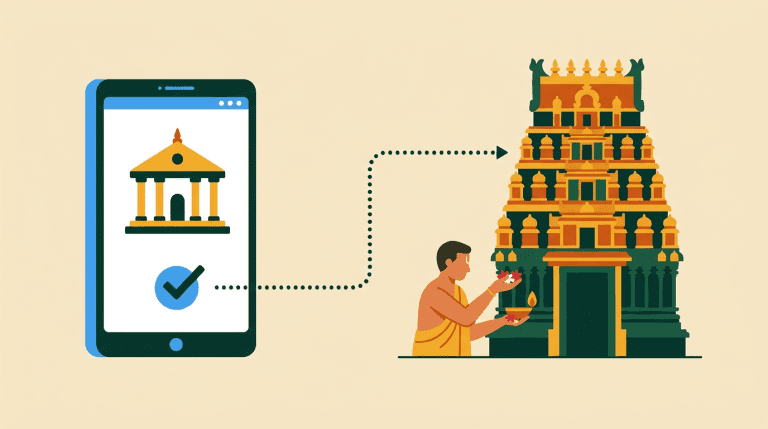
- Supplement home pooja with temple sevas: On days when personal pooja is impossible due to travel or illness, booking a seva at Shri Vadiraja Mandira ensures that worship continues on your behalf. This is not a replacement for personal practice but a valuable supplement.
Do I need a Shaligrama to perform Devara Pooja?
A Shaligrama is the most sacred representation of Vishnu for Madhwa worship, but it is not required for beginners. You can begin with a metal or marble murti of Krishna, Vishnu, or Rama, or even a framed image of the deity. As your practice deepens and you receive guidance from a Guru, you may acquire a Shaligrama through proper channels. The Shaligrama requires specific daily care (Abhisheka with Tulasi water is mandatory), so beginners should establish basic discipline before taking on this responsibility.
Can women perform Devara Pooja?
Yes. In the Madhwa tradition, women perform Devara Pooja, particularly when they are the primary caregivers of the household deity. Women’s pooja follows similar steps but may omit certain Vedic mantras reserved for those who have undergone Upanayana. Instead, Puranic stotras and Vishnu Sahasranama are chanted. Many Madhwa households have a tradition of women performing the evening Deepa Namaskara (lamp lighting and aarti) as a daily duty.
What if I miss a day of Devara Pooja?
If Devara Pooja is missed due to illness, travel, or unavoidable circumstances, the tradition advises performing prayaschitta (atonement) by doubling the next day’s japa or offering an additional Naivedya. The Shastras recognise that life sometimes intervenes, but the key is to resume immediately rather than allow the gap to become habitual. Consistent effort matters more than perfection.
How is Madhwa Devara Pooja different from generic Hindu pooja?
Madhwa Devara Pooja is distinguished by several features: the emphasis on Sandhyavandana as a prerequisite, the mandatory use of Tulasi leaves in Naivedya, the application of urdhva pundra (vertical Vaishnava forehead marks), the specific mantras from Madhwa texts, and the theological framework where every act of worship is directed to Lord Vishnu as the Supreme Independent Being (Svatantra). In Dvaita Vedanta, pooja is not a symbolic gesture but a real encounter between the jiva (soul) and the Lord — the deity is genuinely present in the murti or Shaligrama, and the offering is genuinely received.
Begin your journey of daily worship today. For guidance and to experience the power of temple-performed sevas, visit our Seva Booking page. To understand the full spectrum of offerings, read our Guide to Madhwa Sevas.
Explore all sacred sevas: Visit our Seva Booking page to discover the complete range of poojas, abhishekas, and archane offerings at Shri Bhaavi Sameera Vadiraja Mandira, Chintamani.