
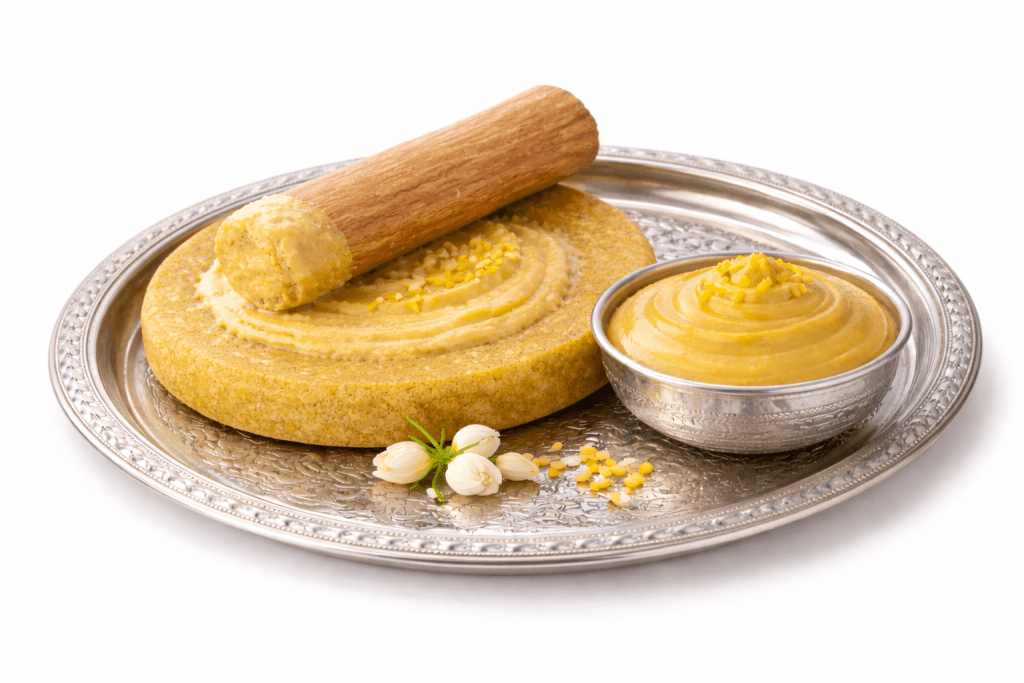
Sri Gandhalepana Seva — the offering of sacred sandalwood paste to the deity — is one of the most refined and symbolically rich sevas in the repertoire of Vaishnava worship. At Shri Vadiraja Mandira, Chintamani, this seva involves the careful preparation and application of sandalwood paste (Gandha) to the divine form of Lord Vadirajaru, transforming the ritual into an act of simultaneous aesthetic devotion and cooling, purifying grace. The Sanskrit word “Gandha” means fragrance — and in the temple context, fragrance is understood as the most subtle and pervasive of all physical offerings, one that reaches the divine most intimately.
Sandalwood, known as Chandana in Sanskrit, is perhaps the most universally revered sacred material in Hindu worship. The Vishnu Sahasranama, in its commentary tradition, describes one of Vishnu’s attributes as “Gandha-priya” — one who loves fragrance — and sandalwood is specifically identified as his preferred fragrant substance. The Vishnu Purana describes the preparation of sandalwood paste as itself a form of worship: the slow, patient grinding of the sandalwood stick on the stone (Gandha Kalasha) is a meditation in itself, the friction releasing the subtle energy of the wood while requiring the grinder to remain still, focused, and unhurried — qualities that devotion itself demands.
The application of Gandhalepana to the deity is described in the Agama Shastras as one of the sixteen Upacharas (acts of service to God). Among these, Gandhalepana holds a special place because sandal paste has a cooling, soothing quality — it reduces heat, calms the system, and creates comfort. The theological interpretation: devotion offered through Gandhalepana “cools” the divine form that burns with the heat of its own transcendent energy, making the deity comfortable and pleased. This metaphor of devotion as cooling the divine fire is repeated across multiple Puranas and Stotras.
Chandana (Sandalwood) in Vedic and Puranic Tradition
Sandalwood appears in some of the earliest Vedic texts as a sacred material. The Atharvaveda mentions sandalwood fragrance in purification ceremonies. The Skanda Purana devotes an entire section to the merits of offering sandal paste to Vishnu, declaring: “He who anoints Vishnu’s form with sandal paste gains the merit of having donated a thousand cows. His lineage prospers, his health is restored, and his prayers are answered.” This is not a small claim — the gift of a thousand cows was among the highest acts of merit in the Vedic economy — and it reflects how deeply the tradition values this offering.
In Ayurveda, sandalwood has documented cooling, antibacterial, and calming properties. The Charaka Samhita lists it as a key ingredient in preparations for inflammatory conditions, fever, and mental agitation. The Vaishnava tradition takes this natural quality and elevates it: the physical coolness of sandal is understood as a physical expression of the divine quality of equanimity and peace (Shanti) that true wisdom brings.
Akshaya Tritiya: The Golden Day for Gandhalepana
Akshaya Tritiya — the third day of Vaishakha, which arrives in late April or early May — is considered the most auspicious day for Gandhalepana in South Indian temples. On this day, which the tradition holds to be eternally auspicious (Akshaya means “that which does not diminish”), offerings of gold and sandal paste are considered to generate inexhaustible merit. The connection between gold and sandal on this day is symbolic: gold represents the solar fire, sandalwood represents the cooling earth — fire and earth in balance, abundance and equanimity together.
At Shri Vadiraja Mandira, Akshaya Tritiya Gandhalepana is performed with special care, using the finest sandalwood paste prepared over several hours of hand-grinding. Devotees who sponsor this seva on Akshaya Tritiya receive merit that is said to last for the entire year ahead, providing an ongoing foundation of auspiciousness and divine grace.
How Sri Gandhalepana Seva is Performed at the Temple
The ritual begins with the fresh preparation of sandalwood paste — sandalwood sticks are ground on a wet stone Kalasha with rose water or pure water, creating a fine, fragrant paste. This process itself takes considerable time and care. The paste is then offered to Lord Vadirajaru’s idol in a prescribed pattern: applied first to the sacred feet, then the navel, chest, arms, and face — following the body map described in the Agamas. Additional Gandha is prepared for the associated idols and Vrundavanas. Throughout the application, specific mantras from the Gandha Stuti (hymn to sandalwood) and the Vishnu Sahasranama are recited.
After the Gandhalepana, the deity’s form carries the pale yellow sandalwood paste along with the distinctive, unmistakable fragrance of real sandalwood — a fragrance that fills the entire sanctum and the surrounding halls, creating an atmosphere of profound peace and divine presence for all devotees who enter the temple that day.
Spiritual Benefits of Sri Gandhalepana Seva
The tradition enumerates the following benefits for sponsors of Gandhalepana: physical health improvement, particularly for skin, inflammation, and fever-related conditions; mental peace and relief from anxiety and restlessness; improved relationships as the “coolness” of sandal blesses family interactions; prosperity and steadiness in financial matters; and spiritual progress through the cultivation of equanimity — the inner quality that sandalwood embodies. It is particularly recommended for those in high-stress professions, for those managing anger or emotional volatility, and for those seeking deeper states of meditation and prayer.
Book your Sri Gandhalepana Seva at Shri Vadiraja Mandira, especially for Akshaya Tritiya bookings. For the full sensory worship experience with fragrance, flowers, and holy bath, explore Panchamruta Abhisheka Seva.
What type of sandalwood is used in the temple’s Gandhalepana?
The temple uses genuine Mysore sandalwood (Santalum album) — the variety considered most sacred and most fragrant in the Vedic tradition. Mysore sandalwood is protected and certified; the temple sources it through established temple supply channels that ensure authenticity. The quality of the sandalwood directly affects the quality of the fragrance and, symbolically, the potency of the offering.
Can I receive a portion of the Gandhalepana paste as Prasada?
Yes. A portion of the sandalwood paste prepared for the Gandhalepana that has been blessed through contact with the deity is made available as Prasada. This Gandha Prasada can be applied to the forehead as a tilak, which is considered a direct blessing of divine peace and presence. Remote sponsors receive a small quantity of Gandha Prasada included with the dispatched Prasada package.
Is Gandhalepana appropriate as a remedy for health conditions?
In the devotional sense, yes — sponsoring Gandhalepana with a specific prayer for health (particularly inflammatory conditions, skin diseases, or mental unrest) is a traditional practice supported by the Puranic testimony. The physical cooling properties of sandalwood align with its spiritual healing associations. Combine with regular consumption of Tulasi and other sattvik practices for comprehensive benefit.
How is Gandhalepana related to the Vishnu Sahasranama?
The Vishnu Sahasranama ritual typically includes the application of Gandha at various points — the 108 names associated with Gandha offering (Gandha Astottara) are recited while applying the paste. Sponsoring Sri Gandhalepana at the temple ensures that your name is held in the sacred space where the Sahasranama’s Gandha-offering dimension is activated, connecting your prayer to the vibrational field of all 1000 divine names.
Cool, calm, and purify your life — book Sri Gandhalepana Seva at Shri Vadiraja Mandira, Chintamani.