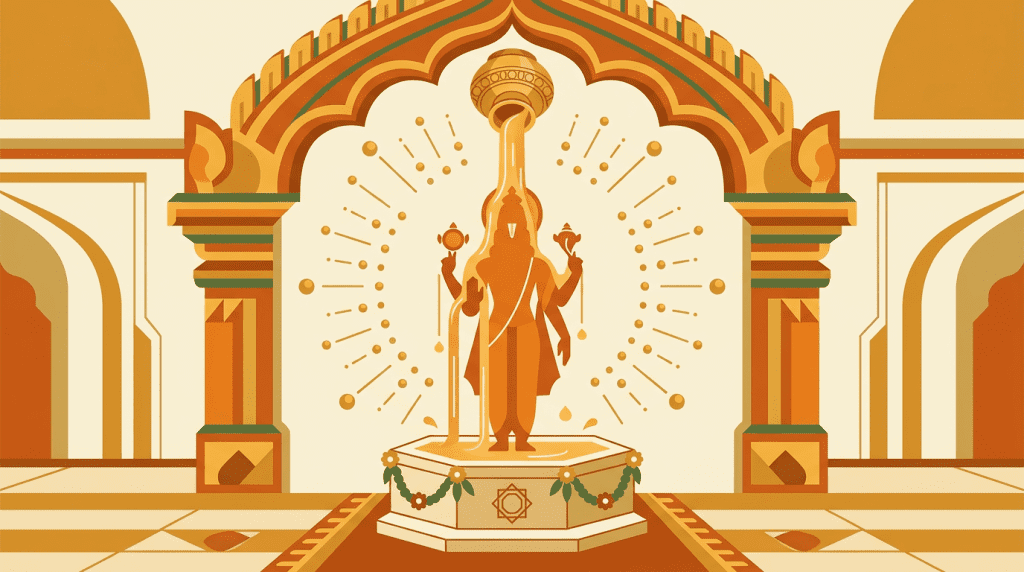
Abhisheka is the sacred ritual of bathing a deity’s idol (Bimba) with sanctified substances such as water, milk, honey, ghee, and more. The word derives from the Sanskrit roots abhi (towards) and seka (sprinkling or pouring), together signifying a ceremonial anointing directed at the divine form. In the Madhwa Vedantic understanding, the idol in the temple is not a mere symbol: Bhagavan Shri Hari actually presides within the consecrated image, and every drop poured over the Bimba is a direct, personal service to the Supreme Being. This understanding — rooted in Shri Madhwacharya’s Brahma Sutra Bhashya and the broader framework of Tattvavada (Dvaita Vedanta) — elevates Abhisheka from ritual to intimate communion with God.
Etymology and Vedic Roots of Abhisheka
The term Abhisheka appears across the Vedas, Puranas, and Agama literature. In the Rig Veda, Abhisheka is associated with the consecration of kings — a sacred bath that conferred divine authority. Over millennia, this meaning expanded into temple worship: just as a king is honoured with an anointing bath, the Lord of the Universe is honoured with the finest substances the earth has to offer. The Vishnu Dharmottara Purana and Padma Purana describe Abhisheka as a primary mode of worship (upachara) that delights the Lord and generates immense merit (punya) for the devotee.
Shri Madhwacharya, in his Mahabharata Tatparya Nirnaya, emphasises that Bhagavan is Purna (complete) and Svatantra (absolutely independent); He does not need our service, yet He graciously accepts it out of compassion for the jiva. This is the philosophical bedrock of Abhisheka in the Madhwa tradition: the act benefits the devotee, not because God lacks anything, but because devoted service (kainkaryam) is the natural and liberating expression of the jiva’s eternal relationship with Hari.
Types of Abhisheka in Madhwa Temples
Several types of Abhisheka are performed in temples following the Madhwa Agama. Each uses a specific substance, carries distinct symbolism, and is recommended for particular spiritual intentions.
Panchamruta Abhisheka
Panchamruta means “five nectars.” The deity is bathed with a blend of milk (ksheera), curd (dadhi), ghee (ghruta), honey (madhu), and sugar (sharkara). Each ingredient symbolises a divine quality: milk represents purity, curd stands for progeny and strength, ghee symbolises victory and spiritual radiance, honey signifies sweetness and harmony, and sugar conveys bliss. Panchamruta Abhisheka is one of the most commonly performed and widely revered forms of worship. At Shri Bhaavi Sameera Vadiraja Mandira, Chintamani, devotees can book Panchamruta Abhisheka and receive consecrated Prasada at their doorstep.
Madhu (Honey) Abhisheka
In this Abhisheka, pure honey is poured over the Bimba. Honey is described in the Ayurveda as yogavahi — a carrier that enhances whatever it touches. Spiritually, Madhu Abhisheka is associated with harmony, sweetness in relationships, and the deepening of devotion. Devotees seeking peace in the household or resolution of discord often choose Madhu Abhisheka.
Kanakabhisheka (Golden Abhisheka)
Kanaka means gold. Kanakabhisheka is the ceremonial offering involving gold — either gold coins, gold ornaments, or gold-infused water — to the deity. This is among the most exalted offerings a devotee can make, symbolising total surrender of material wealth at the Lord’s feet. It is traditionally performed during major festivals, milestones such as griha pravesha (housewarming), or upanayana (sacred thread ceremony). Book Kanakabhisheka at Shri Vadiraja Mandira for prosperity and divine grace.
Jala (Water) Abhisheka
The simplest yet profoundly powerful form of Abhisheka involves pure water, often drawn from sacred rivers or sanctified with Vedic mantras. Water Abhisheka is typically performed as the first step before other Abhishekas and is a staple of the daily temple routine.
Ksheera (Milk) Abhisheka
Pure cow’s milk is poured over the deity to invoke blessings of nourishment, progeny, and longevity. In the Madhwa tradition, the cow (Gau Mata) is held in the highest esteem, and milk from a well-cared-for cow is considered an ideal offering to Shri Hari.
How Abhisheka Is Performed in the Madhwa Tradition
Abhisheka in a Madhwa temple follows a precise Agama-prescribed sequence. The archaka (priest) begins with sankalpa — a formal resolution stating the devotee’s name, gotra (lineage), and intention. The deity’s ornaments and garments are respectfully removed. The Bimba is then bathed with each substance in the prescribed order while the priest chants appropriate Vedic mantras and stotras — often the Purusha Sukta, Shri Sukta, or the Vishnu Sahasranama.
After the bathing, the deity is gently dried, adorned with fresh garments and flowers (alankara), and the temple bell is rung as the Abhisheka concludes with Mangalarati (auspicious waving of the camphor lamp). The liquid collected after the Abhisheka — called Abhisheka Tirtha — is distributed to devotees as a sacred blessing. This Tirtha is not ordinary water; the Madhwa understanding is that the Lord’s presence sanctifies everything it touches, transforming the liquid into a vehicle of divine grace.
Scriptural References and Spiritual Benefits
The Skanda Purana declares that a devotee who performs Abhisheka to Vishnu with devotion is freed from the cycle of birth and death. The Padma Purana states that even witnessing an Abhisheka confers great merit. Shri Jayatirtha, the great commentator of Madhwacharya’s works, explains in his Nyaya Sudha that rituals like Abhisheka serve as instruments (sadhana) for cultivating aparoksha jnana (direct knowledge of God), which is the prerequisite for moksha. Shri Vyasatirtha, in his Nyayamruta, reinforces that bhakti expressed through such rituals purifies the antahkarana (inner faculty) and makes the jiva fit for liberation.
The material benefits described in the Puranas include removal of disease, resolution of financial difficulties, peace in the family, protection from malefic planetary influences, and fulfilment of righteous desires. In the Dvaita framework, these are not mechanical outcomes; they flow from the santosha (satisfaction) of Lord Hari, who responds to sincere devotion with boundless compassion.
Abhisheka and the Dvaita Understanding of the Deity
A question seekers often ask is: why bathe an idol? The answer lies at the heart of Tattvavada. Shri Madhwacharya established that the Lord, though formless and all-pervading, graciously chooses to manifest in the consecrated Bimba for the benefit of the devotee. This is not idol worship in the reductive sense — it is an acknowledgement that Bhagavan, in His infinite compassion, makes Himself accessible in a form we can see, touch, and serve. The Pancha-bheda (five-fold difference) — between God and jiva, God and jada (matter), jiva and jiva, jiva and jada, and jada and jada — means that the jiva can never become God; the jiva’s highest fulfilment is eternal, loving service. Abhisheka is one of the most tangible expressions of this service.
Shri Vadiraja Tirtha, the great saint-poet revered at our temple, composed numerous hymns celebrating the service of the Lord. His life at Sode, where Lord Hayagreeva Himself would come to accept the daily Neivedyam, stands as living testimony that God receives and responds to the devoted offerings of His bhaktas.
Abhisheka Sevas at Shri Bhaavi Sameera Vadiraja Mandira
At Shri Bhaavi Sameera Vadiraja Mandira, Chintamani, devotees can participate in several Abhisheka sevas performed by trained archaka priests following the Madhwa Agama. Prasada from every seva is carefully packed and delivered to your doorstep. Available Abhisheka sevas include:
- Panchamruta Abhisheka — the five sacred nectars
- Madhu (Honey) Abhisheka — for sweetness and harmony
- Kanakabhisheka — the golden offering for prosperity
For a comprehensive overview of all sevas available in the Madhwa tradition, visit our Guide to Madhwa Sevas.
Frequently Asked Questions
What is the difference between Panchamruta Abhisheka and Madhu Abhisheka?
Panchamruta Abhisheka uses five substances (milk, curd, ghee, honey, and sugar) and is a comprehensive offering for general wellbeing and spiritual progress. Madhu Abhisheka uses only honey and is specifically associated with harmony, sweetness in relationships, and peace of mind. Both are Vedic in origin and deeply meritorious.
Can devotees perform Abhisheka at home?
Simple Abhisheka with water or Panchamruta can be performed at home on a Shaligrama or a consecrated idol, provided the devotee follows the basic rules of cleanliness and mantra recitation. However, elaborate Abhishekas involving precious substances or temple-consecrated Bimbas are best performed by trained priests in a sanctified temple setting where the full Agama protocols can be observed.
Why is Abhisheka considered a direct service to God in the Madhwa tradition?
In Tattvavada, the consecrated idol (Bimba) is not a symbol — it is a real locus of Bhagavan’s presence. When we pour milk or honey over the Bimba, we are directly serving the Supreme Person who resides within it. This is analogous to bathing and attending to a beloved master: the act honours the person, not the material form. Because the jiva is eternally dependent on Hari, this service is the most natural and fulfilling activity the jiva can engage in.
When is the best time to perform Abhisheka?
Abhisheka can be performed on any day, but certain tithis amplify the merit. Ekadashi (the eleventh lunar day, sacred to Vishnu), Pournami (full moon), Dvadashi (the twelfth day), and festival days like Krishnashtami, Rama Navami, and Narasimha Jayanti are considered especially auspicious. The Brahma Vaivarta Purana states that Abhisheka performed during Shravan month confers the merit of a hundred ordinary Abhishekas.
How can I participate in Abhisheka at Vadiraja Mandira if I live far away?
Shri Bhaavi Sameera Vadiraja Mandira accepts online seva bookings from devotees across the world. The Abhisheka is performed by the temple priests on your chosen date, and the Prasada is dispatched to your registered address. Visit our Seva Booking page to schedule your Abhisheka today.
Abhisheka is one of the most direct and powerful ways to express devotion to Shri Hari. Whether you choose the five nectars of Panchamruta, the golden splendour of Kanakabhisheka, or the simple purity of water, every offering made with love reaches the Lord. Book your Abhisheka seva at Shri Bhaavi Sameera Vadiraja Mandira and receive the Lord’s Prasada at your doorstep.
Explore all sacred sevas: Visit our Seva Booking page to discover the complete range of Abhishekas, Archanas, and Deepa sevas at Shri Vadiraja Mandira, Chintamani.