Pushpalankara Seva transforms the deity at Shri Vadiraja Mandira, Chintamani into a vision of natural splendour — an elaborate decoration using fresh flowers that makes the divine form radiant and beautiful for the entire day of worship. Pushpa means flower and Alankara means adornment or decoration; together, they describe the ancient art of honouring God with the living beauty of nature’s most exquisite gift. When you sponsor Pushpalankara Seva, you clothe the divine in nature’s finest ornaments, and in doing so, express the deepest aspiration of Bhakti — to offer only the best, the most beautiful, to the Beloved.
Flowers hold a unique place in Vedic worship. The Vishnu Purana states that of all the Shodasha Upachara (sixteen forms of service to the deity), the offering of flowers (Pushpa Samarpane) is among the most pleasing to Lord Vishnu. The Padma Purana records Lord Vishnu himself declaring: “Among all offerings, the devotee who brings fresh flowers from a garden grown with love pleases me most deeply.” This is because a flower is a living thing — it blooms briefly, gives its fragrance and beauty completely, and fades without clinging. This complete, transient offering mirrors the quality of true devotion: unconditional, total, and without expectation of return.
In the Madhwa tradition, the quality of the Pushpalankara (flower decoration) on major festival days is considered a direct indication of the health and vitality of the temple’s devotional life. Elaborate Pushpalankara on Rathotsava, Ekadashi, and Pournami days at Shri Vadiraja Mandira has been a living tradition maintained across generations, with temple priests expert in creating arrangements that reflect both the season’s available flowers and the deity’s aesthetic preferences described in the Agamas.
Types of Flowers in Pushpalankara
The Agama Shastras specify which flowers are especially pleasing to different deities. For Lord Vishnu and Vaishnava forms, the following are considered particularly auspicious:
Tulasi (Holy Basil): Considered the most sacred of all plants for Vishnu worship, Tulasi leaves are the essential offering in any Vaishnava Pushpalankara. The Padma Purana states that a single Tulasi leaf offered with devotion is equivalent to all other flowers combined. Tulasi at Shri Vadiraja Mandira is grown in the temple garden and offered fresh daily.
Lotus (Kamala): The lotus is Vishnu’s seat and the throne of Lakshmi. It grows from mud yet remains unstained — a perfect symbol of the realised soul that lives in the world without being bound by it. Lotus flowers in Pushpalankara represent this ideal of untouched purity.
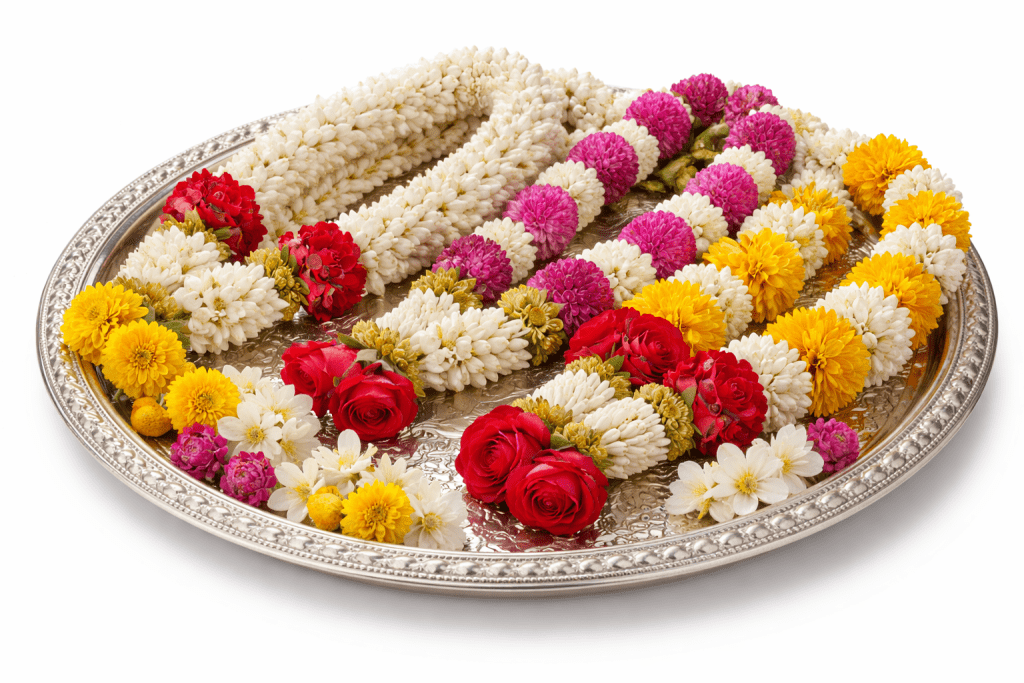
Jasmine (Mallige/Mogra): The fragrance of jasmine is said to be especially dear to Vishnu. Its pure white colour represents the sattvic quality of sincere devotion. Jasmine garlands woven for Pushpalankara fill the temple sanctum with a fragrance that is described in the tradition as “the scent of liberation.”
Chrysanthemum and seasonal flowers: Depending on the season, other fragrant flowers are incorporated to create arrangements of maximum beauty and freshness. The use of seasonal flowers ensures that the Pushpalankara is always in harmony with the natural cycle — itself an act of ecological reverence.
How Pushpalankara Seva is Performed at the Temple
When Pushpalankara Seva is booked, the temple’s dedicated flower-decoration team — priests and assistants trained in the art of sacred floral arrangement (Pushparchana Kala) — prepare the flowers on the morning of the seva day. Fresh flowers are sourced from the temple garden and from the local flower market the previous evening. After the morning Abhisheka (ritual bath) of the deity, Pushpalankara begins: flowers are arranged in prescribed patterns, garlands are placed around the deity’s neck, the crown (Kirita) is decorated, the divine hands are adorned with flower wristlets, and the area around the idol is beautified with elaborate floor arrangements (Rangoli of flowers).
The Pushpalankara remains for the entire day, from the morning Pooja through to the evening Aarti, allowing thousands of devotees who visit the temple that day to behold the Lord in his floral splendour. At the end of the day’s worship, the flowers are reverentially removed and, where possible, placed in the temple garden or used for other sacred purposes — never wasted.
Spiritual Benefits of Pushpalankara Seva
The tradition teaches that sponsoring Pushpalankara Seva — clothing the Lord in beauty — generates the grace of aesthetic refinement in the devotee’s own life. The patron of beauty becomes beautiful; the one who adorns the divine becomes adorned with divine qualities. Specifically, Pushpalankara is associated with: the blossoming of creativity and artistic ability; beauty and health in the devotee and their family; success in matters of love, courtship, and marriage; and the sweetening of interpersonal relationships. It is also recommended for those in creative professions — artists, designers, musicians, architects — who seek divine inspiration in their work.
Book your Pushpalankara Seva and adorn the Lord in the living beauty of flowers. For the offering of Tulasi specifically, explore Tulasi Archane Seva.
Can I choose specific flowers for the Pushpalankara?
Devotees with a preference for specific flowers (lotus, jasmine, tulasi arrangements) can mention this preference when booking. The temple will accommodate requests based on seasonal availability. However, the priests are trained to create the most beautiful and appropriate arrangement for the deity using available flowers, so specific requests are best treated as preferences rather than guarantees.
Is Pushpalankara different from daily flower offering?
Yes. The temple’s daily Pooja includes a regular flower offering as part of the sixteen Upacharas. Sponsored Pushpalankara Seva involves a more elaborate, dedicated decoration that transforms the deity’s appearance significantly — using larger quantities of specific flowers, creating garlands, crowns, and full-body floral adornments that go far beyond the daily offering in scale and beauty.
On which days is Pushpalankara most auspicious?
Pushpalankara is most auspicious on Ekadashi, Pournami (full moon), Akshaya Tritiya, Vaishakha month, and all major Vaishnava festival days. The month of Vaishakha (April–May) is the traditional time for elaborate flower offerings to Vishnu, making it particularly meritorious to sponsor Pushpalankara during this period.
What Prasada is received from Pushpalankara Seva?
The flowers that have adorned the deity during Pushpalankara become Prasada at the end of the seva. Devotees present at the temple receive these blessed flowers directly. Remote sponsors receive temple Prasada (sacred food from the day’s pooja) along with a flower from the deity’s decoration if available and preservable for dispatch.
Adorn the divine and beautify your life — book Pushpalankara Seva at Shri Vadiraja Mandira, Chintamani.