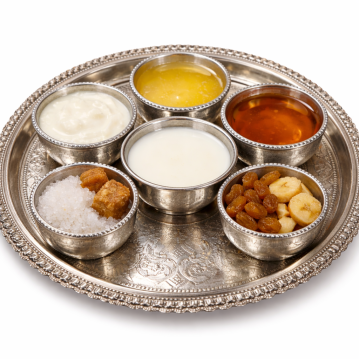
Panchamruta Abhisheka is the sacred ritual bath performed upon the deity using five nectars — milk, curd, honey, ghee, and sugar — each carrying profound symbolic significance within the Vedic tradition. At Shri Vadiraja Mandira, Chintamani, this ancient ritual is performed upon the idol of Lord Vadirajaru and associated deities with precision and devotion, following the Madhwa Agama procedures that have been passed down through an unbroken lineage of trained priests. The word “Panchamruta” — from Sanskrit pancha (five) and amruta (nectar) — encapsulates the teaching that these five substances, consecrated through Vedic mantras, become ambrosia capable of granting spiritual boons and healing blessings.
The Shiva Purana, Vishnu Purana, and Agni Purana all prescribe Panchamruta Abhisheka as one of the most pleasing forms of worship to the divine. The Vishnu Sahasranama, which catalogues the thousand names of Vishnu, is traditionally recited during Panchamruta Abhisheka, imbuing each drop of the five nectars with vibrations of divine names. At Shri Vadiraja Mandira, the Panchamruta Abhisheka follows this classical tradition, creating a sacred confluence of substance, mantra, and devotion.
Whether you are seeking blessings for health, prosperity, a new beginning (marriage, housewarming, business launch), or the deepening of your spiritual practice, Panchamruta Abhisheka is among the most comprehensive sevas available at the temple. Booking this seva means your name and intention are woven into one of the most ancient and powerful forms of divine communion.
The Five Nectars and Their Symbolism
1. Milk (Kshira): Milk represents purity, motherly compassion, and the nourishment of divine grace. In the Vedic worldview, milk is the essence of the cow — the most sattvic food available to humans — and when poured over the deity, it symbolises the washing away of ego and the invitation for divine maternal energy to flow into the devotee’s life. The Srimad Bhagavatam describes the cosmic ocean of milk (Kshira Sagara) as the divine dwelling of Lord Vishnu; pouring milk in Abhisheka recreates this cosmic symbolism in miniature.
2. Curd (Dadhi): Curd symbolises transformation — the creative process of turning raw potential (milk) into something enriched through the right culture (curdling agents). Spiritually, curd represents the transformed mind that has been cultured through spiritual practice. Pouring curd in Abhisheka is a prayer for wisdom that comes through sincere effort and the right association (Satsanga).
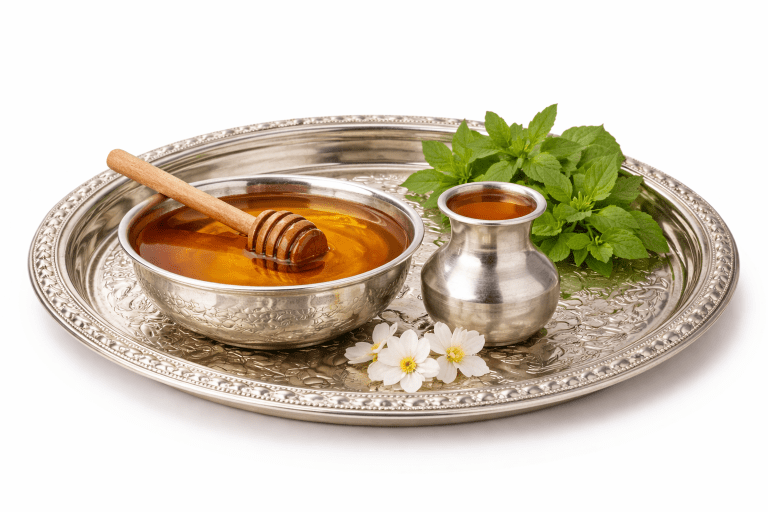
3. Honey (Madhu): Honey, the concentrated nectar gathered by bees from thousands of flowers, represents synthesis — the gathering of wisdom from diverse sources. The Brihadaranyaka Upanishad contains the famous Madhu Vidya (honey doctrine), which teaches that everything in creation is sweetness for everything else, and the cosmic Self is the foundation of this universal sweetness. Pouring honey invokes this understanding of the interconnectedness of all life.
4. Ghee (Ghruta): Pure cow ghee is the offering par excellence in all Vedic rituals. The Rigveda describes ghee as the sun’s gift refined through the cow — concentrated solar energy in liquid form. In Abhisheka, ghee symbolises the clarity of a lamp — the intellect purified of attachment, capable of illuminating the divine. Pouring ghee is a prayer for Viveka (discriminative wisdom) and Vairagya (dispassion).
5. Sugar (Sarkara): Sugar represents the sweetness of devotion itself — the Bhakti Rasa that makes all spiritual endeavour worthwhile. In the Narada Bhakti Sutras, devotion is described as the highest form of sweetness, superior to all other forms of human experience. Pouring sugar in Abhisheka is a declaration that the devotee seeks this sweetness of divine love above all else.
How Panchamruta Abhisheka is Performed at Shri Vadiraja Mandira
The seva begins with a formal Sankalpa, where the archaka priest recites your name, gothra, and the purpose of the Abhisheka. The five nectars are then prepared in separate vessels and offered to the deity in sequence — milk first, then curd, honey, ghee, and sugar — each accompanied by specific Vedic mantras drawn from the Purusha Sukta, Shri Sukta, and the Vishnu Sahasranama. After the Panchamruta bath, the deity is bathed with pure water (Shuddhodaka) and then decorated anew with fresh flowers, sandal paste, and new garments before the Mangala Aarti. The entire process takes approximately forty-five minutes to an hour.
The mixture of the five nectars that has been poured over the deity — now transformed into Panchamruta Prasada — is collected, mixed with fresh ingredients, and made available as the sacred offering sent to the sponsoring devotee.
Spiritual Benefits of Panchamruta Abhisheka
The Agama Shastras enumerate the following benefits for those who sponsor or witness Panchamruta Abhisheka: relief from chronic illness, particularly those associated with digestive disorders and stress; resolution of financial challenges; improvement in family harmony; success in new ventures; enhanced spiritual receptivity; and protection from negative energies. It is also specifically recommended in the Hindu astrological tradition for those with Moon afflictions (Chandra Dosha), as milk and curd in the Abhisheka are associated with the Moon.
Book your Panchamruta Abhisheka Seva and immerse your intention in the sacred bath of five divine nectars. For those wishing to experience the specific power of honey in Abhisheka, also explore the Madhu Abhisheka Seva.
What is the best occasion to book Panchamruta Abhisheka?
Panchamruta Abhisheka is suitable for any occasion. However, it is particularly auspicious on birthdays, wedding anniversaries, Ekadashi, Pournami (full moon), Janmashtami, and the Nakshatra birthday (birth star anniversary). For new beginnings — business launches, home ceremonies, new job starts — it is one of the most recommended sevas to invoke divine support.
Is Panchamruta Abhisheka different from regular water Abhisheka?
Yes. Regular Jala Abhisheka (water bath) is a daily ritual cleansing. Panchamruta Abhisheka, with the five nectars, is a special offering with specific symbolic and spiritual dimensions that goes beyond routine worship. It is considered a complete offering in itself — nourishing, purifying, and sweetening the relationship between the devotee and the divine.
Can I attend Panchamruta Abhisheka in person?
Yes. Devotees are warmly welcomed to attend the Panchamruta Abhisheka in person at Shri Vadiraja Mandira, Chintamani. The temple requests advance booking to ensure the seva is properly arranged with your Sankalpa. Out-of-town devotees can book online and the Prasada will be dispatched.
How is Panchamruta Prasada different from regular Prasada?
Panchamruta Prasada — the mixture of five nectars that has bathed the deity — is considered extraordinarily potent. It is consumed in small quantities by the devotees present, and a portion is dispatched to the booking devotee. This Prasada is believed to have healing properties and is a direct carrier of the divine blessing generated during the Abhisheka.
Experience the sweetness of divine grace — book your Panchamruta Abhisheka Seva at Shri Vadiraja Mandira today.