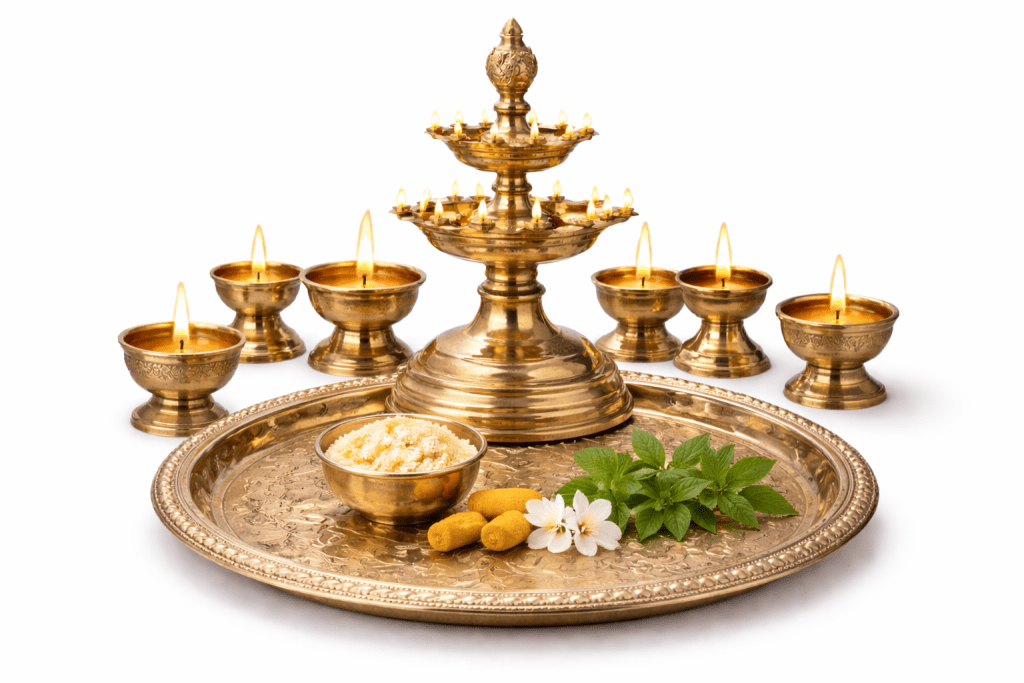
Deeparadhane Seva — the offering and waving of sacred lamps before the deity — is one of the most universal and beloved acts of Hindu worship. At Shri Vadiraja Mandira, Chintamani, Deeparadhane takes a particularly charged significance: this is the temple of Shri Vadirajaru, the saint whose miraculous life was itself illuminated by divine light — the light of wisdom (Hayagreeva’s grace), the light of devotion (120 years of unbroken bhakti), and the light of tradition (the Madhwa sampradaya carried forward by his successors). When a lamp is waved before Lord Vadirajaru’s sacred presence here, it participates in this living tradition of light.
The Agama Shastras describe the Deeparadhane (Aarti) as the climactic moment of daily worship — the act where all senses converge in adoration of the divine: the eyes behold the flame and the deity’s illuminated form, the ears hear the bells, the nose receives the incense and flower fragrance, the voice joins in the songs, and the hands clap or ring bells. This multi-sensory convergence is described as a moment of total Bhakti — complete immersion of the devotee in divine adoration. Sponsoring Deeparadhane ensures that this most beautiful moment of daily worship is offered in your name.
The lamp in Hindu tradition is never merely a light source. The Brihadaranyaka Upanishad uses the lamp as a central metaphor for the individual soul (Jiva): just as a lamp burns within a pot, illuminating its interior, the individual soul illuminates the body from within through consciousness. When the lamp is waved before the deity, it is a symbolic gesture of the soul offering its own light back to the source of all light — the Supreme Consciousness that alone makes the soul’s illumination possible.
Karthika Masa: The Sacred Month of Lamps
While Deeparadhane can be sponsored at any time of year, the month of Karthika (October–November) is the most auspicious period for all lamp offerings in the Vaishnava tradition. Karthika Masa is described in the Skanda Purana as the month when Lord Vishnu is most accessible and receptive to devotees’ prayers — a period of heightened divine presence on earth. The tradition prescribes that a lamp lit before Vishnu during Karthika is equivalent to performing a major Yajna (fire ritual) on any other day.
The Anu Vrundavana Akhyana describes specific lamp-related observances in Shri Vadirajaru’s life that took place during the Karthika period, connecting the month of lamps with this temple’s presiding saint in a particularly living way. Devotees who visit Shri Vadiraja Mandira during Karthika and witness or sponsor Deeparadhane are said to receive the accumulated merit of all the lamps lit by Vadirajaru himself during his 120-year life of devotion.
Types of Deepa in Deeparadhane
The Agamas specify different types of lamps for different purposes within the Deeparadhane ritual. The main Aarti lamp used at Shri Vadiraja Mandira is a multi-flame lamp (Pancha Harathi — the five-flame lamp), which represents the five elements and their offering back to the divine source. Supporting this are:
Taila Deepa (oil lamp): Associated with removal of obstacles, ancestral blessing, and Saturn-related remedies. Lit at the periphery of the Deeparadhane area. Ghruta Deepa (ghee lamp): The central, most sattvic lamp. Associated with Vishnu directly, with prosperity and clarity. Kapoor (camphor) Aarti: The concluding lamp that burns completely without residue — symbolising the ego’s total dissolution in divine presence. Devotees who receive the warmth of the Kapoor Aarti on their hands and then place those hands on their eyes are performing a traditional act of blessing.
How Deeparadhane Seva is Performed
When you sponsor Deeparadhane Seva, the temple priest performs a formal Sankalpa in your name before the Aarti. The Aarti is conducted at the scheduled time — typically at dawn (Usha Kaala), mid-morning, noon, evening, and night — with a specific Deeparadhane Seva offered during the most auspicious Aarti of the day based on your booking. The priest waves the lamp before the deity in specific patterns prescribed by the Agamas, accompanied by the ringing of bells, blowing of conch (Shankha), and singing of Vadirajaru’s devotional compositions.
After the Aarti, the warmth of the sacred lamp is offered to all devotees present — who receive the heat on their palms and then cover their eyes. This act — Aarti Sparsha — is itself a traditional blessing, the warmth of the divine light being physically shared with all present.
Spiritual Benefits of Deeparadhane Seva
Sponsoring Deeparadhane is associated with: illumination of the intellect and removal of the “darkness of ignorance” (Ajnana); protection of the household from negative energies; improvement in eyesight and eye health (the eyes that behold the sacred lamp are blessed); resolution of obstacles in career and education; and the cultivation of devotion itself — the more you offer light to the divine, the more the divine illuminates your inner world. It is particularly recommended for those in professions that require clear vision — both literal and metaphorical — such as leaders, decision-makers, artists, and teachers.
Book your Deeparadhane Seva at Shri Vadiraja Mandira today. For a sustained lamp offering across thirty days, explore the Taila Nanda Deepa or Ghruta Nanda Deepa Seva.
What is the most auspicious time for Deeparadhane?
The evening Deeparadhane at dusk (Sandhya Kaala) is traditionally the most auspicious, as it marks the transition between day and night — a liminal time when the divine is considered most accessible. In Karthika Masa, the evening lamp is given special prominence. For morning bookings, the Usha Kaala (dawn) Deeparadhane is recommended for those seeking clarity, new beginnings, and fresh starts.
Can I send a specific prayer or intention for the Deeparadhane?
Yes. When booking, you can include a specific intention (Sankalpa) such as “for health of my mother,” “for success in examinations,” or “for harmony in our family.” The priest will hold this intention while performing the Aarti in your name, making the Deeparadhane a highly personalised act of prayer.
Is Deeparadhane connected to Navagraha worship?
Yes. Different lamps within the Deeparadhane ceremony address different planetary energies. Ghee lamps are particularly associated with Jupiter and the Sun; oil lamps address Saturn and ancestral influences; the central Pancha Harathi lamp addresses all five elements and their planetary correspondences. A comprehensive Deeparadhane thus serves as a multi-Graha offering.
Can Deeparadhane be sponsored on behalf of a departed family member?
Yes. Offering Deeparadhane in the name of a departed loved one is a traditional act of reverence and continued connection. The light offered in their name at this sacred temple reaches them, according to tradition, as a symbol of the ongoing light of family love. Many families make this an annual practice on the Punya Tithi (death anniversary) of their loved ones.
Let your devotion illuminate the divine — book Deeparadhane Seva at Shri Vadiraja Mandira, Chintamani.