
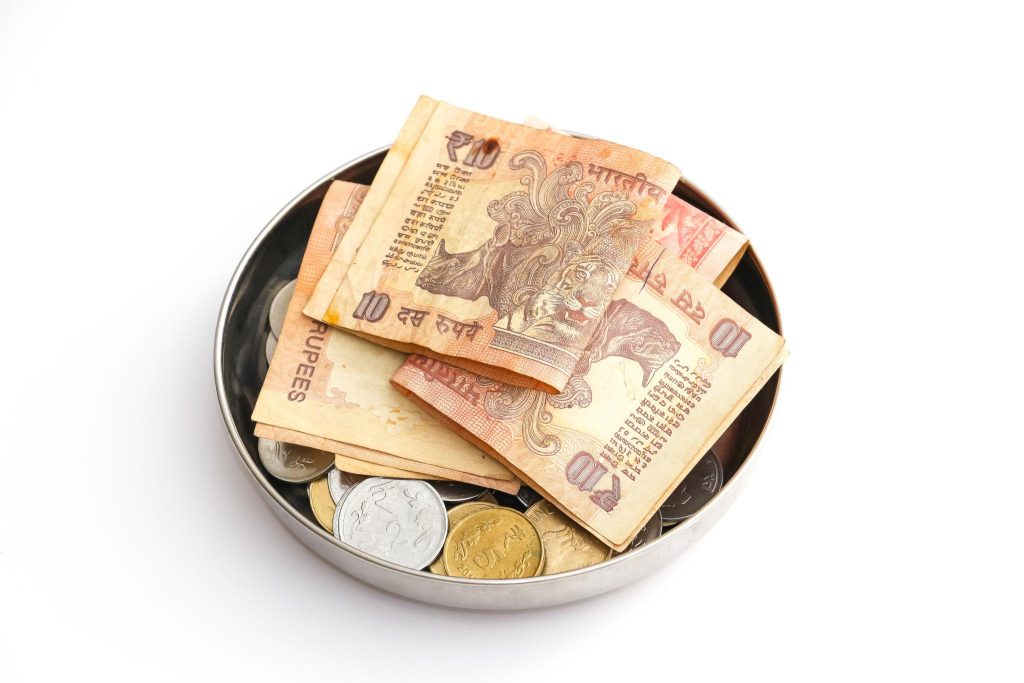
Kanike — the voluntary offering of one’s resources to the temple — is one of the most fundamental and spiritually significant acts in the life of a devoted Hindu. At Shri Vadiraja Mandira, Chintamani, Kanike is the primary channel through which devotees express their gratitude to God, their commitment to the sustenance of the temple as a sacred institution, and their participation in the ancient tradition of Dana (charitable giving) that the Vedas describe as one of the pillars of Dharmic life. The very word “Kanike” in Kannada carries the connotation of a gift given from the heart — not as payment for a service, but as an expression of love and reverence.
The Dharmashastra tradition, particularly the Apastamba Dharmasutra and the Vishnu Smriti, places Dana (giving) alongside Yajana (worship) and Tapas (austerity) as the three foundational practices of Dharmic living. The Bhagavad Gita, in its seventeenth chapter, elaborates three types of Dana: sattvic Dana — given to the right person, at the right time, in the right place, without expectation of return; rajasic Dana — given for recognition or reward; and tamasic Dana — given reluctantly or to wrong recipients. The tradition teaches that only sattvic Dana generates genuine spiritual merit. Kanike at a sacred temple, given freely and without expectation, is the paradigmatic example of sattvic Dana.
Shri Madhwacharya’s commentary on the Bhagavad Gita affirms that offering one’s resources to maintain the worship of the Supreme Lord (Sarvesha — the Lord of All) is among the most direct forms of Vishnu seva available to a householder. The temple is described in the Agamas as the Lord’s home on earth — and maintaining that home through Kanike is the responsibility and privilege of the devotees who regard the Lord as their divine parent.
The Tradition of Kanike in Karnataka’s Temple Culture
The practice of Kanike at Karnataka’s Madhwa temples has a documented history spanning centuries. Historical records from Udupi, Melukote, and the Ashta Matha-associated temples show that wealthy merchants, landlords, and ordinary farmers alike contributed to temple upkeep through the Kanike tradition — each according to their means, none excluded by poverty. The principle embedded in this history is that the temple belongs to everyone who loves the Lord, and everyone’s contribution — however small — is equally welcomed in the Lord’s sight.
Shri Vadirajaru himself composed several verses about the importance of supporting the Lord’s worship materially, drawing on the Bhagavata Purana’s teaching that the Supreme Lord is pleased by sincere, heart-felt offering of whatever the devotee has — even a leaf, a flower, a fruit, or water. The Kanike offered at Shri Vadiraja Mandira, Chintamani carries this 500-year-old tradition forward, connecting present-day devotees to the lineage of Vadirajaru’s own devotees who maintained his temple across the centuries.
How Kanike is Used at Shri Vadiraja Mandira
The Kanike received at the temple funds the full range of temple operations, ensuring that the Lord’s worship continues without interruption and that the temple serves the community effectively. Specific areas supported include:
- Daily worship expenses: Flowers, incense, camphor, oil and ghee for lamps, and raw materials for Neivedyam preparation. These daily ritual requirements are the most immediate need that Kanike addresses.
- Priest remuneration: The archaka priests and supporting staff who perform the six daily Poojas are remunerated through the temple’s operating fund, which Kanike supports. Attracting and retaining skilled priests trained in Madhwa Agama procedures requires consistent financial support.
- Temple maintenance: Structural maintenance of the sanctum, halls, and surrounding facilities ensures that the temple remains a dignified and safe place of worship for all visitors.
- Annadana program: The Annadana Seva that feeds pilgrims is partly sustained by the temple’s general fund, including Kanike contributions.
- Festival celebrations: Major annual events — Rathotsava (chariot festival), Vadirajaru Aradhana, Karthika celebrations — require significant resources that the regular Kanike base supports.
- Educational programs: The temple’s Vedapathashala (Vedic school) and Agama training for young priests are sustained in part by the temple’s financial health, which Kanike contributions protect.
Nishkama Dana: Giving Without Expectation
The deepest teaching about Kanike in the Madhwa tradition is the concept of Nishkama Dana — giving without desire for result. The Bhagavad Gita’s seventeenth chapter specifies that the highest Dana is given “without expectation of fruit, with the conviction that it is one’s duty, and in a proper time and place.” When Kanike is offered at Shri Vadiraja Mandira with this spirit — not to purchase merit, not to fulfil a transaction, but simply because supporting the Lord’s home is the right thing to do — it generates the deepest spiritual benefit for the devotee and creates the most significant positive impact for the temple.
Ironically, the tradition teaches that Nishkama Dana — given without expectation — returns to the devotee the most abundant blessings, precisely because the detachment with which it is given creates openness to receive. The Bhagavata Purana narrates numerous stories of devotees who gave freely, without calculation, and found that the Lord’s response was far beyond what any calculation could have secured.
Prasada from Kanike
While Kanike is specifically a gift rather than a purchase of service, the temple sends an acknowledgement and a portion of the temple’s general Prasada to devotees who contribute online. This Prasada is a token of the Lord’s recognition of the devotee’s gift — a response to generosity with generosity. The most meaningful “Prasada” of Kanike, however, is the quiet inner satisfaction of having contributed to something larger than oneself — the maintenance of a sacred space that serves thousands of devotees and carries a 500-year tradition forward into the future.
Contribute to the living tradition of Vadirajaru’s worship — offer Kanike at Shri Vadiraja Mandira, Chintamani. For more directed forms of giving, explore Annadana Seva.
Is Kanike tax-deductible?
Contributions to recognised Hindu religious trusts in India may be eligible for tax benefits under Section 80G of the Income Tax Act, depending on the trust’s registration status. Please contact the temple administration at Shri Vadiraja Mandira, Chintamani directly for information about their current tax exemption status and to receive the required donation certificate for tax purposes.
What is the minimum Kanike amount?
There is no minimum. Kanike is a voluntary offering, and the tradition holds that even a small amount given with genuine love and devotion is as valued by the Lord as a large amount given with ambivalence. The temple accepts contributions of all sizes through the online portal. The spirit of the offering matters infinitely more than the amount.
How is Kanike different from paying for a Seva?
Seva payments (for Abhisheka, Archana, Annadana, etc.) fund specific ritual services performed on the devotee’s behalf. Kanike is a general voluntary offering to the temple’s operating fund, given without specification of service. Both are forms of Dana, but Kanike has the additional quality of being completely unattached to personal benefit — it is given for the Lord’s cause, not for the devotee’s specific prayer.
Can Kanike be offered in memory of a departed family member?
Yes. Offering Kanike in memory of a departed parent, grandparent, or teacher is a beautiful act of Shraddha (reverence). The spiritual merit generated by the Kanike benefits both the giver and the one in whose memory it is given. This practice is traditionally observed on death anniversaries, Shraddha days, and during Pitru Paksha.
Give freely, receive abundantly — offer your Kanike to Shri Vadiraja Mandira, Chintamani today.