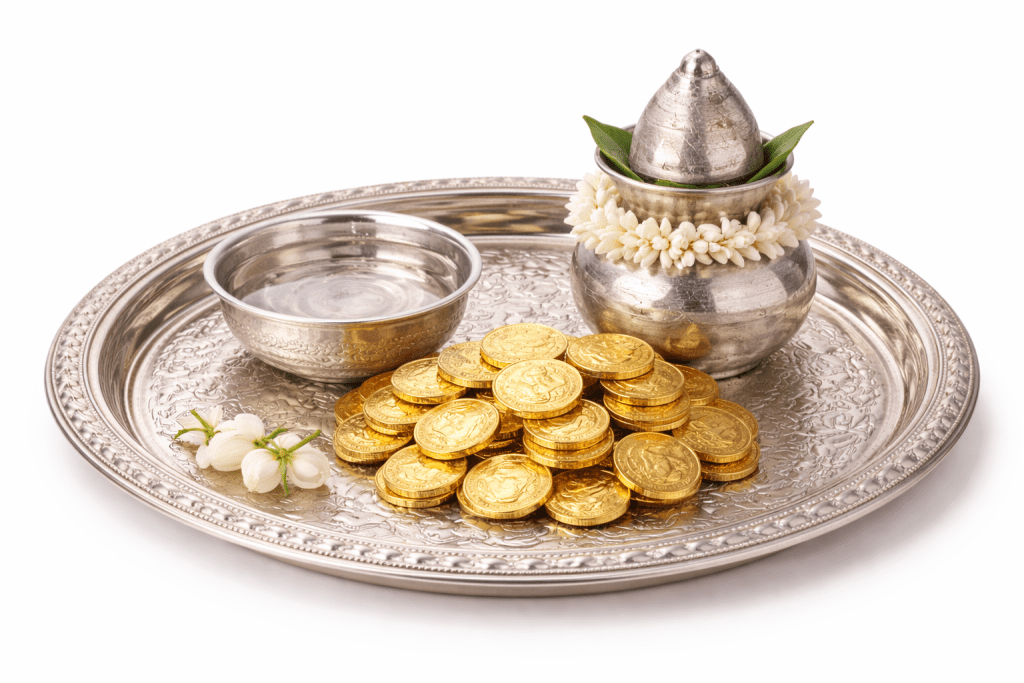
Kanakabhisheka — the golden Abhisheka — is among the most magnificent and meritorious of all ritual offerings described in the Hindu temple tradition. At Shri Vadiraja Mandira, Chintamani, this special Abhisheka involves the symbolic offering of gold (kanaka) as part of a consecrated bathing ritual, combining the Vedic reverence for gold as a purified form of solar energy with the devotional act of Abhisheka (divine bathing). The very word “kanaka” resonates with auspiciousness — it appears in the names of deities (Kanakadurga, Kanakadhara), in sacred verses, and in the highest forms of temple offering across the Hindu tradition.
Gold, in the Vedic cosmology, is not merely a precious metal. The Chandogya Upanishad describes gold as the condensed form of the Sun’s energy — the cosmic fire (Agni) made dense and purified by the earth. The Rig Veda praises gold as “Hiranya” — “the gleaming one” — and associates it with Agni, the Sun, and the vital force (Prana) that sustains all life. When gold is offered to the deity in Kanakabhisheka, the act invokes this cosmic wealth — not merely the material value of gold but the solar, life-giving energy that gold embodies in the Vedic understanding of creation.
The tradition of Kanakabhisheka at major Vishnu temples is attested across South India. At Tirumala-Tirupati, the offering of gold (Suvarna Tula — the weighing of the devotee in gold and offering it to the Lord) is the most exalted of all sevas. In Karnataka’s Udupi and associated temple traditions, Kanakabhisheka similarly holds a pinnacle position in the hierarchy of offerings. At Shri Vadiraja Mandira, Kanakabhisheka carries the additional significance of the gold associated with Shri Vadirajaru’s own tradition of wealth offered in divine service.
Scriptural Background: Lakshmi Hrudaya Stotra and the Golden Shower
The Lakshmi Hrudaya Stotra, attributed to Vadiraja Tirtha, is a deeply devotional hymn that reflects his intense spiritual experience and unwavering faith in Goddess Lakshmi. According to tradition, Vadiraja Tirtha composed this stotra after attaining divine insight into the compassionate nature and supreme grace of Goddess Lakshmi. It is believed that through profound meditation and devotion, he perceived Lakshmi not merely as the consort of Lord Vishnu but as the embodiment of mercy, auspiciousness, and inner spiritual wealth. The hymn, therefore, is not just a prayer for material prosperity but a heartfelt appeal for divine protection, purity of mind, and liberation. Devotees regard the Lakshmi Hrudaya Stotra as especially powerful, believing that its sincere recitation invokes the goddess’s blessings, removes hardships, and brings both spiritual elevation and worldly well-being.
How Kanakabhisheka is Performed at Shri Vadiraja Mandira
The Kanakabhisheka at the temple involves a formal ritual where sacred gold (in symbolic form — gold water prepared using traditional methods, or a gold object touched to the Abhisheka water) is incorporated into the Abhisheka offerings. The ritual begins with the Panchamruta Abhisheka (the five-nectar bath) as the base, to which the golden offering is ceremonially added. The priests recite specific Vedic mantras associated with gold — from the Hiranya Sukta and the Lakshmi Sukta — throughout the Abhisheka.
After the Abhisheka, the deity is decorated with golden ornaments (Suvarna Alankara) as part of the Kanakabhisheka seva, making the divine form resplendent with golden light. The entire experience — the golden water, the golden ornaments, the Vedic mantras invoking solar wealth — creates a uniquely elevated devotional atmosphere that devotees who attend describe as transformative.
Occasions for Kanakabhisheka
Kanakabhisheka is traditionally booked to celebrate and consecrate major life milestones: business milestones (when a company reaches a significant threshold or new premises); significant birthdays (60th, 80th — Sashtiabdapoorthi, Sadabhishekam); weddings (as a special blessing for the newly married couple); child naming ceremonies; the purchase of a new home or vehicle; or as an act of major thanksgiving when a long-held prayer is answered. It is also recommended when beginning a significant long-term investment, as the golden blessing at the start is believed to infuse the enterprise with Lakshmi’s energy.
Spiritual Benefits of Kanakabhisheka
The Kanakabhisheka is believed to: attract sustained material and spiritual wealth; remove financial obstacles and improve prosperity; strengthen the individual’s solar qualities (confidence, leadership, vitality); create an aura of Lakshmi’s grace around the sponsor’s family and endeavours; and mark a “golden” chapter in the devotee’s life story — a turning point blessed by divine acknowledgement. Many families who have sponsored Kanakabhisheka report that significant positive changes followed in the months after the seva.
Celebrate your golden moments with the Lord — book Kanakabhisheka Seva at Shri Vadiraja Mandira. For the complete ritual bath that forms the foundation of Kanakabhisheka, see Panchamruta Abhisheka.
Is actual gold required for Kanakabhisheka?
No. In the traditional performance of temple Kanakabhisheka, gold is incorporated symbolically — through gold-infused Abhisheka water prepared by traditional methods, or through the priest’s mantra-invocation that consecrates water with the “golden” quality of solar energy. Actual gold objects may optionally be brought by devotees for symbolic inclusion in the ritual. The temple can advise on the appropriate form when you book.
How is Kanakabhisheka different from regular Abhisheka?
Regular Abhisheka uses water and the five nectars. Kanakabhisheka adds the dimension of gold — either symbolically in the water, in the mantras, or in the post-Abhisheka Alankara using golden ornaments. The additional golden element is what elevates this Abhisheka to its special status and makes its associated benefits specifically wealth and prosperity-related.
Can Kanakabhisheka be performed for a business?
Yes. Many business owners and companies sponsor Kanakabhisheka at the beginning of a financial year, at the launch of a new venture, or at a major milestone. The Sankalpa (dedication) can include the name of the business alongside the owner’s name and gothra. This is a well-established tradition in Karnataka’s business community.
Is there an astrological timing for Kanakabhisheka?
Akshaya Tritiya (the third day of Vaishakha, when anything begun grows perpetually — literally “the inexhaustible third”) is the most auspicious day for Kanakabhisheka. Rohini Nakshatra, Pournami, and the auspicious Muhurtas marked in the Panchangam are other recommended timings. Gold-related auspicious days (Dhanteras, Diwali) are also popular.
Mark your milestone with gold — book Kanakabhisheka Seva at Shri Vadiraja Mandira, Chintamani today.