Archana is the act of worshipping the Lord by reciting His divine names while offering sacred items — flowers, Tulasi leaves, kumkuma, or akshata — at His feet. The word comes from the Sanskrit root arch, meaning to honour, praise, or worship. In the Madhwa Vedantic tradition, Archana holds a place of immense importance because it is rooted in Nama Smarana — the remembrance and recitation of God’s names — which Shri Madhwacharya identifies as one of the most accessible and powerful forms of bhakti (devotion) available to the jiva in the Kali Yuga.
The Power of Nama Smarana in Dvaita Philosophy
Why are God’s names so powerful? In the Dvaita framework established by Shri Madhwacharya in his Brahma Sutra Bhashya, the names of Bhagavan are not mere labels. Each divine name — Narayana, Keshava, Govinda, Madhava — carries within it the shakti (potency) of the Lord Himself. Just as fire burns whether you call it “agni” or “fire,” the divine name invokes Bhagavan’s actual presence and power regardless of the devotee’s level of learning. Shri Jayatirtha, the celebrated commentator known as Tikacharya, explains in his Nyaya Sudha that Nama Smarana purifies the antahkarana (inner instrument of the mind) and gradually dissolves the layers of avidya (ignorance) that obscure the jiva’s innate devotion.
Shri Vyasatirtha (Vyasaraja), the great Madhwa philosopher and royal preceptor, composed the Vishnu Stuti in which he demonstrates through 33 verses that every name of Vishnu reveals a unique aspect of His infinite nature — His sovereignty, compassion, beauty, strength, knowledge, and independence. When these names are recited during Archana, the devotee is not performing an empty chant; each name is an invocation of a specific divine attribute, drawing the devotee closer to a real, personal relationship with God.
Shri Raghavendra Swami, whose Brindavana at Mantralaya draws millions, emphasised that even a single sincere utterance of “Narayana” can destroy mountains of accumulated sin. Archana, which involves hundreds or even a thousand names in sequence, therefore represents a concentrated outpouring of devotion whose cumulative power is described in the Vishnu Purana as capable of liberating entire lineages.
Types of Archana in Madhwa Temples
Archana takes several forms depending on the number of names recited, the offering material, and the deity being worshipped.
Sahasranama Archana
Sahasranama means “a thousand names.” The most widely recited is the Vishnu Sahasranama from the Anushasana Parva of the Mahabharata, where Bhishma reveals to Yudhishthira the thousand names of Vishnu. During Sahasranama Archana, the priest recites each of the 1,000 names while offering a flower, Tulasi leaf, or akshata at the deity’s feet. This is the most elaborate and comprehensive form of Archana and is recommended for major life events, Ekadashi, and annual observances.
Ashtottara Archana (108 Names)
Ashtottara Shatanamavali is a collection of 108 names of the deity, drawn from Puranic sources. Ashtottara Archana is shorter than Sahasranama but deeply effective. The number 108 holds cosmic significance — it corresponds to the 27 nakshatras multiplied by the 4 padas (quarters) of each nakshatra, representing the totality of the cosmic order over which Vishnu presides.
Tulasi Archana
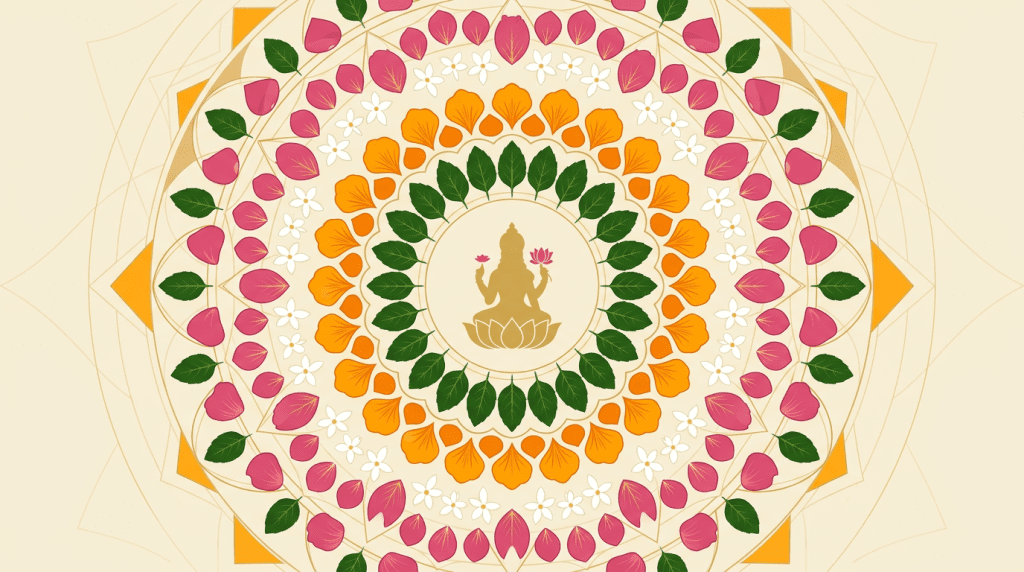
Tulasi (holy basil, Ocimum tenuiflorum) is the plant most dear to Lord Vishnu. The Padma Purana declares that a worship performed with Tulasi leaves pleases the Lord more than offerings of gold or precious gems. In Tulasi Archana, each divine name is accompanied by the offering of a fresh Tulasi leaf at the Lord’s feet. At Shri Vadiraja Mandira, Tulasi Archane is performed with leaves from the temple’s own Tulasi Brindavana, ensuring ritual purity.
Kumkumarchane (Kumkuma Archana)
Kumkuma (vermilion) is a symbol of sowbhagya (auspiciousness) and is especially sacred to Goddess Lakshmi. Lakshmi Kumkumarchane involves reciting the 108 or 1,000 names of Shri Lakshmi while offering pinches of kumkuma at her feet. This seva is widely sought for prosperity, marital harmony, and the blessings of the divine feminine. Fridays and the day of Varalakshmi Vrata are considered especially potent for Kumkumarchane.
How Archana Is Performed in a Madhwa Temple
The procedure of Archana in a Madhwa temple follows the Agama-prescribed format. The devotee communicates the sankalpa — name, gotra (lineage), nakshatra (birth star), and intention — to the archaka priest. The priest begins with an invocation (avahana) of the Lord’s presence, followed by the sequential recitation of divine names. With each name, the priest utters the prefix “Om” and the suffix “Namaha” (I bow), placing the offering at the deity’s feet. For instance: “Om Keshavaya Namaha” (I bow to Keshava), “Om Narayanaya Namaha” (I bow to Narayana), and so on.
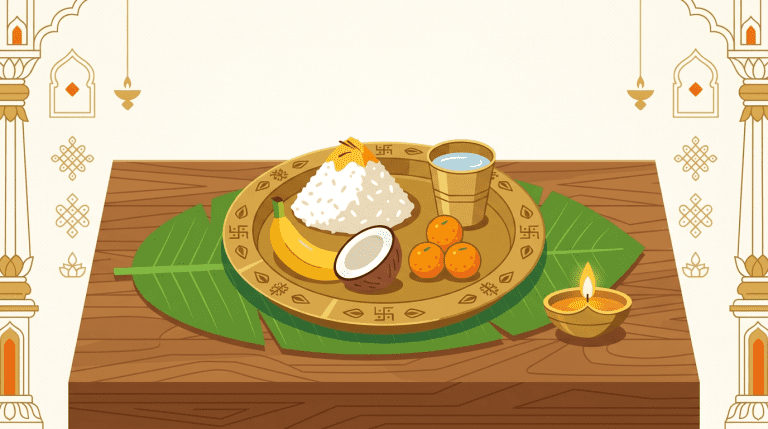
After the final name, the priest recites a concluding prayer (phala shruti) that describes the fruits of reciting the Lord’s names, and performs Mangala Aarati. The flowers or Tulasi leaves that were offered are collected as Nirmalya — sacred remnants — and distributed along with Mantrakshate (sanctified rice grains) to the devotee as Prasada.
The atmosphere during Archana is one of focused reverence. The rhythmic chanting of names, the fragrance of flowers and incense, and the sight of the adorned deity together create a multisensory experience that draws the mind away from worldly distractions and fixes it on the divine. Shri Vadiraja Tirtha composed the Dashavataara Stuti and numerous kirtanas in which each name of the Lord is a doorway to contemplation of His infinite qualities. When the priest chants these names during Archana at Shri Vadiraja Mandira, the devotee — whether present in person or participating through an online booking — is drawn into this same contemplative stream.
At Shri Vadiraja Mandira, the Panchami Archana Seva is a special observance prescribed by Shri Vadiraja Tirtha himself in the Swapna Vrundavana Akhyana. The saint directed that his Vrundavana at Sode be worshipped on every Panchami tithi (the fifth lunar day), and this instruction is faithfully observed at our temple in Chintamani as well.
Scriptural Basis and Spiritual Benefits of Archana
The Narada Bhakti Sutra counts Archana among the nine forms of bhakti (navavidha bhakti). The Bhagavata Purana (7.5.23) lists it alongside Shravana (hearing), Kirtana (singing), and Vandana (prostration) as a primary means of cultivating devotion. In the Madhwa understanding, these nine forms are not merely symbolic exercises — they are real transactions between the jiva and the Lord. When you offer a Tulasi leaf and say “Om Narayanaya Namaha,” you are communicating directly with Bhagavan, who hears, receives, and responds.
The spiritual benefits of Archana include purification of the mind, reduction of the karmic burden, protection from malefic influences, and — most importantly — the deepening of bhakti, which is the ultimate goal of all sadhana. The Vishnu Sahasranama Phala Shruti states that one who recites or hears the thousand names of Vishnu is freed from all fear, disease, and sorrow, and attains the supreme abode of Vishnu after death.
Archana Sevas at Shri Bhaavi Sameera Vadiraja Mandira
Devotees can book several Archana sevas online at Shri Vadiraja Mandira, Chintamani, and receive Prasada at their doorstep:
- Tulasi Archane — worship with sacred Tulasi leaves
- Lakshmi Kumkumarchane — kumkuma offering to Goddess Lakshmi
- Panchami Archana Seva — special Archana on Panchami tithi as prescribed by Shri Vadiraja Tirtha
For the full list of sevas and their philosophical context, see our Guide to Madhwa Sevas.
Frequently Asked Questions
What is the difference between Archana and Abhisheka?
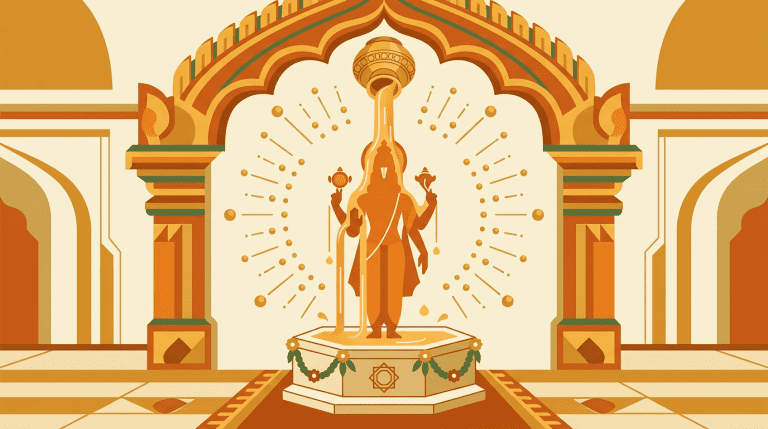
Abhisheka is the ceremonial bathing of the deity with sacred substances (milk, honey, water, etc.), while Archana is the worship of the deity through the recitation of divine names accompanied by offerings of flowers, Tulasi, or kumkuma. Both are important upacharas (services) in temple worship and are often performed together during elaborate poojas.
How many names are recited in a typical Archana?
Ashtottara Archana involves 108 names, and Sahasranama Archana involves 1,000 names. The choice depends on the devotee’s intention and the occasion. Sahasranama is recommended for major events, while Ashtottara is suitable for regular worship and specific requests.
Why is Tulasi preferred over other flowers for Vishnu worship?
The Padma Purana and Skanda Purana declare Tulasi as the plant most dear to Lord Vishnu. Offering Tulasi is said to confer greater merit than offering gold, sandalwood, or any other flower. In the Madhwa tradition, Tulasi is essential for any Vishnu pooja and is grown in every Madhwa household’s Tulasi Brindavana (sacred basil altar).
Can Archana be performed for specific intentions like health or marriage?
Yes. When booking Archana, the devotee states a sankalpa (intention) — for health, marriage, education, job, family peace, or any righteous desire. The priest includes this intention in the invocation. However, the deepest purpose of Archana is to cultivate pure bhakti; material blessings follow naturally when the Lord is pleased with sincere devotion.
Is Archana effective if performed by a priest on my behalf rather than by me personally?
Absolutely. The Agama Shastras explicitly sanction para-karma — rituals performed by a qualified priest on behalf of a devotee. The priest acts as your representative before the deity; the merit accrues to you because the sankalpa carries your name and intention. This is why temple Archana has been a cornerstone of Hindu devotion for millennia, serving devotees who may live far from the temple.
Archana is the simplest yet most profound way to call upon the Lord by name and offer your devotion at His feet. Book your Archana seva at Shri Bhaavi Sameera Vadiraja Mandira, Chintamani, and receive the Lord’s Prasada at your doorstep.
Explore all sacred sevas: Visit our Seva Booking page to discover the complete range of Archanas, Abhishekas, and Deepa sevas at Shri Vadiraja Mandira, Chintamani.