Of all forms of charity described in the Hindu scriptures, Annadana — the gift of food — stands supreme. The Taittiriya Upanishad, one of the most ancient of the Upanishads, makes this unequivocal: “Annam Brahma” — “Food is Brahman (God).” And again: “Na kadacit annam pratyakhyam tat” — “Never refuse food to anyone who asks.” At Shri Vadiraja Mandira, Chintamani, the Annadana Seva embodies this timeless teaching, providing a sacred meal to pilgrims, devotees, scholars, and the needy who visit the temple. By sponsoring this seva, you participate in one of the most meritorious acts recognised across all of Indian spiritual tradition.
The Mahabharata records the great patriarch Bhishma’s teaching to Yudhishthira: “Annadana param danam ity aahu munisattamah” — “The sages declare that food-giving is the highest gift.” Bhishma goes on to enumerate the spiritual rewards of Annadana: the sponsor gains merit equal to performing major Vedic yajnas, ensures the welfare of ancestors across seven generations, and receives the blessings of all deities for whom food is sacred. This is not merely poetic exaggeration — it reflects the deep understanding that food is the foundation of all life, and the one who provides it participates in the divine act of sustaining creation.
In the Madhwa tradition, Annadana carries an additional dimension: it is understood as serving the Lord himself in the form of visiting devotees. Shri Madhwacharya’s Dvaita philosophy teaches that the Supreme Lord pervades all forms of existence, and serving sincere devotees is equivalent to serving God directly. The Bhagavata Purana records that Lord Vishnu declared: “I live within those who are hungry; whoever satisfies them satisfies Me.” At Shri Vadiraja Mandira, Annadana Seva is thus not mere charity — it is sacred service (Seva) to the Lord.
How Annadana Seva Works at Shri Vadiraja Mandira
When you book Annadana Seva online, your sponsorship funds the preparation and serving of a complete sacred meal for a specified number of pilgrims at the temple. The food is prepared in the temple kitchen (Madhvara Madige) according to strict purity standards — it is sattvic (pure vegetarian, without onion and garlic), freshly prepared on the day, and cooked with the awareness that it will serve as an offering first to the Lord (as Neivedyam) and then to the devotees as Prasada.
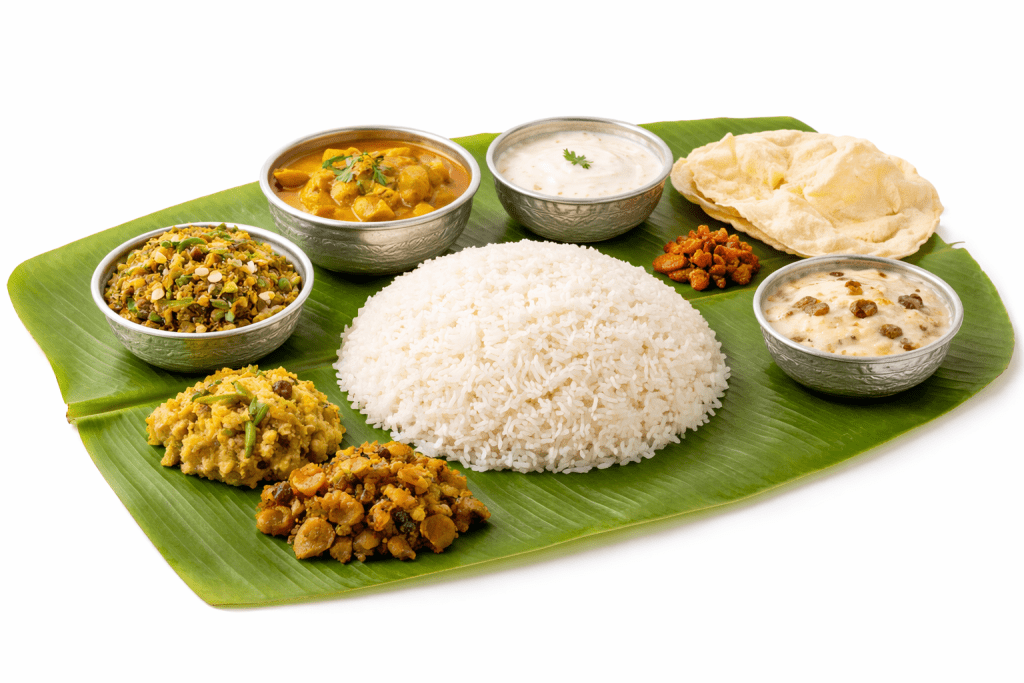
The meal typically includes rice, sambar, rasam, vegetable preparations, and papad — a traditional South Indian meal that is nutritious, sattvik, and prepared according to the purity standards of Madhwa Agama cooking. The food is served with care and respect, with priests offering a brief prayer before distribution. Every person who receives the meal receives it as Prasada — consecrated food that carries divine blessing.
Depending on the sponsorship level, Annadana Seva can feed 10, 25, 50, 100, or more pilgrims. The temple maintains a log of all Annadana sponsorships and a formal acknowledgement (Prashastipatra) can be provided to the sponsor on request.
Who Benefits from Annadana at the Temple?
The beneficiaries of Annadana Seva at Shri Vadiraja Mandira include: pilgrims who travel long distances to visit the temple and need a mid-day meal; scholars and priests (Vedapathashala students and archaka trainees) who reside near or at the temple; elderly devotees who cannot prepare food themselves; and on special festival days, the general public who come to participate in the celebrations. During major festivals like Rathotsava, Vadirajaru Aradhana, and Karthika events, the Annadana program feeds hundreds of people in a single day.
Spiritual Benefits for the Annadana Sponsor
The Vishnu Dharmottara Purana lists the spiritual rewards of Annadana: relief from debt (both material and karmic), ancestral peace and uplift, protection of children and descendants, fulfilment of long-cherished desires, and liberation from the cycle of hunger and deprivation in future lifetimes. The sponsor of Annadana, the scriptures say, never faces scarcity — either in this lifetime or in lives to come.
Many devotees sponsor Annadana on significant occasions: birth anniversaries, wedding anniversaries, in memory of departed family members (especially in the month after a death or on annual Shraddha days), after recovery from illness, or as an act of gratitude for a prayer answered. The tradition of sponsoring Annadana as an act of thanksgiving is deeply embedded in Karnataka’s temple culture, and Shri Vadiraja Mandira has been a centre of this practice for generations.
Prasada from Annadana Seva
The food served during Annadana is itself the Prasada — the devotees who receive and consume the meal are the direct recipients of the divine blessing your sponsorship creates. For the sponsor themselves, a portion of the sacred temple food is set aside and, if you are visiting in person, served directly to you. For remote sponsors, the temple dispatches general Prasada from the day’s pooja along with confirmation of the Annadana conducted.
Nourish the body, uplift the soul — book Annadana Seva at Shri Vadiraja Mandira today. For a comprehensive act of worship that includes Annadana along with other major sevas, consider the Sarva Seva package.
Is Annadana Seva effective for ancestral healing (Pitru Dosha)?
Yes. The Hindu tradition holds that feeding Brahmanas, priests, and sincere devotees at a temple pleases the departed ancestors who receive symbolic nourishment through the merit generated. Annadana performed on Amavasya, Pitru Paksha, or on a parent’s death anniversary is specifically recommended for Pitru Dosha relief. Pairing Annadana with Gau Grasa Seva on the same day creates a powerful combination for ancestral blessing.
How much does it cost to feed one devotee through Annadana Seva?
The cost varies based on the scale of the meal and the number of devotees. Please visit our Annadana Seva booking page for the current pricing and available options. The temple offers flexible sponsorship levels to accommodate devotees of all economic backgrounds, reflecting the non-discriminatory nature of Annadana itself.
Can I sponsor Annadana in memory of a departed family member?
Absolutely. Dedicating Annadana to the memory of a departed parent, grandparent, or other family member is one of the most traditional forms of Shraddha in Hinduism. The seva will be performed with a Sankalpa in the name of the departed soul. Many families make this an annual tradition on the death anniversary (Punya Tithi) of their loved ones.
What is the difference between Annadana and Kanike at the temple?
Kanike is a general voluntary donation to the temple’s operating fund, while Annadana is a specifically earmarked offering for the provision of food to pilgrims and devotees. Both are forms of Dana (charity), but Annadana generates the specific merit associated with the gift of food as described in the Taittiriya Upanishad. Kanike contributes to the general wellbeing of the temple institution.
Join the ancient tradition of sacred food-giving — sponsor Annadana Seva at Shri Vadiraja Mandira, Chintamani.