
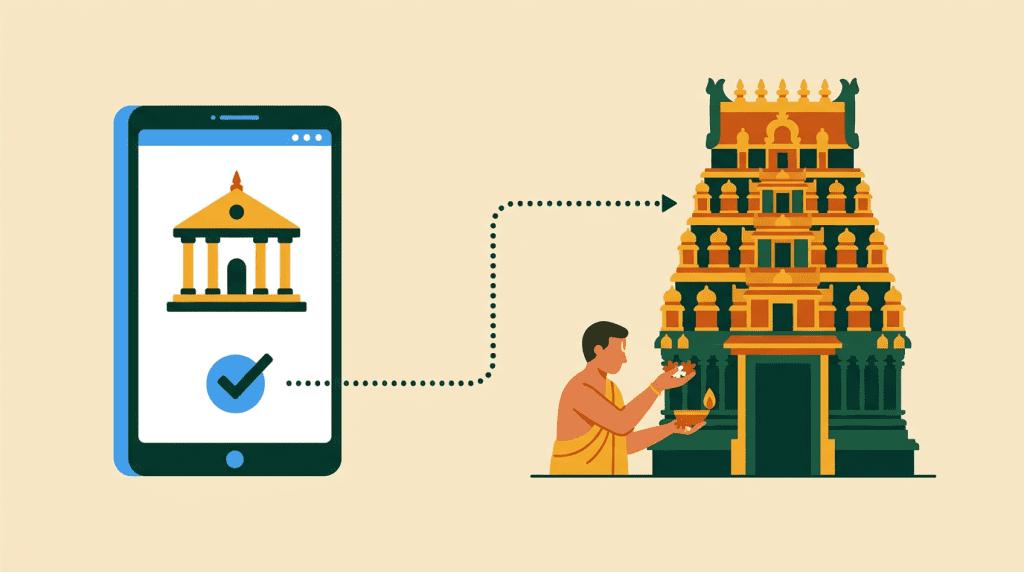
Booking a seva online at a Hindu temple might seem like a modern convenience — a few clicks on a website, a digital payment, and a confirmation email. But what happens after that click? For many devotees, particularly those booking for the first time from a distant city or another country, there is a natural curiosity — and sometimes concern — about what actually takes place at the temple. Is the seva really performed? Who performs it? How is the prasada prepared and dispatched? Does the archaka truly take a personal sankalpa (intention) for each devotee?
At Shri Bhaavi Sameera Vadiraja Mandira, Chintamani, online seva booking is not a dilution of tradition — it is an extension of it. Every seva booked online is performed with the same Vedic precision, Madhwa Agama adherence, and personal attention as a seva booked in person. This article takes you behind the scenes, step by step, from the moment you click “Book Now” to the moment consecrated prasada arrives at your doorstep.
Step 1: The Devotee Selects a Seva and Date
The journey begins on the Seva Booking page of the Ruju Yogi Foundation website. Devotees choose from the full range of sevas offered at Vadiraja Mandira — abhishekas (sacred bathing of the deity), archane (recitation of the deity’s names with offerings), Deeparadhane (lamp offering), Hastodaka (Naivedyam to Yati Vrundavanas), Annadana (community feeding), Gau Seva (cow worship), and the comprehensive Sarva Seva.
Each seva has a clear description, including what it involves, its spiritual significance, and the prasada that will be dispatched. The devotee selects a preferred date — this could be a specific Ekadashi, a festival day, a family member’s birthday, or any auspicious occasion per the Hindu calendar. Personal details including name, gothra (ancestral lineage), nakshatra (birth star), and the sankalpa purpose (for whom and for what intention the seva is being offered) are provided during booking.
Step 2: The Temple Receives the Booking
Once payment is confirmed, the booking is transmitted to the temple administration at Shri Vadiraja Mandira. The temple maintains a seva register — a physical logbook where every booking is recorded with the devotee’s name, gothra, nakshatra, sankalpa purpose, and the date of the seva. This register is updated daily by the temple manager and shared with the archaka (priest) team.
For sevas scheduled on specific dates (such as Ekadashi or a Jayanti), the booking is slotted into that day’s schedule. For sevas without a date-specific requirement, the temple performs them on the next available auspicious day. The devotee’s details are never treated as abstract data — each name is spoken aloud during the sankalpa, making the seva genuinely personal.
Step 3: The Archaka Priest Prepares Materials
On the day of the seva, the temple’s trained Madhwa archaka priests prepare all necessary materials. For an abhisheka, this includes the specific substances (milk, curd, honey, ghee, sugar for Panchamruta Abhisheka; fresh honey for Madhu Abhisheka; gold-infused water for Kanakabhisheka). For an archane, fresh flowers, Tulasi leaves, gandha (sandalwood paste), kumkum, and akshata are prepared. For Deeparadhane, oil or ghee lamps are readied. For Annadana, the kitchen team begins cooking fresh sattvic food.
Every material used in Vadiraja Mandira sevas is sourced with care — milk from local cows, flowers from temple gardens or trusted vendors, ghee from verified sources. The archaka personally inspects each item before use. In the Madhwa tradition, the purity (shuddha) of materials is as important as the correctness of mantras — both must be flawless for the seva to bear its full spiritual fruit.
Step 4: The Seva Is Performed per Madhwa Agama
This is the heart of the process. The archaka, having completed his own morning Sandhyavandana and Devara Pooja, takes up the devotee’s seva in the sanctum sanctorum. The sequence follows Madhwa Agama prescriptions meticulously:
- Sankalpa: The archaka recites the devotee’s name, gothra, and nakshatra aloud, along with the specific intention of the seva. This verbal declaration — spoken in the presence of the deity — is what transforms a generic ritual into a personalised spiritual act. The Lord hears the devotee’s name and intention directly from the priest’s lips.
- Prana Pratishtha invocation: The archaka invokes the deity’s living presence in the murti through Vedic mantras. In Dvaita theology, the Lord is genuinely present in a properly consecrated murti — this is not symbolic but ontologically real.
- Seva execution: The specific ritual is performed — abhisheka with the prescribed substances, archane with the recitation of 108 or 1,000 names, lamp offering, Naivedya preparation and presentation, or whatever the seva entails. Each step is accompanied by appropriate Vedic mantras, Puranic stotras, and Haridasa kirtanes.
- Mangalarathi: The seva concludes with Mangalarathi — waving of the camphor or ghee lamp before the deity — and a final prayer for the devotee’s wellbeing.
Step 5: Prasada Is Sanctified
After the seva, the offerings — food, flowers, sacred water, gandha, kumkum — become prasada: substances that have been in direct contact with the deity during worship and are now carriers of divine grace. In Dvaita Vedanta, prasada is not merely “blessed food” in a vague sense — it is food that the Lord has genuinely accepted and returned to the devotee as an act of grace. Consuming prasada with faith creates a direct connection between the devotee and the deity.
The prasada from each seva is carefully set aside and labelled with the devotee’s name and booking reference. It is not mixed with prasada from other sevas — each devotee receives the specific prasada from their specific seva.
Step 6: Prasada Is Packed and Dispatched
The temple team packs the prasada with care and reverence. Dry prasada items (kumkum, gandha, akshata, Tulasi, sacred thread) are packed in clean pouches. Food prasada (laddu, holige, or other Naivedya items) is packed in food-safe containers. The package is sealed and labelled with the devotee’s address.
Dispatch is handled through reliable courier services. The temple aims to dispatch prasada within 2–3 days of the seva date. Tracking information is shared with the devotee so they can follow the delivery. For destinations within Karnataka, delivery typically takes 3–5 days; for other Indian states, 5–7 days.
Step 7: The Devotee Receives Prasada at Home
When the prasada arrives, the devotee receives it with the same reverence as they would receive prasada in person at the temple. The recommended practice is:
- Receive the package with clean hands.
- Place it before the home deity before opening.
- Open the package and distribute prasada to family members.
- Consume food prasada with faith and gratitude.
- Store kumkum, gandha, and akshata in the pooja room for daily use.
For devotees who wish to request prasada delivery to a family member or friend, the Request Prasada option allows specifying an alternate delivery address.
Authenticity and Trust: How Vadiraja Mandira Maintains Tradition
The most important question for any devotee booking a seva remotely is: “Can I trust that the seva is actually performed?” At Shri Vadiraja Mandira, the answer is rooted in the temple’s institutional integrity:
- Trained Madhwa archakas: All priests at Vadiraja Mandira are trained in the Madhwa Agama tradition. They are initiated Vaishnavas who perform their own daily Sandhyavandana, Devara Pooja, and personal worship before conducting any temple seva.
- Physical seva register: Every booking is logged in a physical register maintained at the temple. This provides an auditable record of every seva performed.
- Ruju Yogi Foundation oversight: The Foundation, which manages the temple’s operations, ensures quality control across all sevas — from material procurement to dispatch logistics.
- Devotee communication: The temple provides updates on seva completion and prasada dispatch. Devotees can contact the temple for any questions or special requests.
Is online seva booking as effective as visiting the temple in person?
Yes. The Shastras affirm that when a qualified priest performs a seva with your sankalpa (name, gothra, and intention), the spiritual merit accrues to you identically whether you are physically present or not. The archaka acts as your representative before the deity. Shri Raghavendra Swami famously assured distant devotees that sincere prayer transcends physical distance — the Lord responds to bhakti, not geography. Online booking simply provides the logistics to make this accessible.
Can I book a seva for someone else — a family member or friend?
Absolutely. Many devotees book sevas for elderly parents, children studying abroad, or friends going through difficult periods. During booking, simply provide the beneficiary’s name, gothra, and nakshatra instead of your own. The sankalpa will be taken in their name, and prasada can be shipped to their address. This is a beautiful expression of care — offering sacred merit to a loved one.
How do I know which seva to book?
Each seva on the website includes a detailed description of its purpose and spiritual significance. As a general guide: Abhishekas are recommended for health and obstacle removal; Archane for specific wishes and family wellbeing; Deeparadhane for ancestral healing and protection; Hastodaka for Guru blessings; Annadana for universal merit; Gau Seva for Pitru Tarpana and prosperity. The Sarva Seva is the all-inclusive option for those who want comprehensive blessings.
What if I want a seva on a specific date that is already fully booked?
Temple capacity for each date is managed carefully to ensure every seva receives proper attention. If a specific date is unavailable, the temple will suggest the nearest available date or a suitable alternative auspicious day. For high-demand dates like Vaikunta Ekadashi or Krishna Janmashtami, early booking is recommended.
Experience the full journey from booking to blessings. Book your seva at Shri Bhaavi Sameera Vadiraja Mandira, Chintamani, and receive sanctified prasada from the temple of Shri Vadirajaru.
Explore all sacred sevas: Visit our Seva Booking page to discover the complete range of poojas, abhishekas, and archane offerings at Shri Bhaavi Sameera Vadiraja Mandira, Chintamani.