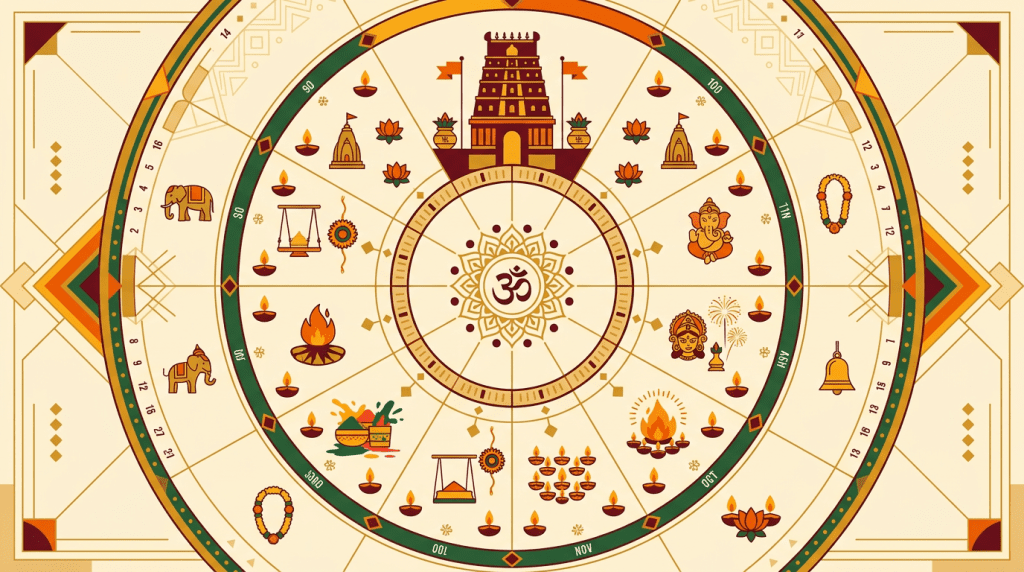
The Hindu Vaishnava calendar is a living rhythm of worship — a continuous cycle of Ekadashis, Jayantis (birth anniversaries of Lord Vishnu’s avataras and revered Acharyas), seasonal festivals, and temple celebrations that keep the devotee anchored to the Divine throughout the year. For followers of the Madhwa sampradaya, this calendar is not merely informational; it is prescriptive. Each observance carries specific rituals, fasting rules, and recommended sevas that connect the individual devotee to the cosmic order established by Lord Vishnu.
At Shri Bhaavi Sameera Vadiraja Mandira, Chintamani, every major Vaishnava festival is celebrated with Vedic precision and community devotion. This guide provides a month-by-month overview of the most important dates, their significance in the Madhwa tradition, and which sevas to book at the temple for each occasion.
Month-by-Month Vaishnava Festival Overview
Chaitra (March–April):
- Yugadi (Ugadi): The Hindu New Year per the Chandramana (lunar) calendar. Celebrated with Panchanga Shravana (listening to the year’s astrological forecast), Naivedya of Bevu-Bella (neem and jaggery), and special poojas. At Vadiraja Mandira, Yugadi is marked by Sarva Seva — a comprehensive pooja covering all major rituals. Book Sarva Seva for Yugadi.
- Rama Navami: The appearance day of Lord Rama, the seventh avatara of Vishnu. Shri Madhwacharya identifies Rama as a Poorna Avatara in the Mahabharata Tatparya Nirnaya. Fasting until noon and Rama Pattabhisheka (coronation re-enactment) are observed. Temple sevas include special abhishekas and Pushpalankara (floral decoration).
Vaishakha (April–May):
- Akshaya Tritiya: The day of inexhaustible merit. Any dana (charity), japa, or seva performed on this day yields permanent, non-diminishing spiritual reward. Annadana, Gau Seva, and lamp offerings are particularly recommended.
- Narasimha Jayanti: The appearance day of Lord Narasimha, Vishnu’s ferocious half-man-half-lion avatara who appeared to protect His devotee Prahlada. Observed with fasting and night vigil. The Narasimha Kavacham and Narasimha stotras are chanted. Shri Vadiraja Tirtha composed powerful kirtanes on Narasimha, and these resound in the temple on this night.
- Madhwa Navami: The day Shri Madhwacharya is believed to have departed from mortal vision. Observed with special poojas at Madhwa mutts and temples. This is a day of intense philosophical remembrance — readings from Madhwacharya’s Sarva Moola Granthas and discourses on Dvaita Vedanta.
Jyeshtha (May–June):
- Nirjala Ekadashi (Bhima Ekadashi): The strictest Ekadashi of the year — complete waterless fast. Named for Bhimasena’s observance as described in the Padma Purana. In the Madhwa tradition, Bhimasena is revered as Vayu’s avatara and the protector of the Pandavas. This Ekadashi carries extraordinary merit.
Ashadha (June–July):
- Chaturmasa begins: The four-month period of intensified spiritual practice. Many devotees take additional vratas (vows) during Chaturmasa — giving up specific foods, increasing japa, or performing daily parayana (scriptural recitation).
- Guru Purnima (Vyasa Purnima): Honouring Shri Vedavyasa — identified in the Madhwa tradition as an avatara of Lord Vishnu. All Madhwa Acharyas trace their philosophical lineage through Vedavyasa. This day is observed with Guru Vandana and offerings to one’s spiritual preceptor.
Shravana (July–August):
- Shravana Shukla Ekadashi (Putrada Ekadashi): Recommended for couples seeking progeny.
- Varamahalakshmi Vrata: Observed by married women for family prosperity and Lakshmi’s blessings. While primarily a household vrata, temple participation through seva booking adds spiritual depth.
Bhadrapada (August–September):
- Krishna Janmashtami: The appearance of Lord Krishna — the Poorna-tama Avatara of Vishnu per the Mahabharata Tatparya Nirnaya. Observed with fasting until midnight, Krishnashtami Pooja, and Gopala Pooja. Shri Vadiraja Mandira celebrates Janmashtami with midnight abhisheka, Daahi Handi, and community celebration. Sarva Seva is ideal for Janmashtami.
- Vadiraja Jayanti: The appearance day of Shri Vadiraja Tirtha (1480 CE), the presiding saint of our temple. Celebrated with special poojas to the Panchavrundavana, Harikatha on Vadirajaru’s life, and recitation of his compositions (Lakshmi Shobhane, Dashavatara Stuti, Tirtha Prabandha). This is the most important day in the Vadiraja Mandira calendar.
Ashwina (September–October):
- Navaratri: Nine nights honouring the divine feminine. In the Madhwa tradition, Navaratri celebrates Lakshmi, Saraswati, and Durga as Hari-Bhaktas (devotees of Vishnu) and independent Tatvas in the divine hierarchy. Dussehra on the tenth day commemorates Rama’s victory over Ravana.
- Madhwacharya Jayanti: The appearance day of Shri Madhwacharya (1238 CE on Vijayadashami). Celebrated with Poorna Kumbha Pooja, philosophical discourses, and readings from the Brahma Sutra Bhashya. At Vadiraja Mandira, this day is observed with the same grandeur as Vadiraja Jayanti.
Kartika (October–November):
- Kartika Deepotsava: Month-long lamp festival. Daily evening lamp lighting before the deity and Tulasi Brindavana. Deeparadhane and Taila Nanda Deepa are the recommended sevas.
- Deepavali: The festival of lights. In the Madhwa tradition, Deepavali celebrates Narakasura Vadha (Krishna’s slaying of the demon Narakasura) and the resultant liberation of 16,000 captive princesses.
- Tulasi Vivaha: Ceremonial wedding of Tulasi Devi with Lord Vishnu, marking the end of Chaturmasa. Tulasi Archane is the recommended seva.
Margashirsha (November–December):
- Vaikunta Ekadashi (Mukkoti Ekadashi): The holiest Ekadashi of the year. The gates of Vaikunta open for devotees. Strict fasting and Jagarane observed. This is the highest-attendance day at most Vaishnava temples.
- Hanuman Jayanti (per some panchangas): The appearance day of Lord Hanuman, revered in the Madhwa tradition as the first of Vayu’s three avataras (Hanuman, Bhimasena, Madhwacharya). Fasting and Hanuman Chalisa recitation observed.
Pushya (December–January):
- Makara Sankranti: The Sun’s entry into Makara Rashi (Capricorn). Celebrated with Ellu-Bella (sesame and jaggery) distribution, kite flying, and Gau Pooja. At Vadiraja Mandira, Sankranti is marked with special Surya Narayana Pooja and community Annadana.
Magha (January–February):
- Raghavendra Swami Aradhana: The Aradhana (Vrundavana Pravesha anniversary) of Shri Raghavendra Swami of Mantralaya. Celebrated at every Madhwa institution worldwide with abhishekas, Raghavendra Stotra parayana, and community feeding.
- Ratha Saptami: Celebrating the Sun God’s chariot with seven horses. Mangala Snana (sacred bath with seven leaves) and Surya Namaskaras are performed.
Phalguna (February–March):
- Maha Shivaratri: In the Madhwa tradition, Shiva is worshipped as the foremost devotee of Vishnu and a key Tatva in the divine hierarchy. Jagarane and Shiva Pooja are observed with the understanding of Shiva’s position per Dvaita Vedanta.
- Holi: Celebrating the victory of Prahlada and the burning of Holika — a triumph of Vishnu Bhakti over demonic opposition.
Ekadashi Dates: How to Track Them
Since Ekadashi occurs twice per lunar month, there are approximately 24 Ekadashis per year. The exact dates shift annually because the Hindu calendar is lunisolar. The most reliable way to track Ekadashi dates is through a Madhwa Panchanga — the annual almanac compiled by Madhwa scholars that accounts for local variations and tithi calculations specific to our tradition. Generic Hindu calendars may differ from the Madhwa reckoning, especially for “Vaishnava Ekadashi” versus “Smartha Ekadashi” — always follow the Madhwa panchanga to ensure correct observance.
Which Sevas to Book for Each Festival
The following guide helps devotees match the right seva to each occasion:
- Ekadashis: Book abhisheka or archane for the Ekadashi date.
- Jayanti festivals: Sarva Seva — the comprehensive pooja covering all major rituals.
- Kartika month: Deeparadhane and Nanda Deepa.
- Family occasions (birthdays, anniversaries): Sarva Seva or individual abhisheka.
- Ancestor-related observances: Hastodaka Seva and Gau Seva.
How do I find the correct Ekadashi date for my location?
Ekadashi tithi calculations depend on your geographic location because the lunar day’s start and end times vary. Use a Madhwa panchanga — the Uttaradi Math, Sosale Vyasaraja Math, and Pejawar Math publish annual panchangas that provide Ekadashi dates for major Indian cities. For devotees abroad, several Madhwa community websites provide panchanga conversions for global locations. The critical rule: follow the tithi applicable at your location’s sunrise.
Do all Vaishnava traditions celebrate the same festivals?
The core festivals — Ekadashis, Janmashtami, Rama Navami, Narasimha Jayanti — are common across Vaishnava traditions. However, the Madhwa sampradaya has unique observances including Madhwacharya Jayanti, Vadiraja Jayanti, and the Aradhanas of Madhwa saints (Raghavendra Swami, Jayatirtha, Vyasatirtha). The fasting rules and panchanga calculations also differ from other traditions, so a Madhwa-specific calendar is essential.
Can I book multiple sevas for a single festival day?
Yes, and this is encouraged for major festivals. For example, on Krishna Janmashtami, a devotee might book Sarva Seva (for the comprehensive pooja), Pushpalankara (floral decoration), and Annadana (community feeding) — creating a multi-layered offering. Multiple sevas on a single day multiply the spiritual merit, per Shastric injunction.
How does Vadiraja Mandira celebrate Vadiraja Jayanti?
Vadiraja Jayanti is the most important day in the temple calendar. Celebrations include Maha Abhisheka to the Panchavrundavana, Pushpalankara (grand floral decoration), public recitation of Vadirajaru’s compositions, Harikatha narrating his miraculous life, and community Annadana. Devotees worldwide participate by booking sevas online and receiving consecrated prasada from the Jayanti celebrations.
Stay connected to the sacred rhythm of the Vaishnava year. Book your sevas at Shri Vadiraja Mandira, Chintamani, for every major festival and Ekadashi. For a comprehensive offering, choose the Sarva Seva — our all-inclusive pooja package.
Explore all sacred sevas: Visit our Seva Booking page to discover the complete range of poojas, abhishekas, and archane offerings at Shri Bhaavi Sameera Vadiraja Mandira, Chintamani.