
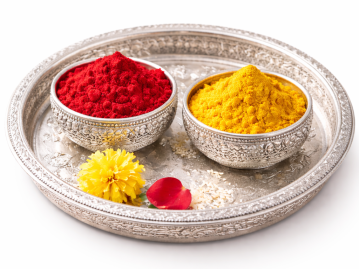
Lakshmi Kumkumarchane is a form of Archana (ritual worship through divine name recitation) where each of Goddess Lakshmi’s sacred names is offered alongside kumkuma — the vibrant vermilion powder that is the most auspicious symbol of the Divine Feminine in the Vedic tradition. At Shri Vadiraja Mandira, Chintamani, this seva invokes the grace of Goddess Lakshmi through the concentrated act of name-offering with kumkuma, creating a living bridge between the devotee’s aspiration and the Goddess’s inexhaustible abundance.
Kumkuma (vermilion) is not merely a cosmetic ingredient in the Hindu tradition — it is a sacred substance infused with the energy of the Divine Mother. Derived from turmeric transformed through a natural chemical process, kumkuma represents Shakti — the dynamic feminine power that underlies all creation. The red-orange colour is associated with the Sun and with auspiciousness; it is the colour of the rising sun that drives away darkness, of mangalsutra and tilak that mark sacred commitments, and of Lakshmi’s own depiction in temple iconography. When kumkuma is offered at each name during archana, the repetitive act becomes a focused meditation on the Goddess’s attributes, qualities, and grace.
The Lakshmi Sahasranama (thousand names of Lakshmi) enumerates her qualities from cosmic (Jagajjanani — Mother of the Universe) to intimate (Grihalakshmi — Goddess of the household). Each name is a door into one facet of her grace. Kumkumarchane — the systematic recitation of these names while offering kumkuma — is a structured devotional journey through all of Lakshmi’s dimensions, ensuring that the prayer encompasses every aspect of life where divine abundance and auspiciousness are needed.
Lakshmi in the Madhwa Tradition
In Dvaita Vedanta, the philosophy of Shri Madhwacharya, Goddess Lakshmi (Shri Devi) holds a unique and exalted position. She is described as eternally free (Nitya Mukta), blissful (Ananda Svarupini), and the mediator (Madhyastha) between the Supreme Lord Vishnu and the souls seeking liberation. Unlike some traditions where Lakshmi is understood primarily as the goddess of material wealth, in Madhwa philosophy she is the embodiment of divine grace itself — the compassionate force that pleads the case of sincere souls before the Supreme Lord.
The Madhwa Agamas prescribe specific forms of Lakshmi worship, including Kumkumarchane, especially on Fridays and during the Varalakshmi Vratam (the last Friday before Shravana Pournami). At Shri Vadiraja Mandira, the Lakshmi Kumkumarchane follows these traditional prescriptions, making it a ritual deeply rooted in the Madhwa philosophical and devotional framework rather than a generic offering.
Friday: The Most Auspicious Day for Lakshmi Worship
In Vedic astrology, Friday is the day of Venus (Shukra), the planet associated with beauty, prosperity, relationships, and the finer pleasures of life — all qualities presided over by Goddess Lakshmi. Shastras describe Shukravar (Friday) as the most auspicious day for any form of Lakshmi worship, including Kumkumarchane. Families seeking prosperity, couples praying for marital harmony, young women seeking auspicious life partners, and business persons seeking growth are all traditional sponsors of Friday Lakshmi Kumkumarchane.
The combination of Varalakshmi Vratam Friday and Kumkumarchane at a consecrated temple like Shri Vadiraja Mandira amplifies the effect considerably. Many Karnataka families maintain the tradition of sponsoring Lakshmi Kumkumarchane on the last Friday of each month as a regular devotional practice throughout the year.
How Lakshmi Kumkumarchane is Performed
The archaka priest at Shri Vadiraja Mandira performs the Sankalpa (dedication) in your name and then proceeds to recite Goddess Lakshmi’s names — from the Lakshmi Ashtottara (108 names) or Lakshmi Sahasranama (1008 names) — offering a pinch of kumkuma at each name. This concentrated act of devotion continues until all names are completed. The Goddess’s idol and yantra are decorated with the kumkuma as it is offered, creating a beautiful visual expression of the building Shakti energy.
Following the archana, the kumkuma that has been offered to the Goddess is distributed as Prasada. This blessed kumkuma is applied by devotees to their foreheads and to the door frame of their homes as a mark of Lakshmi’s protection and presence. Many women also apply it to the Mangalsutra or the part in their hair as an especially personal form of Lakshmi’s blessing.
Spiritual Benefits of Lakshmi Kumkumarchane
The regular practice of Lakshmi Kumkumarchane — whether attended in person or sponsored remotely — is said to: attract financial abundance and remove poverty; improve marital relations and bring harmony to the household; bless couples seeking children with fertility; protect the Grihalakshmi (the Lakshmi energy) that sustains the household; and bring general auspiciousness to all family endeavours. For women seeking empowerment, clarity of purpose, and divine support in their life journey, this seva is specifically recommended as it honours the Divine Feminine directly.
Book your Lakshmi Kumkumarchane Seva today — especially on a Friday — and invite Goddess Lakshmi’s grace into your home. For complementary worship of Lord Vishnu’s compassionate form, explore Tulasi Archane Seva.
What is the best way to use the Kumkuma Prasada from this seva?
Apply the blessed kumkuma to your forehead (Tilak), to the door frame of your home (both sides), and to any sacred objects in your home pooja room. Women traditionally apply it to the part in their hair (Sindoor area) and to the Mangalsutra as a mark of Lakshmi’s protection on their married life. Keeping a small portion in a silver container in the pooja room maintains an ongoing connection to the blessing received during the archana.
Can men sponsor and benefit from Lakshmi Kumkumarchane?
Absolutely. While Kumkumarchane is specifically popular among women, any devotee — male or female — can sponsor and receive the blessings of Lakshmi Kumkumarchane. Lakshmi’s grace is not limited by gender; she bestows prosperity, peace, and auspiciousness on all who approach her with sincere devotion. Many male heads of family sponsor this seva regularly to invoke Lakshmi’s protection on their entire household.
Is Kumkumarchane different from regular Lakshmi Pooja?
Yes. Regular Lakshmi Pooja is a broad ritual that includes multiple elements (Abhisheka, lamp, incense, food offering, etc.). Kumkumarchane is a specific, focused form of Archana where the primary medium of offering is kumkuma offered at each divine name. The sustained focus on name-recitation combined with the symbolic power of kumkuma makes this seva uniquely effective for invoking Lakshmi’s grace on specific intentions.
How often should Lakshmi Kumkumarchane be performed for best results?
Many devotees sponsor this seva once a month, ideally on the Friday closest to Pournami (full moon) for maximum potency. For specific prayers — seeking a job, overcoming financial difficulties, praying for a child — performing Kumkumarchane every Friday for three consecutive months is a common practice recommended by temple priests.
Invite abundance and auspiciousness into your life — book Lakshmi Kumkumarchane Seva at Shri Vadiraja Mandira today.