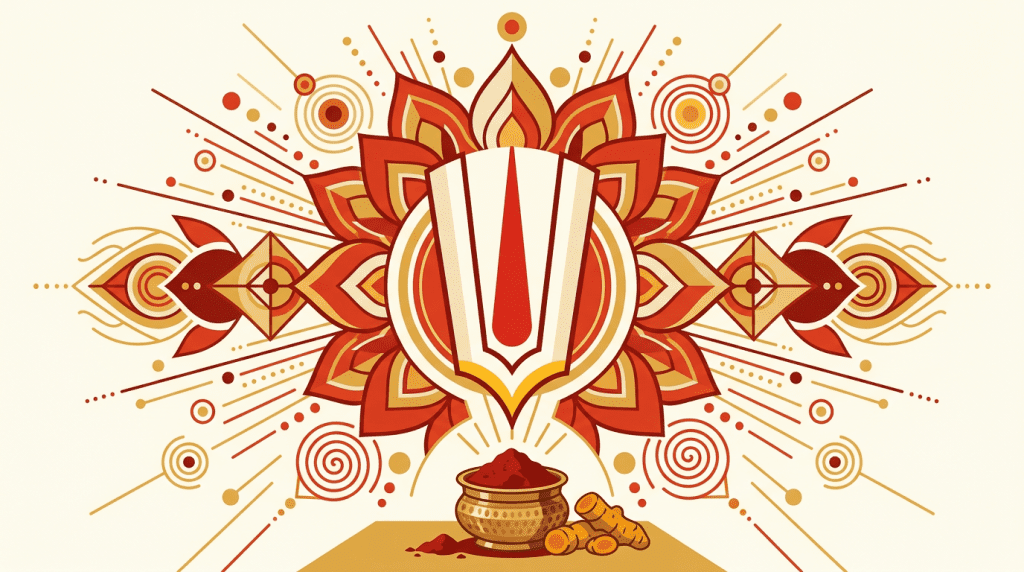
Kumkum—the vibrant red powder derived from turmeric—is one of the most recognisable elements of Hindu worship. From the auspicious mark on a devotee’s forehead to the elaborate kumkumarchane offered at temple sanctums, this sacred substance carries deep theological meaning. In the Madhwa sampradaya, kumkum is not merely a cosmetic or cultural marker; it is a potent symbol of divine grace, auspiciousness, and the devotee’s relationship with the Supreme Lord and His consort, Sri Lakshmi Devi.
Sri Madhwacharya’s Tattvavada teaches that every element of worship has a real, not merely symbolic, purpose. When kumkum is offered to the deity, it is genuinely received by the Lord, who is Svatantra (absolutely independent) and Sarva Guna Purna (possessed of all auspicious qualities). Understanding the significance of kumkum deepens our appreciation of this ancient practice.
What Is Kumkum? Preparation and Composition
Kumkum is traditionally prepared from turmeric (haridra), which is dried, powdered, and mixed with a small quantity of slaked lime. This chemical interaction transforms the yellow turmeric into a brilliant red powder. The result is a substance that is both naturally derived and imbued with sacred significance.
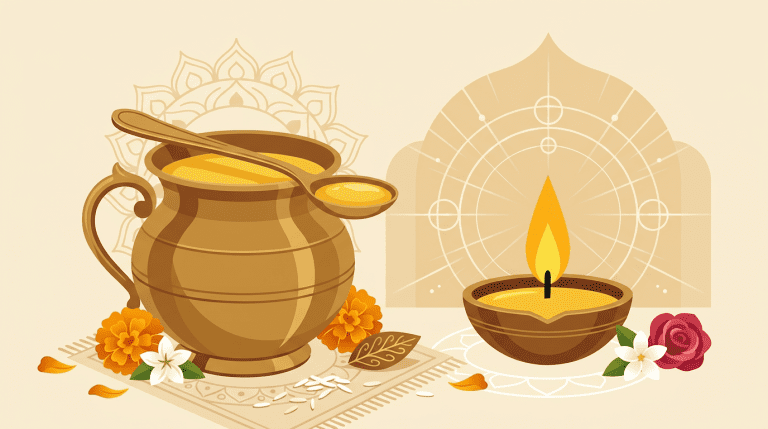
In temple worship, kumkum is prepared fresh and kept in a clean vessel near the deity. Some traditions also use kumkum made from saffron (kunkuma kesari), which is especially prized for elaborate rituals. The red colour of kumkum is significant—it represents shakti (divine energy), sowbhagya (auspiciousness), and the life-giving grace of Sri Lakshmi Devi.
In Madhwa households, kumkum is a staple of the pooja room. It is applied to the deity’s image, offered during archana, and distributed as prasada to devotees after worship. The careful preparation and handling of kumkum reflects the Madhwa emphasis on achara (ritual purity and proper conduct) in all aspects of worship.
The Significance of the Red Mark: Kumkum Tilaka
The application of kumkum on the forehead is one of the most visible markers of Hindu devotion. In the Madhwa tradition, the forehead mark has specific theological significance:
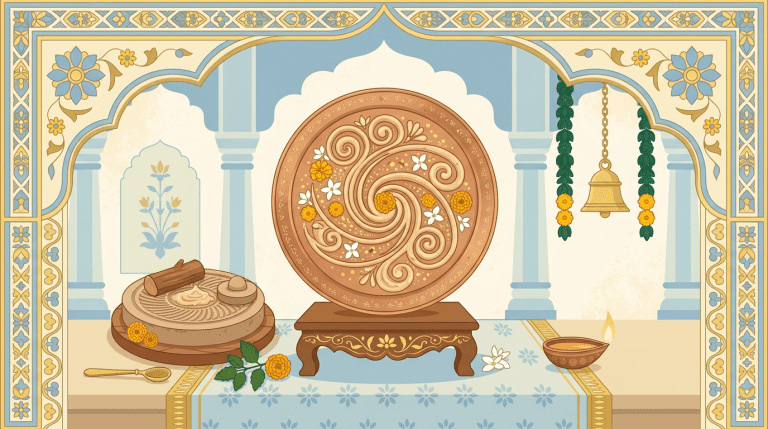
- Urdhva Pundra: Madhwa Vaishnavas wear the Urdhva Pundra—a vertical mark made with Gopichandana (a sacred clay from Dwaraka) on twelve parts of the body. This mark signifies devotion to Lord Vishnu and distinguishes the Madhwa Vaishnava identity.
- Kumkum at the Centre: A dot of kumkum is often placed at the centre of the Urdhva Pundra on the forehead. This represents Sri Lakshmi Devi, who eternally resides on the chest of Lord Vishnu. The combined mark thus symbolises the inseparable unity of Vishnu and Lakshmi—Lakshmi-Narayana.
- Ajna Chakra: The forehead, where the tilaka is applied, corresponds to the Ajna Chakra (the point of spiritual insight). Applying kumkum here is believed to activate spiritual awareness and protect the devotee from negative influences.
Sri Jayatirtha, the celebrated commentator on Madhwacharya’s works, explains in his writings that the external marks of a Vaishnava are not mere formalities. They are outward expressions of inner devotion and serve as constant reminders of one’s identity as a servant of Hari.
Kumkum in Lakshmi Worship
Kumkum holds a particularly exalted place in the worship of Sri Lakshmi Devi. As the consort of Lord Vishnu and the embodiment of all auspiciousness, Lakshmi is specially pleased by offerings of kumkum. The red powder represents her sowbhagya (marital auspiciousness and divine grace).
Kumkumarchane—the ritual offering of kumkum while chanting the divine names of Sri Lakshmi—is one of the most beloved forms of Devi worship in the Madhwa tradition. During this seva, the priest recites the Lakshmi Ashtottara Shatanamavali (108 names of Lakshmi) or the Sri Suktam, placing a pinch of kumkum on the deity with each name.
This ritual is performed with special fervour on Fridays (the day sacred to Lakshmi), during Varamahalakshmi Vrata, Deepavali, and other festivals honouring the Divine Mother. At Shri Bhaavi Sameera Vadiraja Mandira in Chintamani, Lakshmi Kumkumarchane is available as a seva that devotees can sponsor for the welfare of their families.
In Dvaita philosophy, Sri Lakshmi is not an abstract force but a real, eternal, and distinct personality—the foremost among all Jivas, ever liberated and ever in the service of Lord Vishnu. Offering kumkum to her is an act of genuine devotion to a real divine being, not a symbolic gesture.
The Tilaka Tradition in Madhwa Sampradaya
The Madhwa sampradaya places great emphasis on the wearing of proper religious marks. This tradition, codified by Madhwacharya himself, includes:
- Gopichandana: Sacred clay sourced from Dwaraka, used to draw the Urdhva Pundra. Madhwacharya prescribes Gopichandana as the ideal substance for the Vaishnava tilaka in his Sadachara Smriti.
- Twelve Markings: The Urdhva Pundra is applied on twelve parts of the body—forehead, belly, chest, throat, right arm, left arm, right shoulder, left shoulder, upper back, lower back, and both sides of the head—each with the chanting of a name of Lord Vishnu.
- Kumkum Application: After the Gopichandana marks, kumkum is applied as a dot, representing Lakshmi Devi’s presence. For married women, the kumkum mark is also a sign of sowbhagya.
- Mudra Dharana: Advanced devotees also bear the marks of Vishnu’s conch and discus, heated and pressed onto the skin, as a sign of total surrender. This practice, while less common today, reflects the depth of commitment in the Madhwa tradition.
Sri Vyasatirtha, one of the greatest Madhwa philosopher-saints, maintained rigorous adherence to tilaka dharana throughout his life and encouraged all devotees to uphold this practice as a mark of their Vaishnava identity.
Kumkum as Prasada: Receiving Divine Grace
After worship, the kumkum that has been offered to the deity is distributed as prasada. In the Madhwa understanding, prasada is not merely a leftover of the ritual—it is a substance that has been sanctified by the Lord’s acceptance. Applying kumkum prasada on the forehead is an act of receiving divine grace directly.
Devotees treasure kumkum prasada from temples and mathas. It is common to see Madhwa families carefully storing prasada kumkum and using it during daily pooja, applying it to family members as a blessing. The kumkum received from a temple where proper Vedic rituals are conducted is considered especially potent.
At sacred centres like Shri Bhaavi Sameera Vadiraja Mandira, the kumkum offered during Lakshmi Kumkumarchane becomes a vehicle of Sri Lakshmi’s blessings. Devotees who sponsor this seva receive prasada that carries the sanctity of the ritual and the grace of the divine couple, Lakshmi-Narayana.
Frequently Asked Questions
What is the spiritual significance of applying kumkum during pooja?
Kumkum represents divine auspiciousness (sowbhagya) and the grace of Sri Lakshmi Devi. When offered to the deity, it is an act of genuine worship—in Dvaita philosophy, the Lord truly receives the offering. When applied on the devotee’s forehead as prasada, it serves as a mark of divine blessing and a reminder of one’s devotion to Lord Vishnu and Lakshmi.
How is kumkumarchane performed in Madhwa temples?
During kumkumarchane, the temple priest chants the 108 or 1,000 names of the deity (typically Sri Lakshmi) while offering a pinch of kumkum with each name. The kumkum is placed on the deity’s feet or image, accumulating into a fragrant mound of red powder. After the ritual, this kumkum is distributed to devotees as prasada. The ritual is accompanied by the ringing of bells and the waving of incense.
Why do Madhwa Vaishnavas wear Gopichandana tilaka instead of just kumkum?
Madhwacharya prescribed Gopichandana (sacred clay from Dwaraka) as the primary substance for the Urdhva Pundra tilaka. The vertical marks represent Lord Vishnu, while the kumkum dot placed within represents Sri Lakshmi. Together, they symbolise Lakshmi-Narayana and identify the wearer as a Madhwa Vaishnava. This practice is codified in Madhwacharya’s Sadachara Smriti and followed across all Madhwa mathas.
Is kumkum used only for Lakshmi worship or for all deities?
While kumkum holds special significance in Lakshmi worship due to its association with sowbhagya, it is used in the worship of all deities in the Hindu pantheon. In Madhwa temples, kumkum is offered to Lord Vishnu, Lakshmi, Hanuman, Vayu, and other deities. However, kumkumarchane as a specific ritual is most commonly associated with Sri Lakshmi Devi and other feminine forms of the divine.
Can I sponsor Lakshmi Kumkumarchane for my family’s well-being?
Yes. At Shri Bhaavi Sameera Vadiraja Mandira in Chintamani, you can sponsor Lakshmi Kumkumarchane for the well-being of your family. This seva is especially recommended for those seeking prosperity, harmony, and the blessings of Sri Lakshmi Devi. The ritual is performed by qualified priests following Madhwa sampradaya procedures, and prasada is sent to the sponsoring devotee.
Kumkum connects the devotee to the living grace of Sri Lakshmi-Narayana. Whether you apply it as a tilaka each morning, offer it during pooja, or sponsor a kumkumarchane at the temple, this sacred red powder carries the power of centuries of Vaishnava devotion. Book Lakshmi Kumkumarchane at Shri Bhaavi Sameera Vadiraja Mandira and invite the blessings of the Divine Mother into your life. Explore all sacred sevas to discover the full range of worship services available at the mandira.