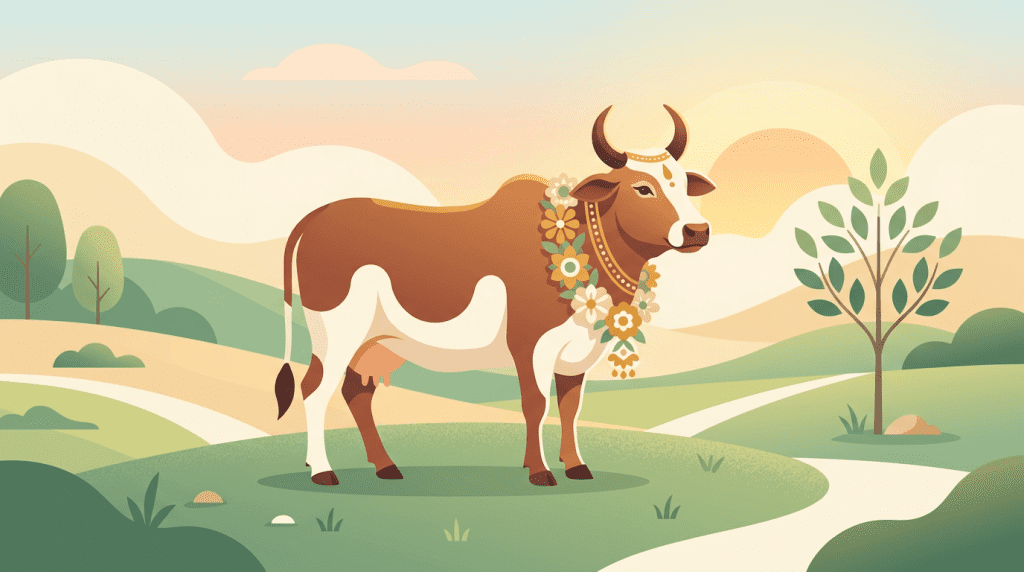
The cow — Gau Mata (Mother Cow) — holds a position of unparalleled reverence in Hindu scripture and practice. She is not merely an animal to be protected; she is a living temple, a sacred being in whom all deities reside. The Mahabharata declares: “Gavaam madhye sthitam Vishnum” — Lord Vishnu dwells within the cow. The Bhagavata Purana describes how Lord Krishna Himself tended to cows in Vrindavana, establishing the model of cow service as divine worship. In the Madhwa tradition, Go Seva (cow service) is considered one of the highest forms of dharmic action — a deed that simultaneously serves the animal kingdom, the devata realm, the ancestral realm, and the devotee’s own spiritual progress.
At Shri Bhaavi Sameera Vadiraja Mandira, Chintamani, Go Seva is a living practice. The Ruju Yogi Foundation maintains a Gaushala (cow shelter) where cows are cared for, fed, and worshipped daily. Devotees from across India participate in this sacred service through online booking — and the spiritual rewards are profound.
The Cow in Vedic Literature
The reverence for cows in Hinduism is not sentimental — it is rooted in the deepest layers of Vedic revelation. The Rig Veda (the oldest Hindu scripture) contains hymns praising the cow as Aghnya (inviolable, not to be harmed). The Atharva Veda states: “The cow is the mother of the Rudras, the daughter of the Vasus, the sister of the Adityas, and the centre of Amrita (immortality).”
The Mahabharata — which Shri Madhwacharya considers the supreme historical text (Itihasa) — contains extensive discourses on the cow’s sacred status. In the Anushasana Parva, Bhishma instructs Yudhishthira at length about the merits of cow protection, cow donation, and cow worship. He declares that there is no gift greater than the gift of a cow (Go-Dana), and that feeding cows (Go-Grasa) daily is equivalent to performing a yajna (fire sacrifice). Shri Madhwacharya’s Mahabharata Tatparya Nirnaya reinforces these passages, highlighting the cow’s role in the divine economy where serving the cow directly serves Lord Vishnu.
Kamadhenu and Surabhi: The Divine Cow
Kamadhenu — also known as Surabhi — is the celestial wish-fulfilling cow who emerged during the Samudra Manthana (Churning of the Ocean of Milk). She represents the archetype of all cows and the concept that the cow is a giver of all desires. The Bhagavata Purana narrates how Kamadhenu was given to the Saptarishis (seven sages) and how her descendants populated the earth, making every earthly cow a reflection of the divine original.
In the Madhwa understanding, Kamadhenu is not a mythological symbol but a real entity in the celestial hierarchy — a being of immense spiritual potency who embodies the motherly, nourishing aspect of divine grace. When a devotee serves an earthly cow, the merit reaches Kamadhenu herself, and through her, to Lord Vishnu. This chain of grace makes even a simple act of feeding a cow a cosmic event.
Thirty-Three Crore Deities in the Cow
One of the most powerful scriptural statements about the cow comes from the Mahabharata and is reiterated across Puranas: all thirty-three crore (330 million) deities reside in the body of the cow. This is not poetic exaggeration — in Madhwa theology, it reflects the reality that the cow’s body is a sanctified vessel hosting the presence of all divine beings. Specifically:
- Lord Brahma resides in the cow’s hump.
- Lord Vishnu resides in the cow’s throat.
- Lord Rudra resides in the cow’s face.
- The Adityas, Vasus, and Ashwini Kumaras reside in various parts of the body.
- Ganga resides in the cow’s urine.
- Lakshmi resides in the cow dung.
- All tirthas reside in the hoofprints of the cow.
This understanding transforms cow service from an act of animal welfare into an act of worship of the entire divine pantheon. When you feed a cow, you feed all the deities. When you worship a cow, you worship the cosmos.
Forms of Go Seva
The scriptures prescribe several forms of Go Seva, each with its own merit:
Gau Grasa (Feeding Cows): The most accessible and widely practised form of Go Seva. Gau Grasa means “a morsel for the cow” — offering food (grass, grains, jaggery, or specially prepared fodder) to cows. The Anushasana Parva states that one who feeds cows daily is freed from all sins and attains the highest heavens. At Vadiraja Mandira, Gau Grasa Seva can be booked online — the temple’s Gaushala feeds the cows on the devotee’s behalf and dispatches Gau Mrittika Prasada.
Gau Pooja (Cow Worship): A formal worship ritual where the cow is bathed, decorated with flowers, kumkum, and turmeric, and offered Naivedya. The Saptaanga Gau Pooja (seven-limbed worship) includes worship of the cow’s seven sacred aspects: head, back, hooves, tail, horns, udder, and mouth. At Shri Vadiraja Mandira, Gau Pooja Seva with Gau Mrittike is available for devotees who wish to participate in this comprehensive worship.
Gau Mrittika (Sacred Cow Soil): The earth from a cow’s hoofprint is considered sacred — it contains the essence of all tirthas. Gau Mrittika collected from the temple’s Gaushala is dispatched to devotees as prasada. It is used for purification of homes, protection of family members, and as a sacred substance in household rituals.
Go-Dana (Cow Donation): The gift of a cow to a Brahmin or temple is considered the highest form of dana (charity). While not always practical in modern life, sponsoring a cow’s upkeep at a Gaushala is considered equivalent merit.
Benefits of Go Seva per Madhwa Teaching
The Mahabharata, Bhagavata Purana, and Vishnu Purana unanimously declare the following benefits of Go Seva:
- Pitru Tarpana: Cow service is one of the most effective means of propitiating ancestors. Feeding cows is said to nourish departed ancestors in the Pitru Loka, granting them peace and upward mobility in the spiritual realms.
- Removal of Pitru Dosha: Families experiencing the effects of Pitru Dosha (ancestral disturbances manifesting as health issues, financial problems, or marital difficulties) are specifically advised to perform Go Seva as a primary remedy.
- Health and longevity: The Anushasana Parva states that one who feeds cows attains freedom from disease and long life.
- Prosperity: The cow is the embodiment of Lakshmi. Serving cows invites the goddess of prosperity into the devotee’s life and home.
- Moksha: The ultimate benefit — regular Go Seva, combined with Vishnu Bhakti and adherence to dharma, accelerates the soul’s journey toward liberation.
The Gaushala at Ruju Yogi Foundation
The Ruju Yogi Foundation, which administers Shri Vadiraja Mandira, maintains a Gaushala where Desi (indigenous Indian breed) cows are housed, fed, and cared for. These are not commercial dairy cows — they are temple cows dedicated to Lord Vishnu’s service. The cows receive nutritious food, clean water, veterinary care, and daily affection from the Gaushala attendants. Cow milk from the Gaushala is used for temple abhishekas, making it part of the sacred worship cycle.
Devotees who sponsor Gau Grasa Seva or Gau Pooja Seva are directly supporting the Gaushala’s operations — ensuring that these sacred animals continue to receive the care they deserve. The Foundation welcomes in-person visits to the Gaushala for devotees who wish to feed the cows directly and experience the joy of Go Seva firsthand.
Is Go Seva only for Hindus?
While Go Seva is rooted in Hindu scripture, the cow’s sacred status is a universal spiritual truth recognised across many traditions. Anyone who feels drawn to serving animals and protecting the cow is welcome to participate. The spiritual benefits, per the Shastras, accrue to anyone who performs the service with sincerity and faith.
How does online Gau Grasa Seva work?
When you book Gau Grasa Seva online, the temple feeds the cows on your behalf on the specified date. The feeding is done with a sankalpa in your name, gothra, and nakshatra. After the seva, Gau Mrittika (sacred earth from the cow’s hoofprint) is collected, packed, and dispatched to your address as prasada. The entire process is overseen by the temple management to ensure authenticity.
Can Go Seva help with specific health or family problems?
The scriptures specifically recommend Go Seva for families experiencing chronic health issues, repeated misfortunes, progeny-related concerns, and Pitru-related disturbances. While Go Seva is not a medical treatment, the spiritual merit it generates is believed to create favourable conditions for healing and resolution. Many Madhwa astrologers prescribe Go Seva alongside specific temple sevas for Rahu, Ketu, and Saturn-related challenges.
What is the connection between Go Seva and Lord Krishna?
Lord Krishna is Gopala — the protector of cows. His Vrindavana leelas (divine sports) are centred around cow herding, and the Bhagavata Purana devotes extensive chapters to Krishna’s love for cows. In the Madhwa tradition, serving cows is a direct way of serving Krishna in His Gopala form. Shri Madhwacharya, in the Mahabharata Tatparya Nirnaya, highlights that Krishna’s cow-herding was not a childhood pastime but a divine demonstration of the cow’s supreme importance in dharma.
Participate in this timeless tradition of sacred cow service. Book Gau Grasa Seva or Gau Pooja Seva with Gau Mrittike at Shri Vadiraja Mandira, Chintamani, and receive the blessings of Gau Mata.
Explore all sacred sevas: Visit our Seva Booking page to discover the complete range of poojas, abhishekas, and archane offerings at Shri Bhaavi Sameera Vadiraja Mandira, Chintamani.