
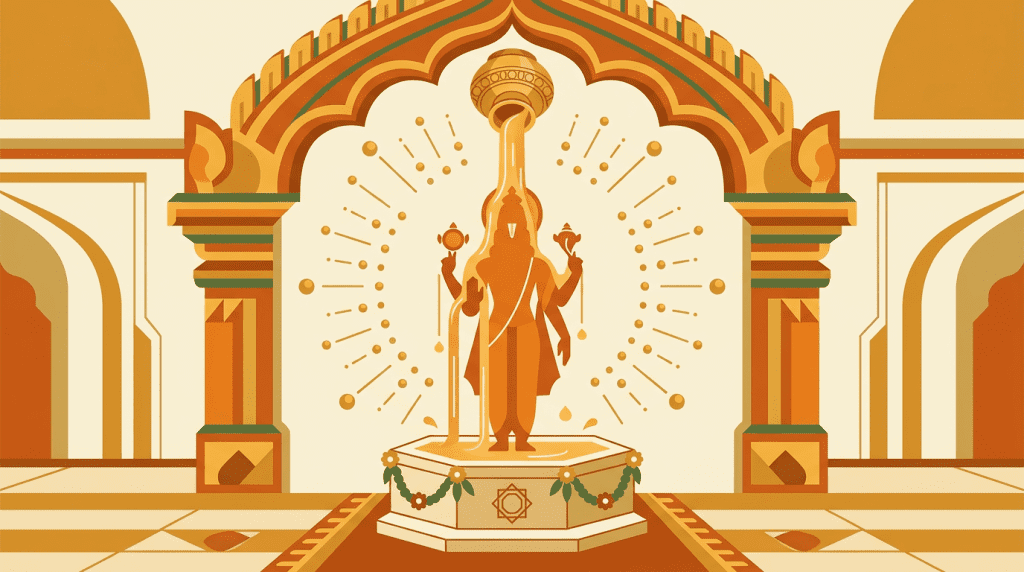
Abhisheka is the sacred ritual of bathing a deity’s idol (Bimba) with sanctified substances such as water, milk, honey, ghee, and more. The word derives from the Sanskrit roots abhi (towards) and seka (sprinkling or pouring), together signifying a ceremonial anointing directed at the divine form. In the…
Posts published in “Rituals and Worship”
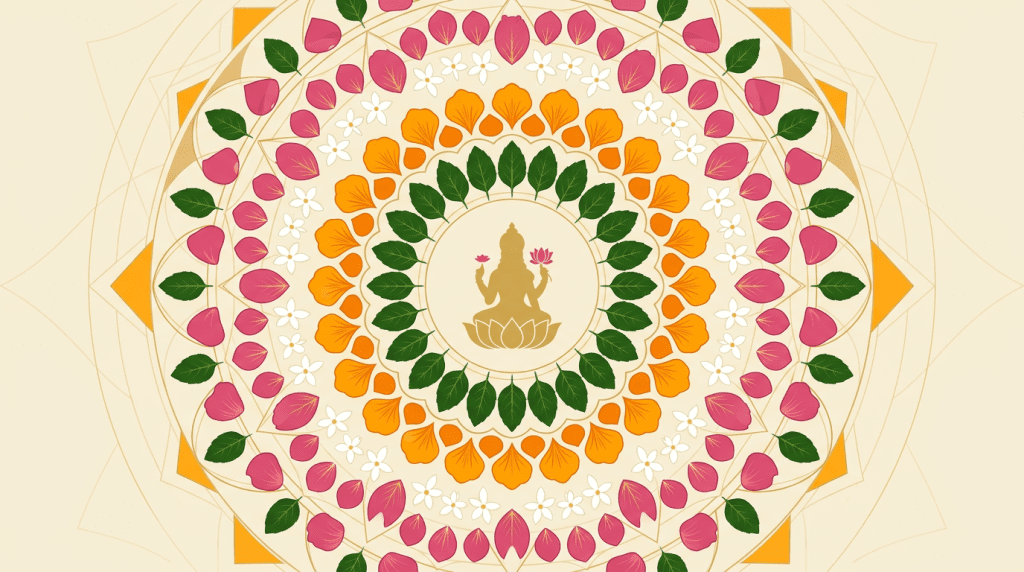
Archana is the act of worshipping the Lord by reciting His divine names while offering sacred items — flowers, Tulasi leaves, kumkuma, or akshata — at His feet. The word comes from the Sanskrit root arch, meaning to honour, praise, or worship. In the Madhwa Vedantic tradition, Archana…
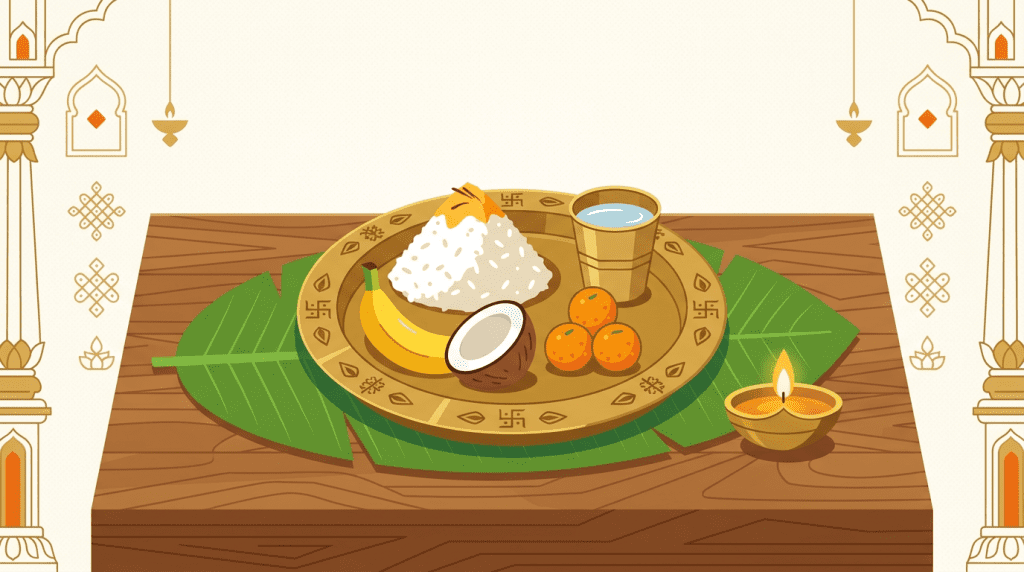
Naivedya (also written Neivedyam in South Indian usage) is the sacred offering of food to God before it is consumed by devotees. The Sanskrit word derives from nivedana, meaning “to present” or “to dedicate.” In the Madhwa tradition of Dvaita Vedanta, Naivedya is far more than a ritual…
The lamp — Deepa in Sanskrit — is among the most ancient and universal symbols of Hindu worship. Every temple pooja begins and ends with the lighting of a lamp; no ritual is considered complete without its presence. In the Madhwa tradition of Dvaita Vedanta, the Deepa carries…
Seva is a Sanskrit word meaning service — specifically, selfless, devoted service to God, to the Guru, and to all living beings as an expression of devotion to the Supreme. In the Madhwa tradition of Dvaita Vedanta, Seva is not merely charity or social work; it is Kainkaryam…